Croatian Wine: The Grapes, the Four Regions and Where to Taste Them
Croatian wine comes from four official wine regions and a short list of grapes worth learning by name: Plavac Mali, the red of the Dalmatian coast and islands; Pošip and Grk, the whites of Korčula; Malvazija and Teran in Istria; and Graševina, the most widely grown grape in the country, inland. The best way to drink them is close to where they grow, from a villa on Korčula or Hvar, on the coast at Primošten or in the Istrian countryside, with the cellar visits booked and a driver waiting. For the houses, see our Croatia villa rentals; the guide below starts with the regions and the grapes, then pairs each wine country with a villa.
Croatian wine at a glance
| Wine regions | Four official regions: Dalmatia; Croatian Istria and Kvarner; Central Hilly Croatia; and Slavonia and the Croatian Danube, divided into twelve subregions. |
|---|---|
| The red to know | Plavac Mali, grown along the Dalmatian coast and on the islands, and the grape behind Dingač and Postup on the Pelješac peninsula. |
| The whites to know | Pošip and Grk on Korčula, Malvazija Istarska in Istria, and Graševina, the most widely grown grape in Croatia, inland. |
| The Zinfandel link | Zinfandel is a Croatian grape, known in Dalmatia as Crljenak Kaštelanski; Plavac Mali is its offspring. |
| Harvest | On the islands the grapes are mostly picked in September. |
| Where to base a wine week | Korčula, with Pelješac a short ferry away; Hvar; Primošten for Babić; the Istrian countryside for Malvazija and Teran. |
The four wine regions of Croatia
Croatia’s Ministry of Agriculture defines four wine regions and twelve subregions in its 2022 ordinance on viticulture. The two coastal regions are where a villa stay and a wine trip meet; the two inland regions are best tasted from Zagreb, or at the table on the coast.
| Region | Subregions | Grapes to know | For a villa stay |
|---|---|---|---|
| Dalmatia | Northern Dalmatia; Dalmatian Hinterland; Central and Southern Dalmatia | Plavac Mali, Pošip, Grk, Babić, Maraština, Plavina | Korčula, Hvar, Brač, Primošten and the Dubrovnik Riviera |
| Croatian Istria and Kvarner | Croatian Istria; Kvarner and the Croatian Littoral | Malvazija Istarska, Teran, Muškat Momjanski; Žlahtina on the island of Krk | Villas near Rovinj, Vrsar and Poreč |
| Central Hilly Croatia | Moslavina; Prigorje–Bilogora; Zagorje–Međimurje; Plešivica; Pokuplje | Škrlet, Kraljevina and Graševina, with Pinot Noir and other international grapes | A day from Zagreb |
| Slavonia and the Croatian Danube | Slavonia; Croatian Danube | Graševina, with international whites and reds | Far from the coast: taste them on the wine lists of Dalmatia and Istria |
The Croatian grapes worth knowing
Croatia grows many international varieties, but the native grapes are the reason to drink the wine here. These are the ones you will see most often on lists along the coast.
| Grape | Red or white | Where it grows | Good to know |
|---|---|---|---|
| Plavac Mali | Red | Central and southern Dalmatia, on Pelješac and the islands | The grape of Dingač and Postup; a child of Zinfandel and Dobričić |
| Pošip | White | Korčula, around Čara and Smokvica | One of the first Croatian wines given a protected origin |
| Grk | White | Lumbarda, on Korčula | Dry and fresh; the vine has only female flowers, so it is planted with another variety, usually Plavac Mali |
| Babić | Red | Primošten and northern Dalmatia | Grown in stone-walled plots on the rocks south of Primošten |
| Malvazija Istarska | White | Istria | The white Istria is proudest of, at home with the peninsula’s food |
| Teran | Red | Istria | Istria’s bold, dry red |
| Graševina | White | Inland, above all Slavonia | The most widely grown grape in Croatia |
| Bogdanjuša | White | Hvar | A native white of the island of Hvar |
| Vugava | White | Vis | The native white of the island of Vis |
| Žlahtina | White | Krk, in Kvarner | The white of Krk |
| Debit | White | Northern Dalmatia | A white of northern Dalmatia |
Plavac Mali, Dingač and Postup
Plavac Mali is the red of Dalmatia. Genetic research by Croatian scientists working with the University of California, Davis showed that it is the offspring of Zinfandel, found in Dalmatia as Crljenak Kaštelanski, and Dobričić, an old grape of the island of Šolta. So the Zinfandel of California started on this coast.
Its most famous wines come from two named vineyard areas on the Pelješac peninsula, where the vines run down steep slopes towards the sea. Dingač was the first Croatian wine area given protected status, in the 1960s; the vineyards are reached through a narrow one-lane tunnel from the village of Potomje. Postup, just east of Orebić, followed a few years later. From Korčula, Orebić is a short car-ferry crossing away, which makes a villa on Korčula the easiest base for a Pelješac day.
Korčula: Pošip and Grk
Korčula grows Croatia’s two most distinctive whites. Pošip comes from the villages of Čara and Smokvica in the middle of the island. Grk grows at Lumbarda, at the eastern end, and its vine has only female flowers: it cannot pollinate itself, so it is planted with another variety, usually Plavac Mali. Korčula Town, its cellars and Lumbarda are all within a short drive of the villas below. More on the island in the best places to visit in Croatia.
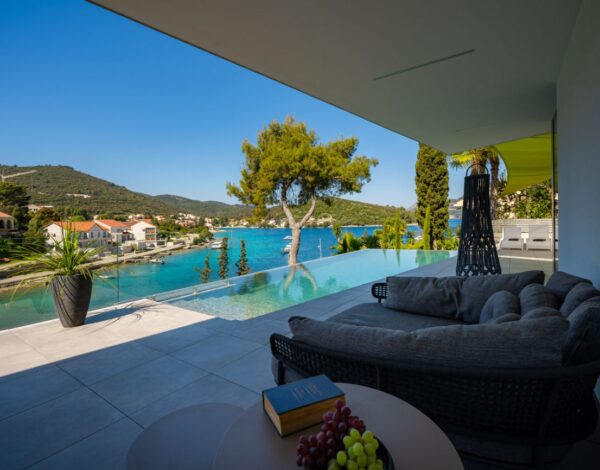
Villa Cataleya
Korčula Island · 4 bedrooms · sleeps 8
A modern house on a quiet bay about three kilometers from Korčula Town, on four floors joined by an elevator, with a heated infinity pool and four en-suite bedrooms. Paddleboards, kayaks and bicycles are part of the house; Lumbarda’s Grk vineyards and the cellars of the old town are a short drive away.
Staff and service: housekeeping, our concierge and a welcome hamper are included; a chef and grocery pre-stocking are arranged on request.

Villa La Scala
Korčula Island, Žrnovo · 5 bedrooms · sleeps 10
Two separate units in the village of Žrnovo, above the Pelješac Channel, each with its own infinity pool and outdoor dining area: three en-suite bedrooms upstairs, two downstairs, seven bathrooms in all. It suits two families who want to share a wine week without sharing every room.
Staff and service: our concierge is included; a chef and grocery pre-stocking are arranged on request.
Hvar: the Greek vineyards of Stari Grad Plain
On Hvar, vines have been grown in the same fields for more than two thousand years. Stari Grad Plain, on the north side of the island, was laid out by Ionian Greeks from Paros in the 4th century BC in plots divided by dry-stone walls, and it has been farmed for grapes and olives ever since; UNESCO inscribed it as a World Heritage Site in 2008. Plavac Mali is the island’s red; Bogdanjuša, a native white, is the one to ask for at dinner.
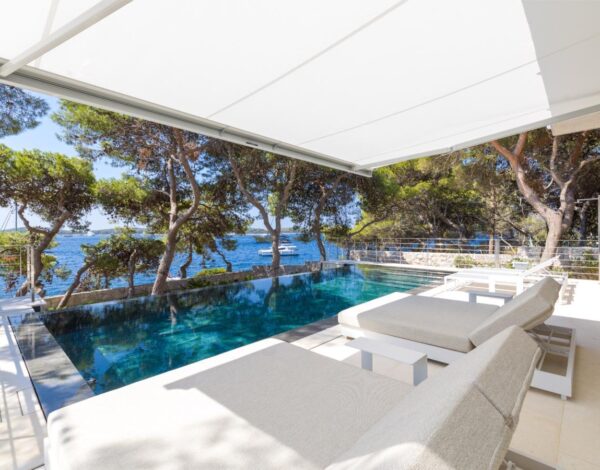
Aqua Vista
Hvar, Majerovica · 10 bedrooms · sleeps 20
At the water’s edge a kilometer west of the main square of Hvar Town, facing the Pakleni Islands, with a heated infinity pool and a private platform into the sea below the terrace. Ten bedrooms over five floors make it the house for a wine week with a large group: one long table on the terrace, and a cellar day on the island or by boat.
Staff and service: a private chef, butler service and transfers are arranged on request.
Primošten: Babić between stone walls
South of Primošten, at Bucavac Veliki, the vineyards are a patchwork of dozens of small plots cut into the rock and divided by dry-stone walls. Croatia added the Primošten Vineyards to its UNESCO Tentative List in 2007, and the grape grown in them is Babić, a red that gives its best wines precisely around Primošten. The town sits on the coast between Šibenik and Split, so a stay here also reaches the wineries of northern Dalmatia, where Debit is the white.
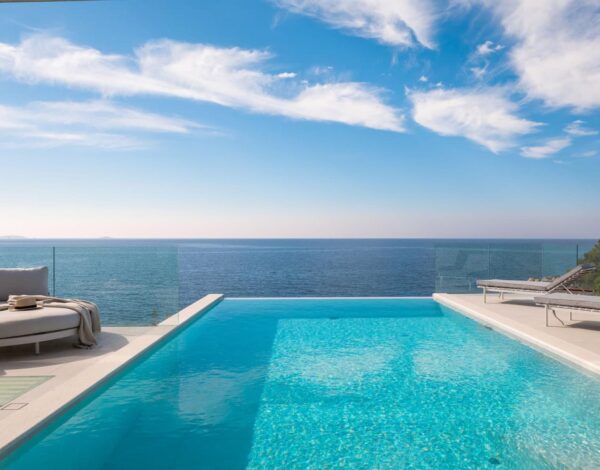
Villa Dream Pearl
Primošten, Bilo · 5 bedrooms · sleeps 10
A house on the sea at Bilo, by Primošten, with a heated pool, a wine cellar, a sauna and a gym; five bedrooms and seven bathrooms. The cellar is the point: ask us to stock it before you arrive with Babić and the other wines of the coast.
Staff and service: a private chef, private tours, a yacht charter and private transfers are arranged on request.
Istria: Malvazija and Teran
Istria, in the north, is the other coastal wine region, known as much for its hill towns and its food as for its wine. Malvazija Istarska is its white and Teran its bold, dry red, with Muškat Momjanski, the muscat of Momjan. Villas here sit inland among olive groves and vineyards rather than on the water, and the cellars are a short drive apart.
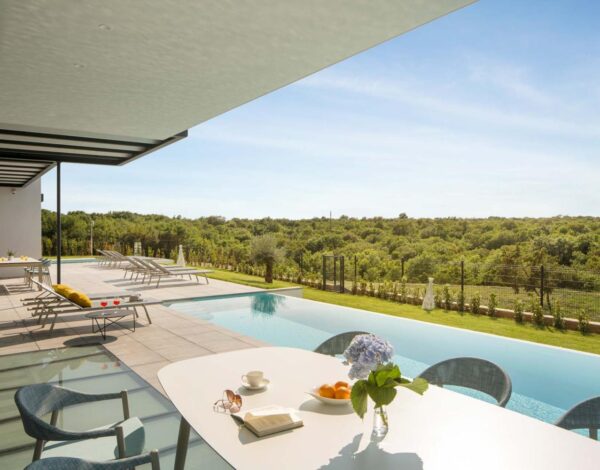
Eva
Istria, near Rovinj · 6 bedrooms · sleeps 12
A modern villa in two identical wings, each with its own kitchen and living room, joined by a wellness level with an indoor heated pool and a sauna; two heated pools outside, in the Istrian countryside of olive groves and vineyards. Two families can share it and keep their own space; the minimum stay is four nights.
Staff and service: a private chef, transfers, excursions and tours are arranged on request.
The Dubrovnik Riviera, for Pelješac and Ston
From Dubrovnik, the coast road runs north-west through Trsteno towards Ston, at the start of the Pelješac peninsula, where the oysters of Mali Ston Bay are the classic match for a glass of Pošip. Beyond Ston, the road continues along Pelješac to the Dingač and Postup vineyards.
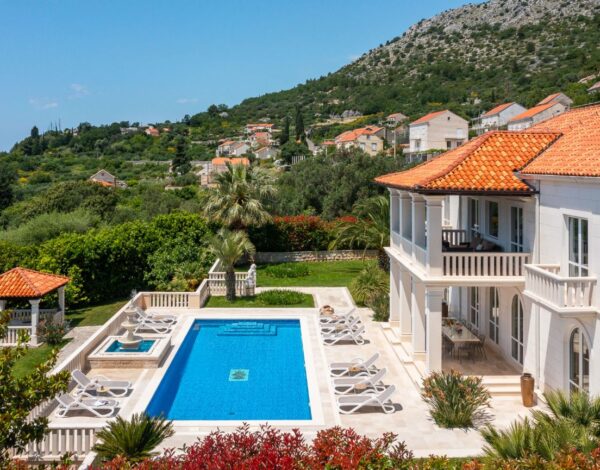
Villa La Villa Dubrovnik
Trsteno, Dubrovnik Riviera · 6 bedrooms · sleeps 12
A house in the village of Trsteno, steps from the Trsteno Arboretum, with a heated pool, a garden pavilion and a dining room laid for twelve; the sixth bedroom is in a separate annex. It is on the Pelješac side of Dubrovnik, so the vineyards and Ston are easier to reach than from the city.
Staff and service: housekeeping, our concierge and a welcome basket are included.
How our concierge plans a wine week
- The cellars. Many of the best producers are small family cellars that receive visitors by appointment. We book the tastings around your days, two a day at most, with lunch in between.
- The driver or the boat. A private driver for the day means no one in the group drives after a tasting. On Korčula and Hvar, a boat can take you along the coast instead, and across to Pelješac.
- The dinner at the villa. In villas where a chef can be booked, we arrange a dinner around the wines of the island, with the bottles chosen before the menu.
- The cellar at home. We stock the house before you arrive with the wines of the region you are staying in, so the first evening on the terrace starts with the right glass.
When to go for wine
- May and June. The cellars are open, the roads are quiet and the evenings are long enough for dinner outside.
- July and August. The busiest weeks on the coast and the islands. Book tastings early and plan the cellar visits for the morning.
- September. Harvest on the islands, and the month we suggest most for a wine week: the sea is still warm and the cellars are at work.
- Booking the villa. Nine to twelve months ahead for June to September, six to nine months for spring and autumn.
Month by month, see the best time to visit Croatia; for flights and the border, see how to travel to Croatia from the USA.
Croatian wine: your questions answered
What is the most famous Croatian wine?
Plavac Mali, the red of the Dalmatian coast, above all from Dingač and Postup on the Pelješac peninsula. Among whites, Pošip from Korčula and Malvazija Istarska from Istria are the best known, and Graševina is the most widely grown grape in the country.
What are the wine regions of Croatia?
Croatia has four official wine regions: Dalmatia; Croatian Istria and Kvarner; Central Hilly Croatia; and Slavonia and the Croatian Danube. Together they are divided into twelve subregions. For a villa stay, the two coastal regions, Dalmatia and Istria, are the ones to choose.
Is Zinfandel from Croatia?
Yes. Zinfandel is a Dalmatian grape, known there as Crljenak Kaštelanski, and genetic research has shown that Plavac Mali is its offspring with Dobričić, an old grape of the island of Šolta.
What is the best Croatian white wine?
There is no single answer, but four are worth knowing: Pošip from Korčula, Grk from Lumbarda on Korčula, Malvazija Istarska from Istria, and Graševina from the inland regions.
When is the harvest in Croatia?
On the islands the grapes are mostly picked in September. It is the month we suggest most for a wine week: the cellars are at work and the sea is still warm.
Which Croatian island is best for wine?
Korčula, for Pošip and Grk and for its short crossing to the Pelješac vineyards, and Hvar, for Plavac Mali and the vineyards of Stari Grad Plain, a UNESCO World Heritage Site.
Can we visit Croatian wineries without driving?
Yes. Our concierge books the tastings and a private driver for the day, or a boat along the coast on Korčula and Hvar, so no one in the group has to drive after a tasting.
Do we need to book wine tastings in advance?
For small family cellars, yes, and in July and August above all. We book them when we plan the stay, around your days and the villa.
More Croatia guides
- Croatia villa rentals
Our collection, with a shortlist in 24 hours. - Best places to visit in Croatia
Coastlines, old towns and island life. - The best time to visit Croatia
Season by season, and how far ahead to book. - Is Croatia a good place to visit?
What travelers find, and who it suits. - Travel to Croatia from the USA
Nonstop flights, the border and the transfers. - Is Croatia safe?
What to know before you book.
Updated October 2026. Sources: wine regions and subregions from the Croatian ordinance on viticulture, 2022; grapes by region from Vina Croatia, the wine association of the Croatian Chamber of Economy; Stari Grad Plain from UNESCO; Primošten Vineyards from the UNESCO Tentative List; the parentage of Plavac Mali from Maletić and colleagues, with Carole Meredith of UC Davis. Villa details are from our listings.
Plan a wine week in Croatia
Tell us your dates, who is coming and which wines you would like to taste. A Croatia specialist replies within 24 hours with three to five villas that fit, their current rates, and the cellar visits we would book around them.
Request a Tailored SelectionWhatsApp +1 305 432 1731
Toll-free, US and Canada +1 888 279 6444 · Miami +1 305 432 1731