Is Croatia Safe? Everything Discerning Travelers Must Know Before They Book
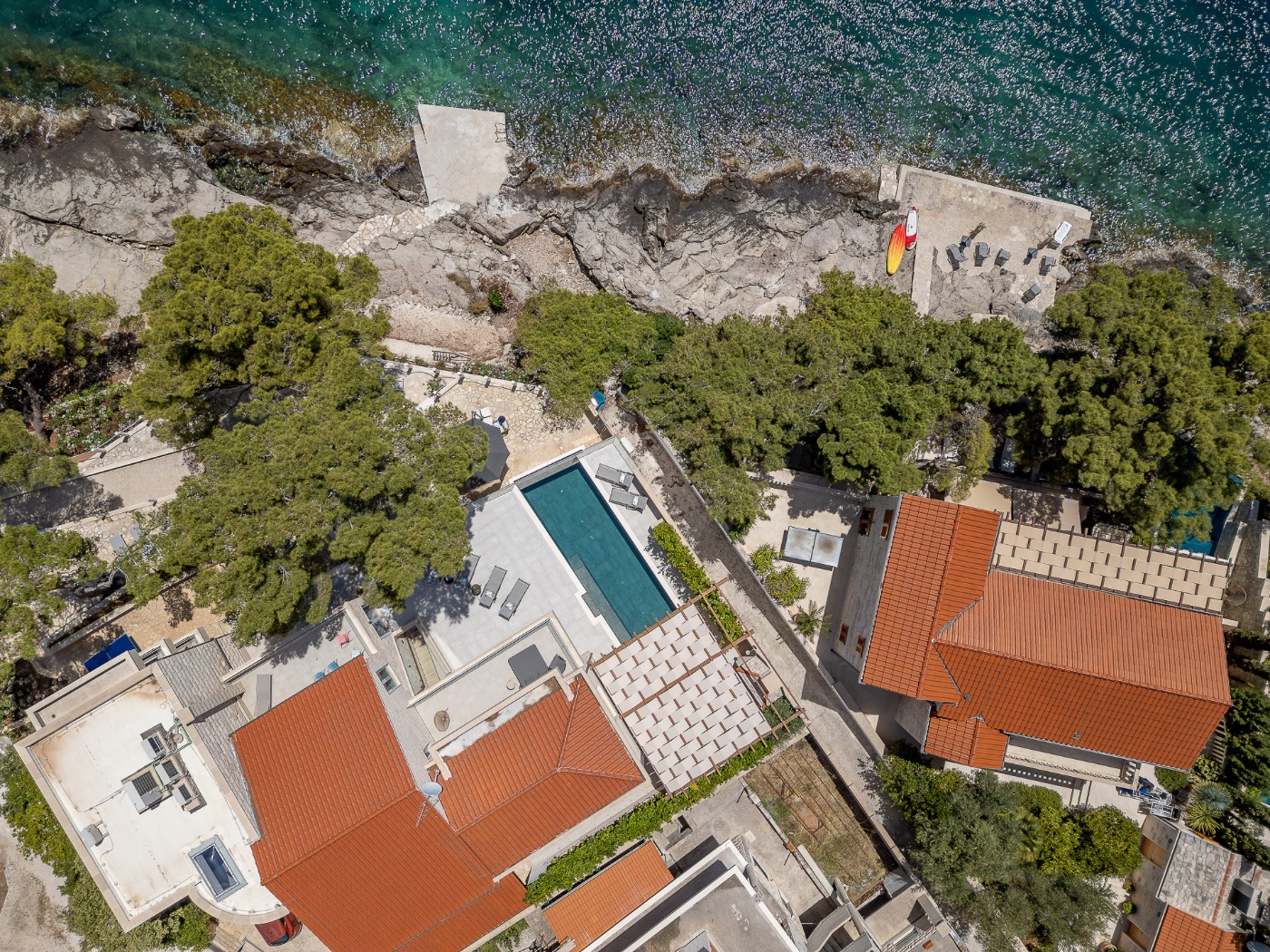
Is Croatia safe? Yes, and the data is unambiguous. Croatia ranked 12th on the Global Peace Index 2024 (Institute for Economics and Peace, 2024), placing it among Europe’s most secure destinations, ahead of France, Spain, and every country in the Western Balkans. The homicide rate sits at 0.8 per 100,000 inhabitants (Eurostat, 2023), well below the EU average. For high-end travelers weighing whether Croatia is safe for a private villa holiday, the answer is not merely reassuring.
It is affirmative, specific, and backed by a decade of post-EU-accession reform that has aligned Croatian law enforcement, health services, and infrastructure with the standards of Western Europe. Is Croatia safe for families, solo travelers, and those seeking complete Adriatic seclusion? Each of these questions deserves a precise answer, and this guide provides one.
Is Croatia Safe? The Answer in 60 Seconds
- Is Croatia safe by global standards? Yes. Croatia consistently ranks inside the top 15 of the Global Peace Index, ahead of many popular European destinations.
- The most common complaint tourists file is petty theft in crowded zones, not violent crime. Croatia is safe from serious violent incidents by every available metric.
- Is Croatia safe year round? Yes, though shoulder seasons, April to June and September to October, offer the most comfortable and least congested experience.
- Private villa rentals through Haute Retreats raise the safety standard further: gated estates, vetted staff, and dedicated concierge access address risks that open hotel environments cannot.
Why Asking Is Croatia Safe Is the Right Starting Point for Every Luxury Trip

Croatia is safe in the way that Lisbon, Prague, or the Amalfi Coast are safe: reassuringly so, with pockets of elevated tourist-area nuisance that call for common sense rather than caution. The question of whether Croatia is safe comes up more frequently than the evidence warrants, partly because the country’s transformation from a post-conflict destination into one of Europe’s most photographed coastlines happened so rapidly that some travelers arrived with outdated mental maps.
Understanding whether Croatia is safe begins with geography. The country stretches from the Habsburg grandeur of Zagreb in the north to the sun-bleached limestone coves of the Dalmatian Coast in the south. It encompasses more than a thousand islands, most of which are among the quietest and most private retreats in the entire Mediterranean. Is Croatia safe across all of these regions? The short answer is yes, though the character of the risks shifts by location and season in ways that matter for serious trip planning.
For the Haute Retreats audience, whether Croatia is safe is less about street-level risk and more about the quality of infrastructure, the reliability of emergency services, and the degree of privacy that a villa stay affords. On all three measures, Croatia is safe and, in certain respects, sets a benchmark that its Mediterranean neighbors have not yet met.
Is Croatia Safe Compared to Other Mediterranean Destinations?
| Destination | Global Peace Index Rank 2024 | US State Dept Advisory | Primary Visitor Risk | Private Villa Infrastructure |
|---|---|---|---|---|
| Croatia | 12 | Level 1 | Petty theft | Excellent, growing rapidly |
| Italy | 31 | Level 2 | Petty theft, scams | Excellent |
| Greece | 60 | Level 2 | Petty theft | Good |
| Spain | 30 | Level 2 | Pickpockets, scams | Very good |
| Montenegro | 57 | Level 1 | Road safety | Developing |
| Turkey | 145 | Level 2 | Various | Good in resort zones |
Croatia is safe relative to its closest competitors for the same discerning clientele. On virtually every formal safety measure, it outperforms the destinations that typically occupy the same shortlist.
Is Croatia Safe in Dubrovnik, Hvar, and Split? A Region-by-Region Answer
Is Dubrovnik safe in Croatia? Yes. The walled city is one of the most tightly controlled urban environments in the entire Mediterranean. Croatian police regularly patrol the Stradun and the lanes around it during the tourist season. The main danger is pickpocketing on the main promenade at the mid-afternoon window when cruise-ship crowds are at their highest. Is Croatia safe in Dubrovnik outside the walls, in the private villa estates above Lapad Bay or on the Elafiti Islands? Yes, absolutely. These places are so quiet and secluded that the question is almost theoretical.
Is Croatia safe in Hvar? Hvar is safe in the sense that serious crime is essentially absent from the island. Hvar town, specifically the nightlife cluster around Carpe Diem and the harbor square, can become disorderly on summer weekends. Guests who book hillside villas above the town, which is precisely what Haute Retreats Hvar villa rentals are designed to offer, are entirely removed from this environment. The question of whether Croatia is safe in Hvar depends heavily on where within Hvar one actually stays.
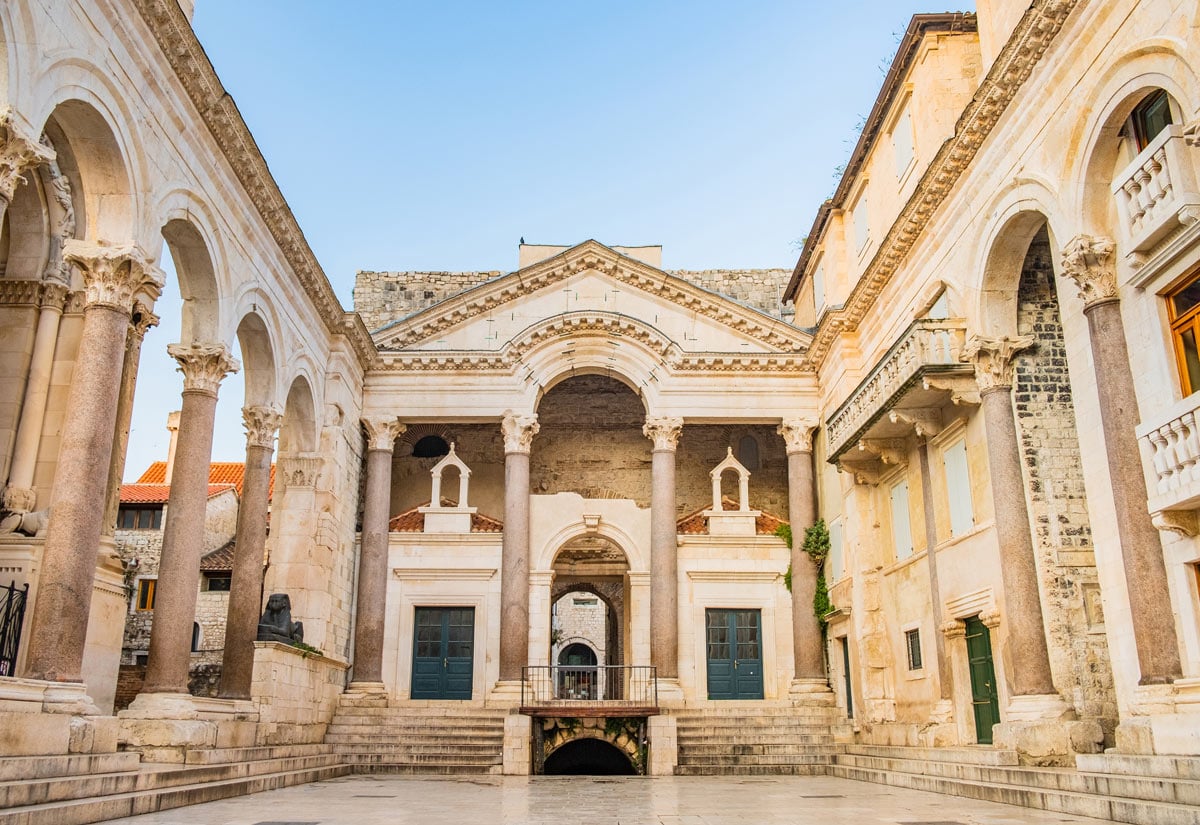
Is Croatia safe in Split? Split’s Diocletian’s Palace and the surrounding Stari Grad district are walkable at any hour with standard urban awareness. The city has a functioning local police presence. Is Croatia safe on the islands around Split, including Brač, Vis, and Šolta? These are among the calmest, least-crowded islands in the Adriatic. The answer is yes, without qualification.
Is Croatia Safe in Dubrovnik During Peak Summer Crowds?
In the high season, in July and August, Dubrovnik is visited by more than ten thousand day visitors (Croatian National Tourist Board, 2024). Is Croatia safe currently in Dubrovnik? Yes, but the experience inside the walls plummets during those hours. Guests in cliff-side properties or on the Elafiti Islands will be met by private transfer or tender and will be on their way before the afternoon rush at Haute Retreats. When the property you are staying in takes you out of the crowd altogether, asking whether Croatia is safe during high season is a lot less important.
Is Croatia Safe for Families Traveling with Children?

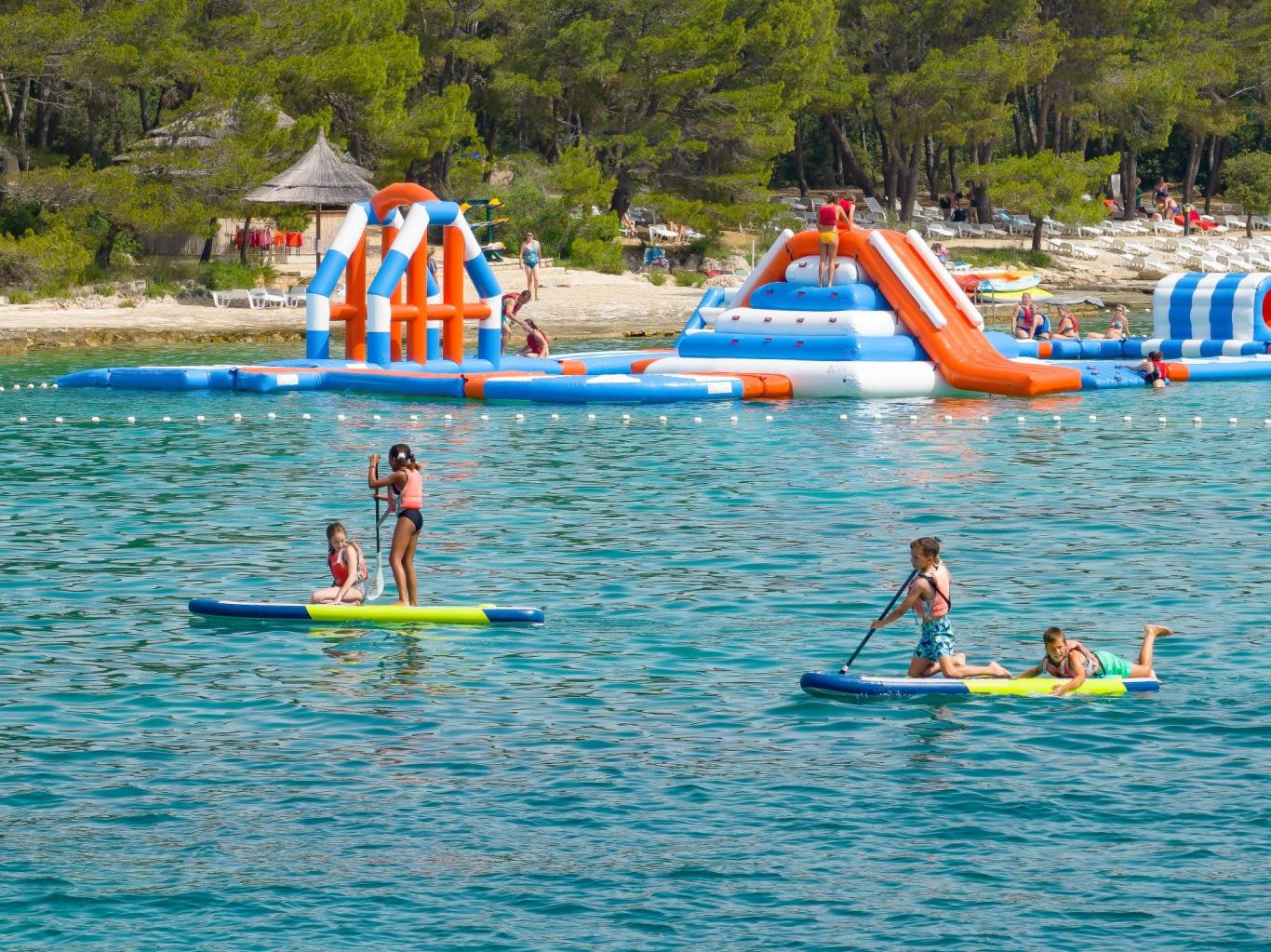
Croatia is a safe country for families and often features on lists of the most child-friendly coastal destinations in Europe. The Adriatic is smooth, warm and unbelievably clear. The beaches vary from shallow pebble beaches, perfect for young children, to natural rock pools which have been formed over thousands of years. Is it safe for young swimmers in Croatia? The low tidal range means conditions are predictable but sea urchins mean you should wear water shoes and in some bays in late August jellyfish appear.
Is Croatia safe for children in terms of food and health? EU standards are implemented at national level. Blue Flag certification is awarded to more than one hundred and forty Croatian beaches (Foundation for Environmental Education, 2024), confirming the water quality complies with strict European bathing-water standards. Tap water is safe to drink in all the main coastal towns and most inhabited islands.
Private villa stays through Haute Retreats address family safety with a specificity that no hotel can match. Is Croatia safe for families with infants or toddlers in a private villa? A gated estate with a private pool, a resident chef preparing every meal, and on-site management available around the clock answers the question before it is asked. Families do not share lifts, dining rooms, or pool areas with strangers. Pre-arrival villa preparation includes childproofing assessments on request. For families wondering whether Croatia is safe enough for very young children, the Haute Retreats Croatia villa collection offers properties that have been specifically assessed for family stays.
Is Croatia Safe for Solo Women Travelers? An Honest Assessment
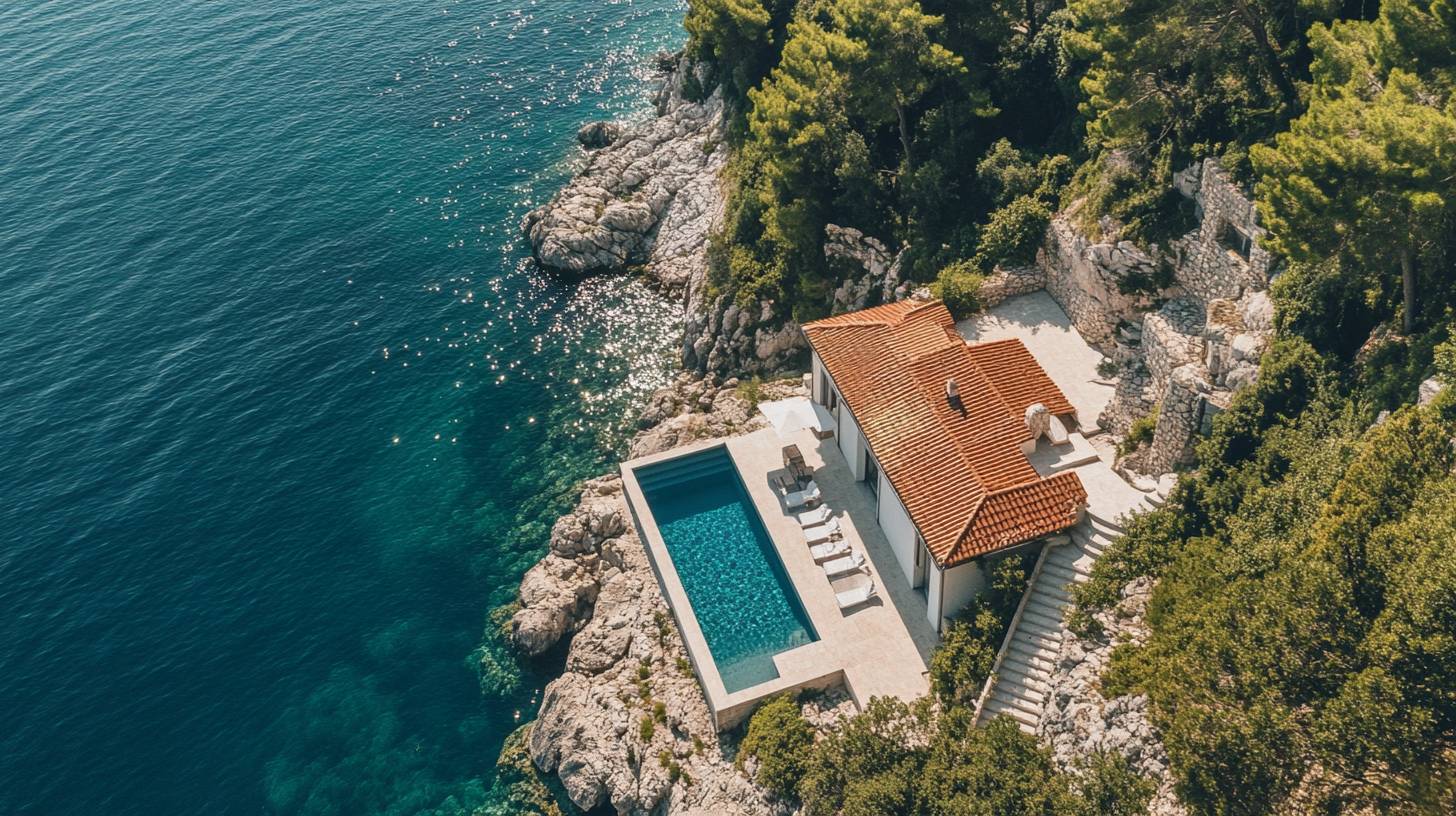
Is Croatia safe for solo female travel? The comparison with other nearby Mediterranean destinations is a good one. Street harassment is a persistent complaint in parts of Italy, Greece and Spain but less common along the Dalmatian Coast. Croatian culture is a product of 30 years of international tourism development and the same matter-of-fact professionalism is applied to solo female visitors as it is to any other guest.
Is it safe for women in Croatia at night? The same situational awareness applies here as it does in any European city environment after midnight in larger resort towns: Hvar town, Zrće Beach on Pag Island, and part of Split’s nightlife district. Women who book private villa stays are almost completely outside of these environments. Haute Retreats properties boast controlled-access gates, onsite staff and direct concierge lines. The question of whether it’s safe for women to be out in Croatia after dark is largely moot when the accommodation itself has a secure perimeter.
Is Croatia safe for women in terms of institutional support? Croatia’s police force operates with English-speaking capacity in every major tourist area. The country’s EU membership guarantees legal protections and emergency response standards consistent with Western Europe. Women who experience any incident have clear, accessible channels for reporting and assistance.
Is Croatia Safe Year Round or Only During the Summer Season?
Croatia is safe in any month of the calendar, but the nature of the risks varies quite a bit between summer and winter. Is it safe in Croatia in winter? In Zagreb and inland regions road conditions are cold and sometimes icy. If you are going to drive on mountain roads along the coast, especially on the Velebit range, your car must be prepared for it and you must be attentive. Coastal towns operate on reduced staff and limited services from November to February.
How safe is Croatia in spring and fall? April to June and September to October are the shoulder seasons, the most comfortable time for discerning travelers. The weather is warm, the Adriatic is swimable, the crowds are thin and every main service is operating at full stretch. According to Haute Retreats, these are the best months to rent a villa in Croatia, precisely because is Croatia safe and is Croatia really nice coincide most completely in these months. If you have school-age children, the first two weeks of September give you summer warmth, but a fraction of the August volume.
Health and Medical Safety: Is Croatia Safe if Something Goes Wrong?
Croatia is safe from a medical infrastructure perspective for EU citizens and, to a meaningful degree, for travelers from further afield. Public hospitals in Zagreb, Split, and Dubrovnik operate to EU standards. The European Health Insurance Card provides emergency coverage for EU nationals. Non-EU travelers should carry comprehensive travel insurance including medical evacuation coverage as a baseline. Is Croatia safe without private health insurance? Technically yes, but the quality differential between public emergency care and private clinic care in coastal areas makes insurance a sensible investment regardless of cost.
Is Croatia safe in terms of water and food hygiene? Tap water is safe to drink in every area where Haute Retreats operates. Restaurant hygiene is subject to EU food safety regulation and enforcement. Is Croatia safe from mosquito-borne illness? Croatia falls outside the malaria zone. Tiger mosquitoes are present along the coast in summer. Haute Retreats property managers conduct pre-arrival treatments as part of standard villa preparation, addressing this before guests arrive.
Is Croatia safe for travelers with specific medical requirements? Pharmacies in Split, Dubrovnik, and Zagreb are well-stocked by European standards. Specialist care is available in Zagreb and, during peak season, in dedicated private clinics in Split and Dubrovnik. Guests with complex medical needs should discuss these with the Haute Retreats concierge team before travel so that appropriate local contacts can be confirmed in advance.
Natural Hazards and Road Safety: What Travelers Miss When Asking Is Croatia Safe
Is Croatia safe from natural hazards? The country sits in a moderate seismic zone. The 2020 Zagreb earthquake registered 5.5 on the Richter scale and caused structural damage to the city center. Coastal areas and the islands experience infrequent, low-magnitude seismic activity. Is Croatia safe from wildfires? The Dalmatian coastal hillsides, particularly around Split, Trogir, and the Pelješac Peninsula, experience wildfire risk during dry summers. Haute Retreats assesses fire-egress routes and emergency protocols for every villa in its Croatian portfolio.
Is Croatia safe for road travel? Croatian highways, specifically the A1 motorway connecting Zagreb to Split, are modern, well-maintained, and safe. Coastal roads, particularly the Magistrala running along the Dalmatian Coast, are scenic and functional but narrow in sections, with steep drops and no central barrier. Is Croatia safe to drive on the islands? Island roads are often single lane with passing places.
This is relevant to guests renting cars for island exploration. Is Croatia safe if you hire a local driver instead? Absolutely, and Haute Retreats routinely arranges vetted private transfers as part of villa arrivals, removing road risk entirely from the guest experience. For luxury villa concierge services that include pre-arranged transfers, the question of whether Croatia is safe behind the wheel simply does not arise.
Private Villa Stays and Why They Change the Safety Calculation Entirely
For discerning travelers, whether Croatia is safe is a question that transforms the moment a private villa becomes the base of operations. Croatia is safe as a destination in its own right. But a Haute Retreats villa in Croatia makes it safer in every practical dimension. The property is not a hotel room. It is a curated, staffed estate, typically gated, with a private pool, in-residence housekeeping, and a concierge who has pre-assessed every element of the guest experience before arrival.
The safety advantages of villa rental are specific and observable. Private pools carry no shared-access risk. Gated properties eliminate the walk home through an unfamiliar street at midnight. On-site management means that if something goes wrong, whether a medical event, a weather emergency, or a logistical problem, an English-speaking local expert is immediately reachable. Is Croatia safe at the villa level? It is the safest possible version of a Croatian holiday.
Haute Retreats curates properties across the Dalmatian Coast, the islands of Hvar, Brač, and Korčula, and the headlands overlooking Dubrovnik villas. Each property in the portfolio is assessed for structural safety, pool maintenance compliance, fire egress, water quality, and staff vetting before it is offered to clients. For any traveler asking whether Croatia is safe for a high-end holiday, the Haute Retreats villa experience answers the question before it needs to be raised. Is Croatia safe in a Haute Retreats property? The answer is as affirmative as travel gets.
Common Mistakes Luxury Travelers Make When Assessing Is Croatia Safe
Understanding that Croatia is safe does not mean every traveler makes equally safe choices within it. These are the patterns Haute Retreats concierge teams observe most frequently.
- Arriving in Dubrovnik’s old city during peak cruise hours without a private car waiting: the crowd density creates a pickpocket environment and genuine logistical stress.
- Attempting unguided boat hire on unfamiliar stretches of coast without checking current sea and wind conditions with a local captain.
- Assuming that is Croatia safe in summer translates automatically to is the swimming safe: rip currents, which are rare on the Adriatic but do occur in specific channel passages between islands, are not marked on tourist maps.
- Overlooking travel insurance because Croatia is safe statistically: medical evacuation from a remote island to Zagreb or Split carries real cost.
- Booking last-minute without confirming villa staff availability: Haute Retreats properties are managed year round, but island villas require advance notice to bring full staff back to the property outside peak season.
Frequently Asked Questions About Croatia Safety
Is Croatia safe for first-time visitors who have never traveled to the Balkans?
Croatia is safe for first-time visitors and is arguably one of the easiest European introductions for travelers who have previously only holidayed in Western Europe. EU membership, English-language proficiency among service staff, and modern infrastructure make Croatia safe and immediately navigable.
Is Croatia safe for older travelers or those with mobility requirements?
Croatia is safe for older guests, though the cobblestone streets of Dubrovnik’s old city and Hvar town are uneven and physically demanding. Private villa stays remove this challenge entirely: properties with level access, heated pools, and ground-floor bedrooms are available within the Haute Retreats collection.
Is Croatia safe for travel with expensive luggage, jewelry, or equipment?
Croatia is safe for high-value personal property in a way that Dubrovnik’s narrow lanes, packed in August, are not. Private transfers from airport to villa gate eliminate the transit exposure that makes jewelry and camera equipment vulnerable in any crowded European destination.
Book a Villa Where Is Croatia Safe Is Never in Doubt
Croatia is safe, curated correctly, in a way that makes it one of the most compelling luxury destinations on the planet. The Adriatic light, the limestone and lavender of the islands, the food that belongs to nobody else’s table: these are reasons to visit. The safety infrastructure, the EU framework, and the standard of care that a Haute Retreats villa stay provides are reasons to visit with complete confidence.
Whether Croatia is safe is a question this guide has answered across every dimension that matters to a discerning traveler. The next question is which property, which island, and which season will make this the journey you return from with a different understanding of what a holiday can be.
Explore the full Haute Retreats Croatia villa collection and request a tailored proposal from the concierge team. Every itinerary begins with a conversation, and that conversation begins whenever you are ready.