
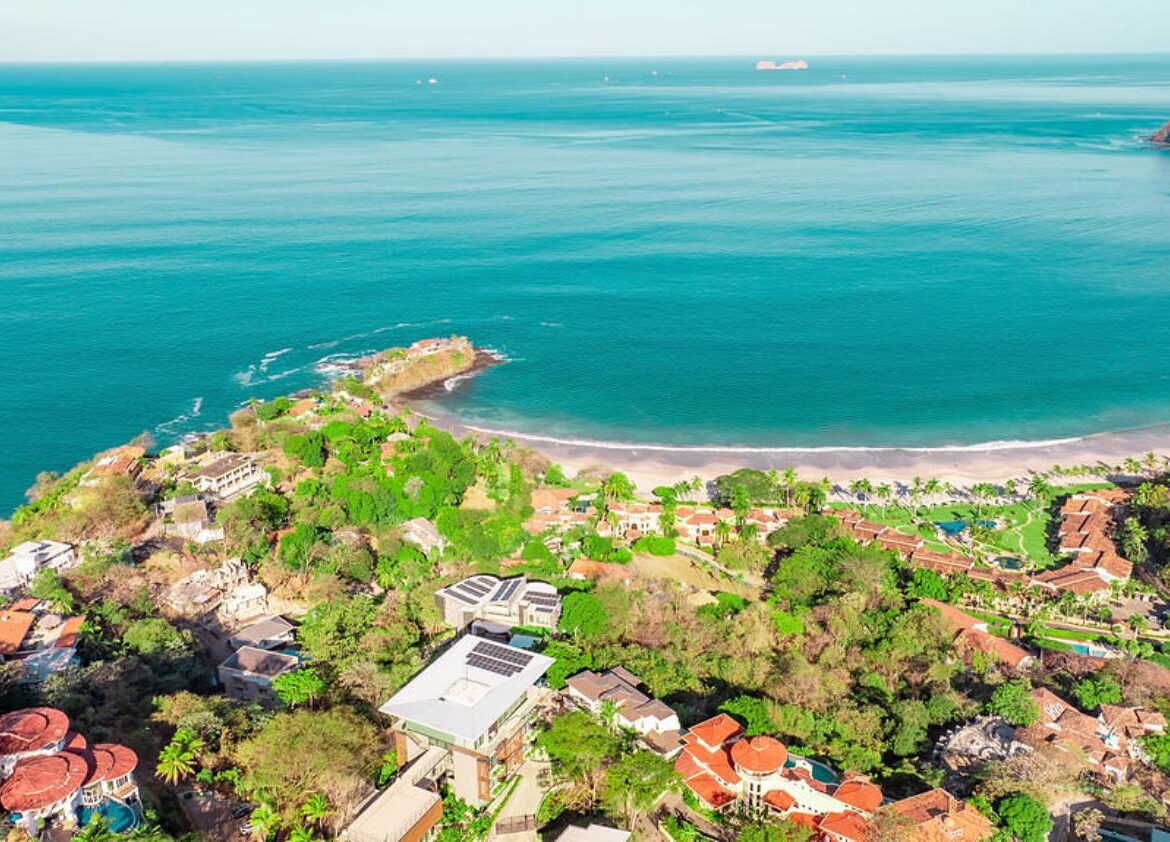
Fun Facts About Costa Rica’s Wildlife, Volcanoes, and World-Class Villas
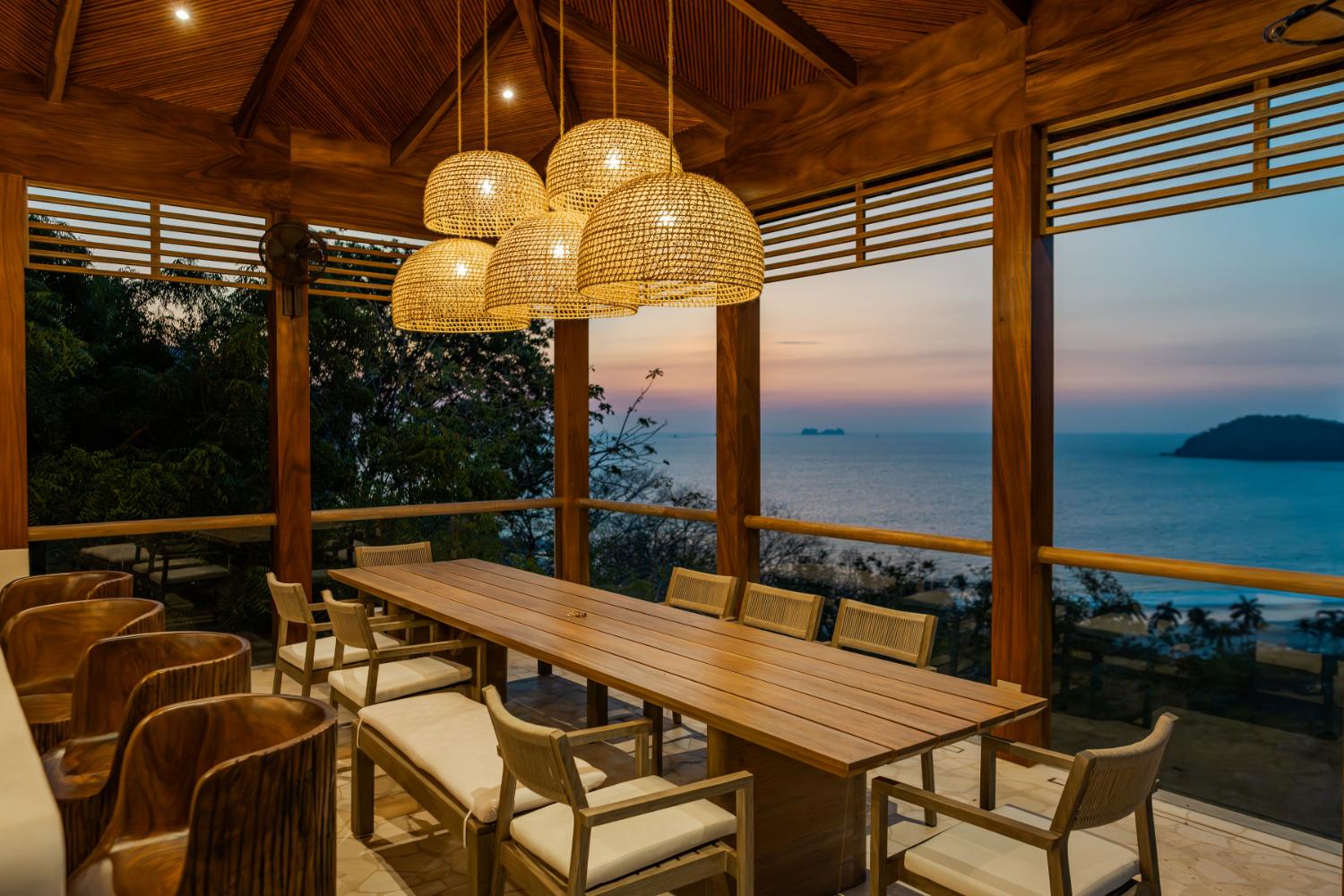
Fun facts about Costa Rica help you see why this compact country is a world-class stage for wildlife, volcanoes, and ultra-luxury villas in one seamless trip. Costa Rica protects around 25–28% of its land as national parks and reserves, one of the highest ratios on the planet (SINAC, 2023). Despite covering only about 0.03–0.3% of Earth’s surface, it shelters roughly 5–6% of global biodiversity, with more than 500,000 species recorded (CEOS, 2024; Kew, 2022). In 2024, over 3.2 million international visitors arrived, many heading straight to private villas overlooking volcanoes and rainforest-backed beaches (UNWTO/Statbase, 2024).
For travelers seeking privacy beyond traditional resorts, discover our handpicked Costa Rica villas—luxury retreats perfect for experiencing the country’s extraordinary biodiversity in complete comfort.
Key Takeaways
- Fun facts about Costa Rica reveal a rare mix of dense wildlife, active volcanoes, and luxury villas within a country smaller than West Virginia.
- Around a quarter of the country is protected land, so many luxury villas back directly onto jungles alive with monkeys, sloths, and scarlet macaws.
- Arenal and other volcanoes create natural hot springs, dramatic skylines, and easy day trips from ocean-view and rainforest villas.
- Microclimates mean you can design a trip that combines cloud forests, Pacific beaches, and volcano hikes in one weeklong stay.
- Haute Retreats curates Costa Rica villas where these fun facts about Costa Rica become your daily reality, from barefoot-luxury surf estates to all-inclusive beachfront compounds.
Last updated: 2026-03-06
Client Experience with Fun Facts About Costa Rica
High-end travelers care about fun facts about Costa Rica because each fact hints at a real moment they can live from a private villa terrace.
Picture a family arriving at a beachfront estate on the Papagayo coast just before sunset. Within minutes, howler monkeys are calling in the treetops and scarlet macaws flash red and gold overhead. The concierge quietly explains that this region sits inside a biological corridor, one of many reasons fun facts about Costa Rica almost always begin with wildlife.
Another couple checks into a sleek jungle villa near Arenal Volcano. Steam rises from the volcano’s flanks while their private chef grills local mahi-mahi. Later that night, they soak in naturally heated pools beneath the stars and realize one of the most underappreciated fun facts about Costa Rica: volcanic activity here translates into effortless spa-level wellness built into the landscape.
Multi-generational groups often choose large compounds like barefoot-luxury beach estates where children can drift between pool and sand while grandparents watch sloths inch along the canopy. Fun facts about Costa Rica, like the country hosting around 5–6% of the planet’s biodiversity, suddenly feel personal when a bright green tree frog appears on the edge of your infinity pool.
Why Costa Rica Captivates Luxury Travelers Who Love Wildlife and Volcanoes
Costa Rica captivates luxury travelers because it layers rainforest wildlife, active and dormant volcanoes, and sophisticated villas into one compact, accessible destination.
For guests who collect experiences rather than souvenirs, fun facts about Costa Rica are more than trivia. They explain why you can wake to monkeys in the trees, have lunch with views of a volcanic crater, and enjoy sunset cocktails at a designer beachfront villa without changing hotels. Short internal flights and well-timed private transfers keep the logistics simple.
The country’s long-standing focus on conservation and renewable energy adds another dimension. Many Haute Retreats villas are set in areas where forest regeneration has brought back toucans, macaws, and even big cats to protected corridors, turning every terrace into a private viewing platform.
Costa Rica’s Biodiversity by the Numbers – Wildlife Fun Facts You Can See from Your Villa Terrace
Costa Rica’s wildlife statistics are some of the most fascinating fun facts about Costa Rica and directly shape what you see from your villa.
The country harbors more than 500,000 species, representing nearly 5% of the planet’s estimated total, despite occupying a sliver of Earth’s surface. Protected areas cover roughly 25–28% of its territory, creating generous buffers of forest, mangrove, and coastal habitat around many villa zones.
Osa Peninsula and Corcovado: Earth’s “Most Intense” Wildlife Hotspot

The Osa Peninsula in southern Costa Rica is often at the heart of the most extreme fun facts about Costa Rica’s wildlife. National Geographic famously described Corcovado National Park as “the most biologically intense place on Earth,” with around 2.5% of global biodiversity squeezed into a tiny area.
From a luxury base on or near the Osa coast, guided walks can reveal all four monkey species, tapirs, crocodiles, and an astonishing array of birds in just a few days. Yet evenings can still mean candlelit dinners by the pool, with the jungle humming just beyond the garden. It’s one of the clearest real-world expressions of the wildest fun facts about Costa Rica.
Monteverde Cloud Forest: Hummingbirds, Hanging Bridges, and Mist
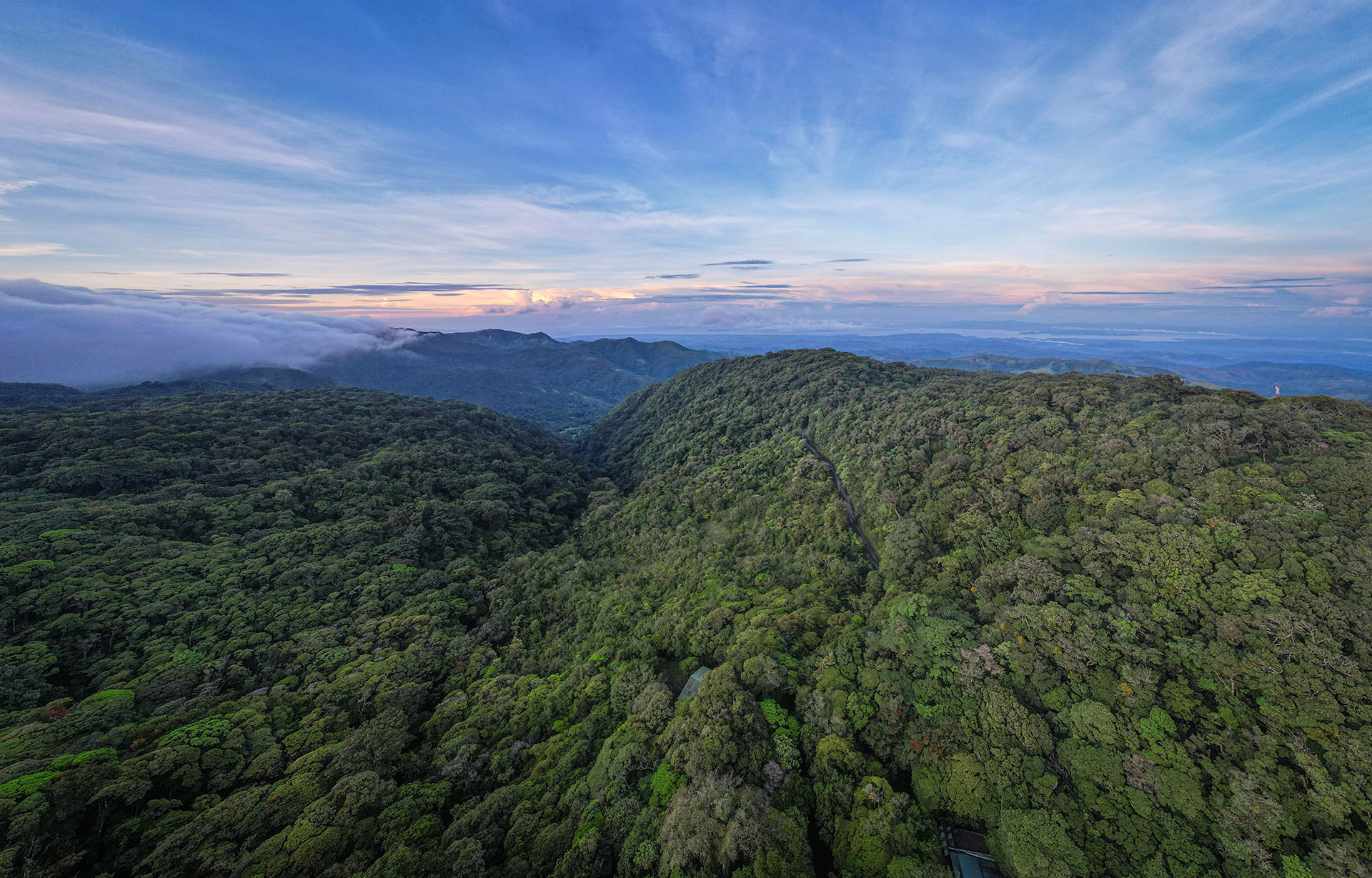
High in the Tilarán Mountains, the Monteverde Cloud Forest Reserve showcases another side of the country’s biodiversity. Cool, misty trails and hanging bridges reveal orchids, hummingbirds, and, with luck, the resplendent quetzal.
Guests often split a trip between a warm coastal villa and a few nights in or near the cloud forest. This contrast makes fun facts about Costa Rica—like having dozens of distinct microclimates—feel tangible. One day you’re surfing in boardshorts; the next, you’re walking through moss-draped trees in a light jacket.
Wildlife you can expect from a luxury villa
Fun facts about Costa Rica’s wildlife statistics become real when you realize how much you can see without leaving your villa. In popular villa regions, guests routinely spot monkeys, sloths, iguanas, and tropical birds from pools and terraces, thanks to extensive protected areas and regenerated forests that border many properties.
Volcano Fun Facts: Arenal, Poás, and Costa Rica’s Fiery Heart

Costa Rica’s volcanoes create some of the most dramatic fun facts about Costa Rica and define entire regions of luxury travel.
The country sits atop the Pacific Ring of Fire and features several major volcanic systems, including Arenal, Poás, Irazú, and Rincón de la Vieja. Their geothermal energy feeds natural hot springs and enriches the soil for coffee, chocolate, and lush rainforests—benefits you experience directly during villa-based stays and private excursions.
Arenal Volcano: Lava Legends and Hot Springs Evenings
Perfectly conical Arenal Volcano, once one of the world’s most active volcanoes, now spends more time steaming quietly than erupting. Yet the region remains one of the most popular areas for travelers drawn by fun facts about Costa Rica’s volcanic history.
Guests staying in Pacific villas often take a day trip or overnight excursion to Arenal for ziplining, hanging bridges, and soaking in hot springs surrounded by rainforest. A private driver and guide arranged through Haute Retreats make it a comfortable adventure, with every detail—from towels to dining—handled in advance.
Poás and Irazú: Day-Trip Craters Above the Clouds
Closer to San José, Poás Volcano and Irazú Volcano offer vast craters and surreal, high-altitude landscapes. On clear mornings, visitors may see both Pacific and Caribbean coasts from viewpoints near Irazú’s summit.
For villa guests, these volcanoes often bookend a trip: a quick crater visit upon arrival or departure, paired with a longer stay on the coast. They reinforce fun facts about Costa Rica’s compactness—you can go from cloud-line craters to warm ocean swims in a few hours of scenic driving.
Microclimates, Coasts, and When to Visit for the Best Wildlife and Volcano Views
Choosing when to visit is one of the most practical fun facts about Costa Rica because microclimates define what you see and how it feels day to day.
Dry Season vs Green Season: Choosing Your Ideal Month
For wildlife, some of the best fun facts about Costa Rica involve timing. In the dry season, animals often concentrate near remaining water sources, making sightings easier along riverbanks and forest edges. In the green season, migratory birds and whales add extra drama offshore, while waterfalls swell.
From a villa perspective:
- December–April: Peak holiday, spring break, and Easter demand translate into higher nightly rates and longer minimum stays in prime villa zones.
- May–August: Still school-holiday friendly but with better value; excellent for families who want both beach and rainforest.
- September–October: Wetter on much of the Pacific coast but often ideal for the Caribbean side.
Every one of these patterns feeds into fun facts about Costa Rica that your Haute Retreats concierge uses when advising on travel dates for specific groups and occasions.
Where to Stay in Costa Rica for Luxury Experience – Pacific, Caribbean, and Inland Regions
The most useful fun facts about Costa Rica for villa guests answer a simple question: where should I base myself?
Haute Retreats focuses on high-end regions where wildlife, beaches, and service standards align. The Pacific coast, especially Guanacaste, Papagayo, Tamarindo, and Santa Teresa, offers the densest cluster of luxury villas, with easy access from Liberia Airport. Inland, Arenal and Monteverde add volcano and cloud-forest extensions.
Papagayo Peninsula and Prieta Bay: Ultra-Luxury Beachfront Estates

On the Papagayo Peninsula, villas such as Villa Avellana Costa Rica deliver the sort of fun facts about Costa Rica that billionaire travelers talk about later: 10 suites, over 33,000 square feet of indoor–outdoor living, and three acres of private beachfront on Prieta Bay.
This area suits multi-generational families and celebratory groups who want boat access, golf, and top-tier security alongside raw natural beauty. It’s also a strong match for guests inspired by broader luxury travel trends 2026 that favor private compounds over traditional resorts. Read more in Haute Retreats’ guide to luxury travel trends 2026.
Tamarindo and Langosta: Surf Town Energy with Private Villas
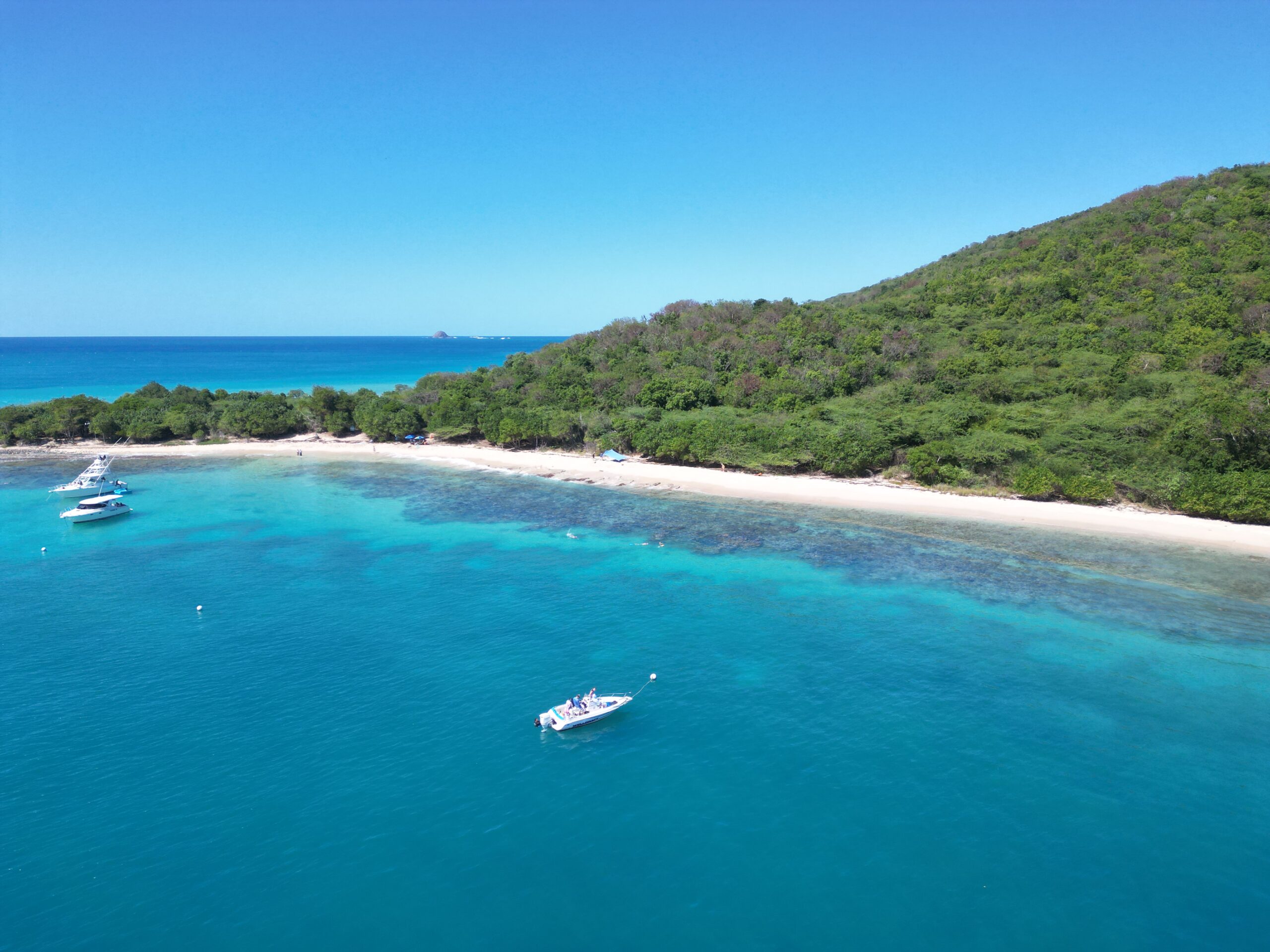
Near the lively surf town of Tamarindo and Playa Langosta, villas like Villa Monoi Costa Rica combine walkable beaches with fully private pools and gardens. Fun facts about Costa Rica’s Pacific sunsets become your nightly ritual here; the sky often turns electric pink and orange while kids play in the pool and adults enjoy cocktails on shaded terraces.
This zone is ideal for families with older children or groups who want both nightlife and quiet. It’s also a natural fit for travelers exploring Luxury Spring Break Destinations and looking for a base that balances fun with privacy.
Santa Teresa and the Nicoya Peninsula: Barefoot Luxury and Surf Culture
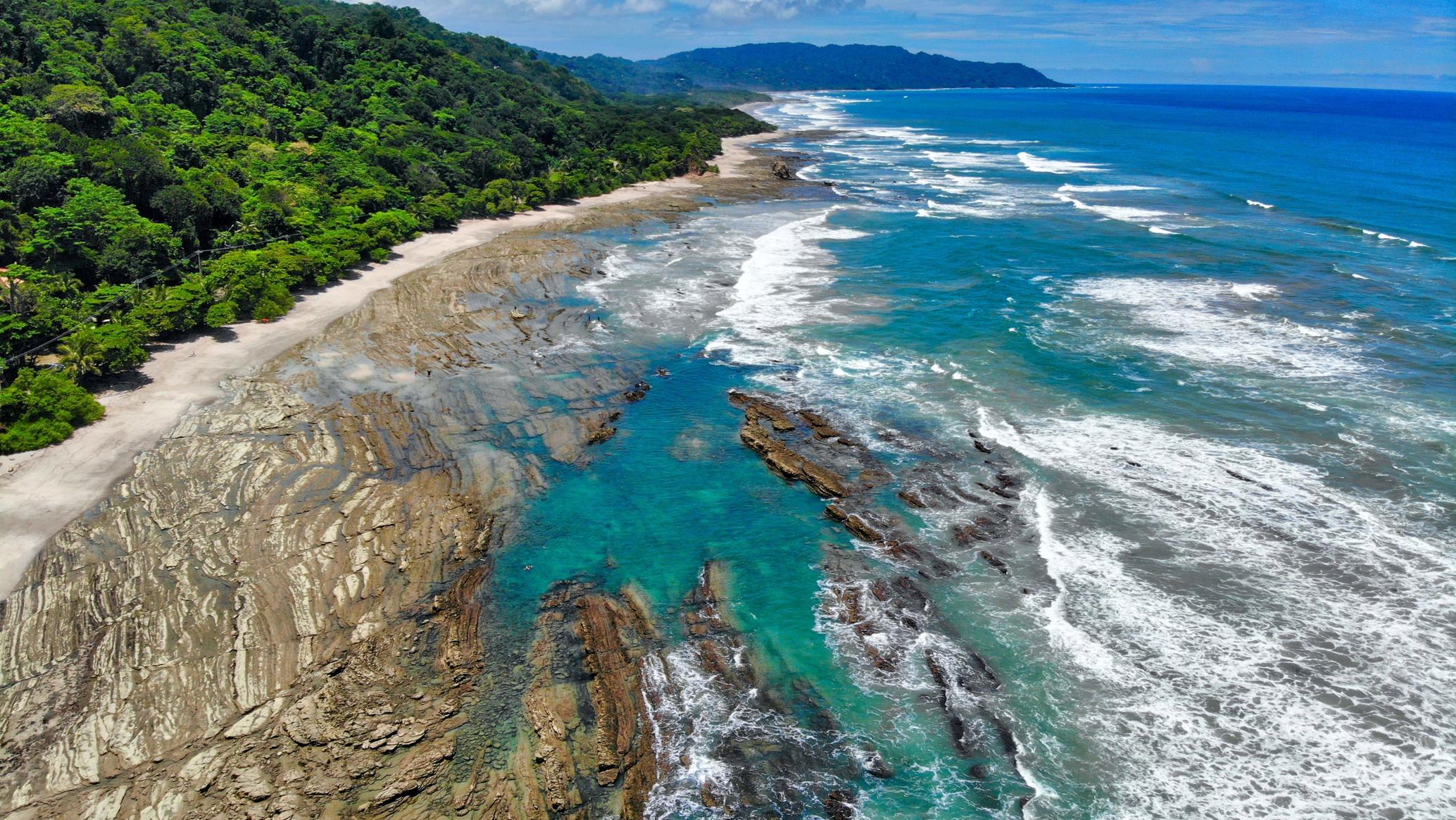
Farther down the Pacific, the Nicoya Peninsula and beach town of Santa Teresa channel a different set of fun facts about Costa Rica—blue zones, surf breaks, and wellness communities. Villas like Casa Taman Costa Rica sit just steps from the sand yet remain deeply private, surrounded by tropical gardens.
Santa Teresa suits design-conscious couples, small groups, and wellness travelers. It’s also one of the most popular regions for guests blending Luxury Honeymoon Destinations research with the spontaneity of a surf village.
Best regions for a first villa stay
For a first villa-based trip built around fun facts about Costa Rica, most high-end travelers choose Guanacaste’s Papagayo Peninsula or Tamarindo/Langosta for easy access and reliable weather, then add either Arenal or Monteverde for volcanic and cloud-forest experiences. Santa Teresa and the Nicoya Peninsula offer a more bohemian, surf-forward take on luxury, ideal for return visitors or design-led honeymoons.
What a True Luxury Costa Rica Villa Includes – Beyond the View
A true luxury Costa Rica villa is defined less by its square footage and more by its staffing, privacy, and integration with place.
The most rewarding fun facts about Costa Rica villas involve service: private chefs sourcing local ingredients, concierges quietly orchestrating everything from catamarans to helicopter transfers, and housekeepers who refresh spaces while respecting family rhythms. Many Haute Retreats properties also prioritize sustainability, from solar power to native landscaping that supports local wildlife.
Staff, Chefs, and Private Guides: Service Levels Explained
Service levels typically range from light (housekeeping and on-call concierge) to fully staffed (chef, butler-style attendants, and dedicated driver). Fun facts about Costa Rica’s hospitality culture—warm, informal, and guest-focused—show up in details like packed beach coolers, kid-friendly snacks, and multilingual guides who can spot a quetzal at 100 meters.
Haute Retreats’ luxury travel concierge framework helps you decide what you need, from airport fast-track services to in-villa spa teams: https://hauteretreats.com/luxury-travel-concierge-bespoke-villa-stays/
Design, Sustainability, and Wellness: Eco-Luxury Done Well
Many villas weave in passive cooling, cross-ventilation, and natural materials. Some estates sit within rewilded forests or alongside conservation projects, turning eco-conscious fun facts about Costa Rica into tangible contributions during your stay.
Wellness features might include yoga decks, cold plunges, sauna pods, and partnerships with local healers or surf coaches. This makes Costa Rica as suitable for corporate wellness retreats as it is for honeymoons and family escapes.
Price Ranges for Costa Rica Villas and What You Actually Get
Understanding price ranges is one of the most practical fun facts about Costa Rica for serious planners.
Broadly, expect:
- Entry luxury (typically smaller 3–4 bedroom villas): from around USD 1,200–2,000 per night outside peak dates.
- Core high-end (4–6 bedroom beachfront or view villas): from roughly USD 2,500–5,000 per night, especially in Guanacaste and Nicoya.
- Flagship estates (8–10+ bedroom compounds like Villa Avellana Costa Rica): often USD 6,000–12,000+ per night in peak weeks, with all-inclusive or semi-inclusive pricing.
Rates shift with season, villa uniqueness, and staffing level. The most important financial fun facts about Costa Rica villas are minimum stay policies (often 5–7 nights in festive seasons), premium pricing over Christmas/New Year, and the value of shoulder-season weeks for longer, more relaxed stays.
Comparison Table – Sample Costa Rica Villa Experiences
| Region / Experience | Best For | Location / Context | Key Features | Approx. Nightly Villa Rate* | Notable Highlight |
|---|---|---|---|---|---|
| Papagayo, Prieta Bay beachfront estate | Multi-gen groups, milestone events | Guanacaste Pacific coast | 10 suites, infinity pool, beachfront, full staff, boat access | $6,000–12,000+ | Private-resort feel at Villa Avellana Costa Rica |
| Tamarindo/Langosta gated beach villa | Families, surf-lovers, spring breaks | Walkable surf town + quiet community | 4–5 bedrooms, pool, chef services available, near restaurants | $2,500–4,500 | Easy balance of privacy and town energy at Villa Monoi |
| Santa Teresa barefoot-luxury surf estate | Design-led honeymoons, wellness groups | Nicoya Peninsula surf + yoga hub | Beachfront, modern architecture, lush gardens, optional yoga staff | $3,500–7,000 | Steps from waves at Casa Taman Costa Rica |
*Approximate, indicative ranges for high season; exact quotes vary by dates, inclusions, and group size.
What your budget actually buys
Fun facts about Costa Rica villa pricing show a clear pattern: as nightly rates rise, you’re not just paying for more bedrooms, but for beachfront position, staff level, and uniqueness of setting. Entry-level luxury gives you private pools and views; flagship estates add all-inclusive dining, curated experiences, and the sense of occupying your own boutique resort.
Definitions and Key Costa Rica Terms for Villa Guests
Knowing a few local terms turns abstract fun facts about Costa Rica into useful tools when you read villa descriptions and itineraries.
- Pura vida: The national catchphrase, loosely “pure life,” used as greeting, thanks, or “all good.” Expect to hear it everywhere.
- Tico / Tica: Informal term for Costa Rican men (Tico) and women (Tica).
- Dry season / verano: December–April on most of the Pacific coast; popular for beach villas and events.
- Green season / invierno: May–November; wetter, greener, often better value, and beloved by wildlife photographers.
- Sodas: Small, local eateries serving typical Costa Rican dishes—perfect for casual lunches between villa-based experiences.
- Blue zone (Nicoya): A region where people live unusually long, healthy lives, one of the more fascinating fun facts about Costa Rica’s Nicoya Peninsula.
What to Watch Out For
- Seasonality and peak dates: Christmas, New Year, Easter, and key school holidays can double or triple nightly rates and require early booking in prime villa regions.
- Minimum stay rules: Many top villas insist on 5–7 night minimums in high season and for events, one of the more important practical fun facts about Costa Rica villas.
- Roads and access: Some of the most spectacular properties are reached by steep or unpaved roads; 4×4 vehicles and daytime arrivals are strongly recommended.
- Weather contrasts by region: While the Pacific may be sunny, the Caribbean or cloud forest can be rainy the same day—microclimates are a key part of fun facts about Costa Rica.
- Activity and event policies: Noise curfews, visitor caps, and restrictions on amplified music can apply, especially in protected or residential zones.
- Inclusions vs extras: Clarify what your rate covers—chef labor, ingredients, premium spirits, spa treatments, and boat charters are often additional.
Designing Your Costa Rica Villa Stay with Haute Retreats
When you put all the fun facts about Costa Rica together—its biodiversity, volcanoes, microclimates, and villa culture—you get a destination that rewards careful, thoughtful planning.
Haute Retreats curates Costa Rica villas that sit at the intersection of wild beauty and refined comfort, from Prieta Bay compounds to surf-chic Nicoya estates: Costa Rica Villas If you’re still torn between Costa Rica and other Luxury Honeymoon Destinations or Luxury Spring Break Destinations, Haute Retreats’ editors and concierge team can compare options, dates, and villas with quiet precision.
For travelers who follow evolving luxury travel trends 2026, Costa Rica offers something rare: a place where the most memorable fun facts about Costa Rica can be heard in the rustle of palm leaves, the call of monkeys at dawn, and the soft echo of waves beyond your private pool. From there, the next step is simple—request a tailored proposal and let the planning unfold.