

Do You Need a Passport for the Caribbean? What Travelers Should Know

For most Caribbean trips, yes—you do need a passport for the Caribbean, especially if you are flying internationally. The main U.S.-citizen exceptions are Puerto Rico, the U.S. Virgin Islands, and some closed-loop cruises, but even there, a passport book is usually the safest choice because it protects you if plans change or you need to fly home unexpectedly. The broader context matters: the Caribbean recorded an estimated 34.2 million overnight arrivals in 2024, and roughly 26.7 million overnight visits in the first nine months of 2025, while current U.S. passport processing times were 4–6 weeks routine and 2–3 weeks expedited as of January 2026 (CTO, 2025; U.S. Department of State, 2026).
What our guests experienced in the Caribbean
For high-end travelers, do you need a passport for the Caribbean matters because one document mistake can unravel an otherwise seamless villa escape.
The pattern is familiar. A family chooses a beautiful island, secures a private driver, requests a chef for arrival night, and assumes the hardest part is over. Then someone notices a passport expiration date, a child without the right document, or a routing detail through Sint Maarten or Miami that changes the rules.
Luxury travelers tend to value ease, privacy, and confidence. They want the airport handoff to feel as polished as the villa check-in, and they want children, grandparents, or friends arriving on separate itineraries to move through the trip without friction.
The positive surprise is that the Caribbean can be very straightforward once the document chain is handled first. The negative surprise is that “the Caribbean” is not one rule set: Puerto Rico, St Barts, Aruba, Anguilla, and a closed-loop cruise do not operate under the same logic.
The direct answer to do you need a passport for the Caribbean
For almost every Caribbean island reached by international flight, do you need a passport for the Caribbean is answered with yes.
U.S. official guidance says U.S. citizens are generally required to present a valid passport to travel to The Bahamas, and State Department country pages also require passports for places such as Aruba and the French West Indies. Anguilla’s official guidance likewise requires a valid passport for entry.
The two major U.S.-citizen exceptions are Puerto Rico and the U.S. Virgin Islands, which USA.gov lists as U.S. territories that do not require a passport for travel between the U.S. and those destinations. That does not eliminate ID requirements at the airport, however, because TSA began REAL ID enforcement on May 7, 2025.
For non-U.S. citizens, do you need a passport for the Caribbean should almost always be treated as yes until you verify your nationality-specific rule. IATA’s Travel Centre is designed for exactly this problem: it personalizes passport, visa, and health rules by traveler profile and itinerary.
If you are asking that question, the reliable editorial rule is simple: assume yes unless you are a U.S. citizen traveling to Puerto Rico or the U.S. Virgin Islands, or you are on a qualifying closed-loop cruise. Even then, a passport book is usually the least risky document because airlines and emergency rerouting can be stricter than the destination’s minimum.
Puerto Rico and the U.S. Virgin Islands are the main U.S.-citizen exceptions
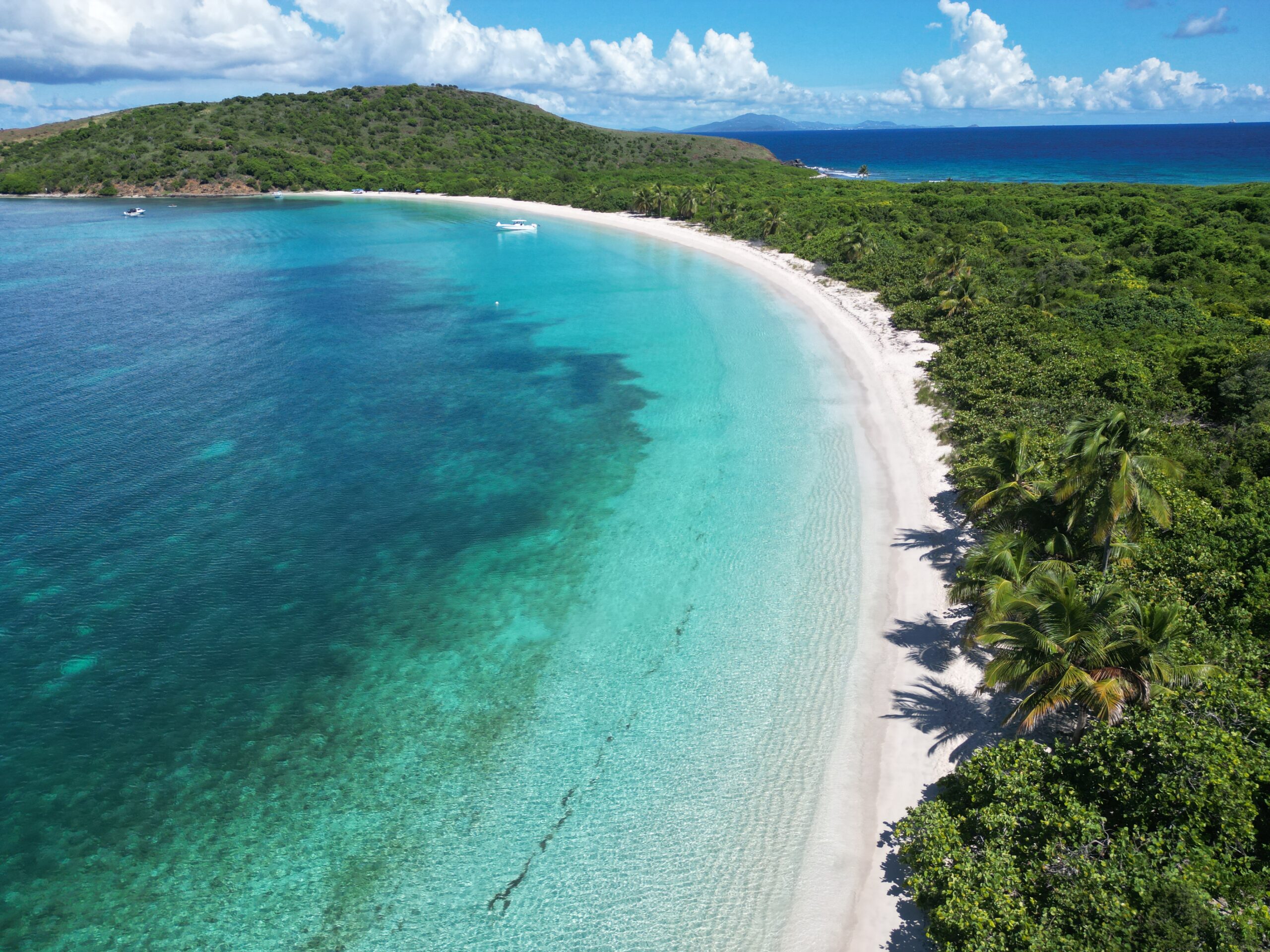
If your goal is the lowest-friction answer to do you need a passport for the Caribbean, Puerto Rico and the U.S. Virgin Islands are the clearest exceptions for U.S. citizens.
USA.gov states that U.S. citizens do not need a passport to travel between the mainland U.S. and Puerto Rico or the U.S. Virgin Islands. The U.S. Department of State’s Puerto Rico and U.S. Virgin Islands pages say the same.
The practical caveat is airport ID. TSA says non-REAL ID state licenses are no longer accepted at airport checkpoints, and that change has been in force since May 7, 2025. A passport book or passport card can also function as acceptable ID for domestic flights.
For affluent travelers booking on a shorter lead time, this is where document reality can shape destination choice. If the passport window is tight, a villa stay in Puerto Rico or the U.S. Virgin Islands can preserve beach time, privacy, and domestic-style arrival ease without downgrading the experience.
That is also why many travelers begin with curated planning rather than a generic island list. A well-matched itinerary through Haute Retreats’ Caribbean villa rentals and luxury resorts collection or its guide to the best Caribbean islands for families on vacation can align entry ease with the right beach, staffing level, and family rhythm.
Closed-loop cruises from Miami, Fort Lauderdale, and other U.S. ports change the rule—but not the risk
:max_bytes(150000):strip_icc()/TAL-maimi-florida-BESTUSCITY1124-280bb08e0d6a478baad7f8c05e64324c.jpg "Do You Need a Passport for the Caribbean? What Travelers Should Know 3")
For some cruises, do you need a passport for the Caribbean becomes “not always,” but that is a narrow exception rather than a broad travel rule.
CBP says U.S. citizens on closed-loop cruises can use proof of citizenship and government-issued ID to enter or depart the country, and WHTI governs land and sea re-entry from the Caribbean. The State Department adds a crucial warning: cruise passengers are strongly advised to carry a passport book anyway.
The reason is simple. If you miss the ship, have a medical emergency, or your itinerary changes, you may need to fly internationally back to the United States. A passport card is not valid for international air travel, even though it can be used for certain land and sea returns.
Answer: For cruise travelers, do you need a passport for the Caribbean depends on whether the sailing is closed-loop and on what happens if the trip stops being straightforward. The legal minimum may be lower, but the practical minimum for a high-value trip is usually a passport book, because it keeps medical, weather, and rerouting problems from becoming document problems.
St Barts, Anguilla, Aruba, and The Bahamas make the baseline clear: bring the passport book

When travelers ask do you need a passport for the Caribbean for classic villa islands, the answer is usually yes.
For The Bahamas, the U.S. Department of State says U.S. citizens are generally required to present a valid U.S. passport, while Bahamas Immigration says passports are required by all persons entering the country. For Aruba, the State Department says U.S. travelers need a passport valid for the duration of stay. For Anguilla, both the State Department and GOV.UK require a valid passport.
For UK travelers, the variation is equally instructive. Antigua and Barbuda guidance says six months’ validity is required, Anguilla requires validity for the duration of stay, and the Dominican Republic currently allows British tourists to enter through December 31, 2026 as long as the passport remains valid for the visit. That spread is exactly why “Caribbean rules” should never be treated as one-size-fits-all.
This is also the point where trip style matters. If your preference leans toward design, privacy, and dining, Haute Retreats’ St Barts luxury villa rentals guide and best beaches in the Caribbean guide are useful next reads, but the document check comes first.
Validity, blank pages, and transit points matter more than most travelers expect
The hardest version of do you need a passport for the Caribbean is often not the destination itself but the passport’s condition and the route you take.
Blank pages matter too. The State Department’s Anguilla page specifies one blank page for the entry stamp, and the department’s cruise guidance recommends a passport valid at least six months beyond travel dates and two or more blank pages.
Transit can quietly raise the standard. A traveler headed to St Barts through Sint Maarten, or to another island via Miami or San Juan, is still judged by airline document checks before the elegant part of the trip even begins. That is why do you need a passport for the Caribbean is best answered across the whole routing chain, not only at the final island.
A comparison table for choosing the right document path
The fastest way to answer do you need a passport for the Caribbean is to match your trip type to the document scenario.
| Entity / Option | Best For | Location / Context | Key Features | Passport Rule | Notable Highlight |
|---|---|---|---|---|---|
| Puerto Rico | Last-minute U.S. trips | Domestic-style flight for U.S. citizens | Easy arrival, urban energy, beach add-ons | No passport for U.S. citizens | Strong choice when passport timing is tight |
| U.S. Virgin Islands | Families and multi-gen groups | Domestic-style route for U.S. citizens | Island scenery with simpler entry | No passport for U.S. citizens | Good balance of Caribbean feel and lower document friction |
| Closed-loop cruise | Travelers already committed to cruise routing | Same U.S. port round-trip | Some WHTI alternatives may work | Sometimes no passport | Least flexible if you need to fly home |
| The Bahamas / Aruba / Anguilla | Classic island holidays | International air arrival | Straightforward rules if documents are in order | Yes | Best for travelers who want simplicity once they land |
| St Barts / French West Indies | Design-led, dining-forward villa stays | International air plus possible transit | Higher payoff, more detail sensitivity | Yes | Best handled with a passport book and generous validity cushion |
Editorial synthesis based on official U.S., Caribbean, and UK entry guidance.
How to answer do you need a passport for the caribbean before you book
The most reliable way to answer do you need a passport for the Caribbean is to check the traveler, the routing, and the island in that order.
- List every traveler exactly as ticketed. Confirm full legal names, citizenship, residency status, and passport expiration dates before you compare villas or flights.
- Map the exact route. Note every airport and transit point, because a routing through Miami, San Juan, or Sint Maarten can matter as much as the final island.
- Decide whether the destination is domestic-style or international. For U.S. citizens, Puerto Rico and the U.S. Virgin Islands are the major no-passport exceptions; most other Caribbean destinations are not.
- Check whether the trip is a closed-loop cruise or an air itinerary. If it is a cruise, verify whether WHTI documents are accepted and remember that a passport card still does not solve international air return.
- Match your passport validity to the strictest rule in the chain. When sources vary, use the toughest standard and add cushion rather than gambling on the minimum.
- Check every child separately. All children, including infants, need their own travel documents for international trips, and minors may also need consent paperwork depending on the destination and who is traveling with them.
- Only then choose the island by style. Use a passport-light option for urgency, or move into design-forward islands when your documents are comfortably in order; Haute Retreats’ Luxury honeymoon destinations, Luxury spring break destinations, and luxury travel trends 2026 guides help narrow the mood after the paperwork is settled.
- Request one final document check before paying non-refundable components. That is particularly important for multi-island stays, holiday weeks, and premium air itineraries where change costs can eclipse the time it would have taken to verify documents properly.
When a passport-free route is worth it—and when it is false economy for luxury travelers
Sometimes the most elegant answer to do you need a passport for the Caribbean is to choose a destination that does not force the issue.
That can make perfect sense for a short-notice family trip, a spring holiday built around school calendars, or a group where one traveler’s passport is too close to expiration. In those cases, Puerto Rico or the U.S. Virgin Islands may protect the trip better than chasing a more complex island on a weaker document timeline.
But avoiding a passport when you actually want St Barts, Anguilla, Turks and Caicos, or a French-Caribbean rhythm can become false economy. The document stress disappears once it is solved, while the right island’s privacy, architecture, beach quality, staffing, and dining scene shape every hour of the stay.
For that reason, affluent travelers often benefit from a planning lens that combines documents with experience design. Haute Retreats’ Luxury travel concierge, Do you need a passport for St Barts?, Do you need a passport for the Bahamas?, and The Ultimate Guide to Things to Do in Dominican Republic help move from paperwork to a more tailored island fit.
What to Watch Out For
- REAL ID confusion: A domestic-style trip to Puerto Rico or the U.S. Virgin Islands still requires acceptable airport ID, and non-compliant state IDs are no longer accepted at TSA checkpoints.
- Cruise exceptions that look broader than they are: Closed-loop rules can help, but they do not solve the problem of an unexpected international flight home.
- Passport cards used for the wrong trip type: A U.S. passport card is not valid for international air travel, even though it works for some land and sea returns.
- Validity mismatches across destinations: In the Caribbean, one island may require validity only for the stay while another or its transit chain expects months of cushion.
- Children overlooked in the document check: International family trips require documents for every child and infant, not only the adults.
- Late passport timing: As of January 2026, routine U.S. passport processing was 4–6 weeks and expedited service was 2–3 weeks, with mailing time on top.
Plan the Caribbean with confidence, not document drama
The smartest version of do you need a passport for the Caribbean is not just a yes-or-no answer; it is a planning filter. Get the documents right first, then choose the island that actually matches your pace, privacy expectations, family setup, and service style. When that order is respected, the Caribbean feels exactly as it should: easy, polished, and deeply restorative.
For a next step, explore Haute Retreats’ curated island collection, compare travel styles through the brand’s editorial guides, or request a more tailored villa path once your route and documents are clear.