Is Spain Safe? What Luxury Travelers Actually Need to Know

Is Spain Safe? What Luxury Travelers Actually Need to Know
The answer is yes. But that’s not the question worth asking.
If you’re asking “is Spain safe,” the short answer settles nothing useful. Spain welcomed 94 million international visitors in 2024 — a number that should make you anxious about availability, pricing, and crowds long before it makes you anxious about your safety. The US State Department issues a Spain travel advisory you can check before any trip. So does everyone who has spent serious time there and isn’t writing for clicks.
The more useful question is: safe for whom, doing what, and where? Because the Spain a considered traveler moves through looks nothing like the one generating headlines about pickpockets and protest marchers.

Is Spain Safe? The Reality: Petty Theft, Not Violent Crime
Let’s be precise about what spain safety discussions are actually about: opportunistic theft. Not violent crime. Not a hostile environment. Pickpocketing in tourist corridors — La Rambla, the queue for the Sagrada Família, Madrid’s Gran Vía at peak hour.
These are real. They are also predictable, manageable, and structurally irrelevant to how most luxury travelers move.
Stay at the Hotel Arts in Barcelona and your daily radius looks different from someone dragging a roller bag through the Gothic Quarter. Your transfers are arranged. Your itinerary doesn’t involve standing in a two-hour queue with a phone in a back pocket. The architecture of how you travel changes the exposure profile. Considerably.
Spain’s Global Peace Index ranking sits at 29th out of 163 countries (Institute for Economics and Peace, 2025). That places it above the United States (131st) and the United Kingdom (34th). The violent crime rate is low by any European benchmark. The issue isn’t crime — it’s density. When you concentrate 94 million visitors in the same postcode, opportunists follow.
The Anti-Tourism Protests: What They’re Actually About
The anti-tourism movement in Spain got real coverage between 2024 and 2025. Málaga saw marches against Airbnb-driven rents. In Barcelona’s Barceloneta, locals deployed water pistols at tourists in beach bars — which sounds alarming until you register that the target demographic was 22-year-olds in swim shorts ordering €5 sangría at noon, not guests at the W Barcelona contemplating a cabana upgrade.
In the Canary Islands and Palma, the protests were about housing costs and carrying capacity. Legitimate policy grievances. Not hostility toward individuals. Spain is safe to visit — these are disputes about policy, not personal safety.
None of this has turned violent toward tourists. None of it has created zones that are unsafe to visit. What it has created is a colder ambient mood in certain areas — particularly in neighborhoods where short-term rentals have displaced long-term residents. You may notice this. It’s not dangerous. It is, arguably, information.
That said: if your preferred accommodation model involves a platform that’s currently pricing out local families in residential neighborhoods, the moral dimension exists even if the personal safety dimension doesn’t. Something to factor in when you’re choosing between that apartment listing and a properly-run villa operation.
Which Spain Are You Visiting?
Spain is eight distinct places pretending to be one country. What being safe in Spain looks like varies considerably between them.
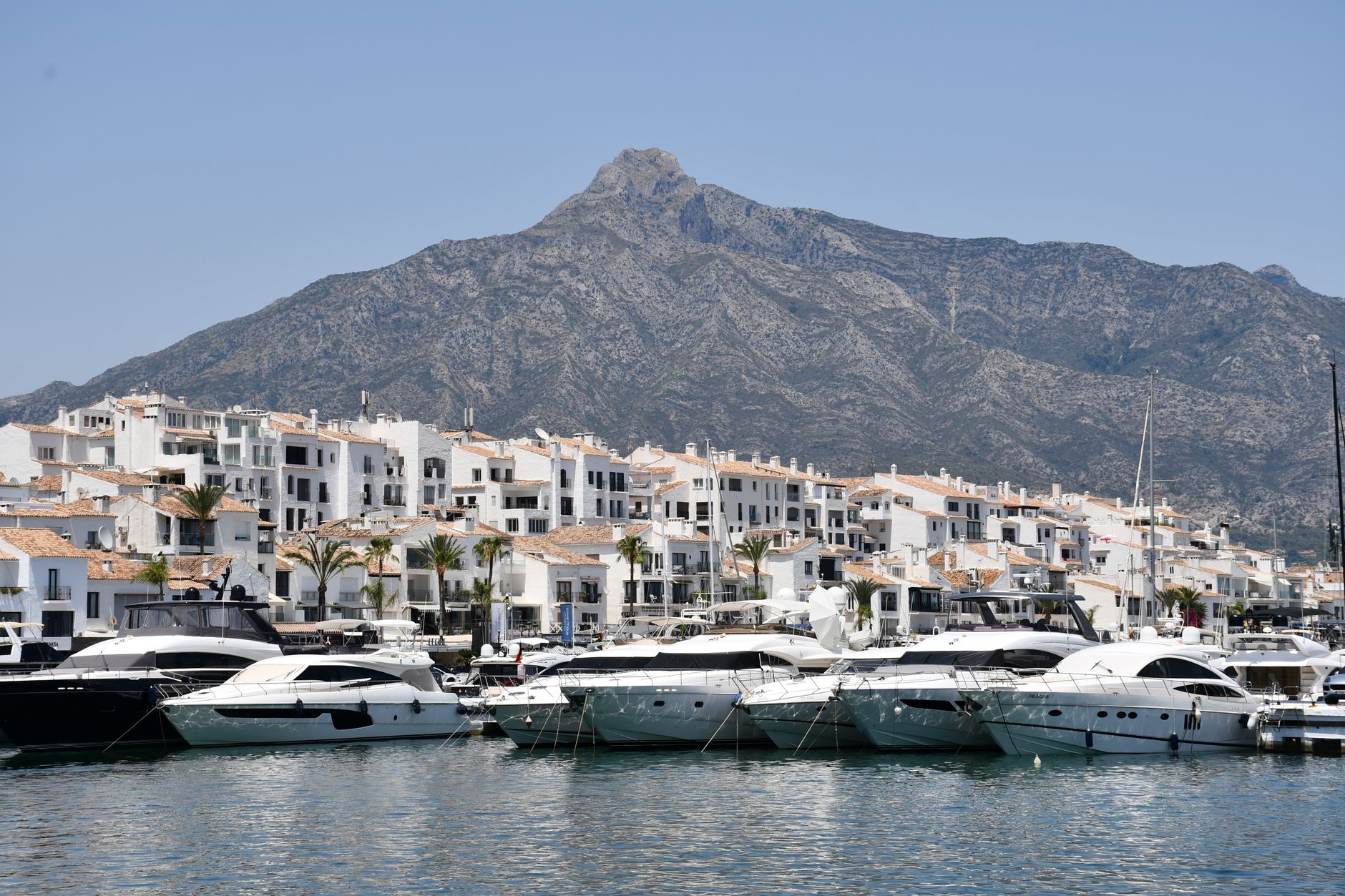
Marbella and the Costa del Sol: Extremely safe, heavily policed, large international community, the kind of infrastructure that exists specifically to make high-net-worth visitors comfortable. The biggest risk on the Golden Mile is an impulsive afternoon at Puente Romano that costs more than planned. Serious risk-adjusted assessment: negligible. If you’re considering a base on the Costa del Sol, luxury villas on the Costa del Sol cover the full range from Golden Mile estates to hillside retreats above Benahavís.
Ibiza: The village and the north of the island are calm, genuinely charming, and the kind of place you can walk at night without a second thought. Playa d’en Bossa at 4am is a different assessment — not because it’s dangerous, but because the crowd is not one that tends toward careful decisions, including about whose phone they pick up. The interior villas, Sant Joan, and the north coast exist entirely outside that ecosystem. Robb Report has been tracking Ibiza’s evolution into a serious luxury destination for some time now — the north and interior of the island are exactly what they describe. Private villas in Ibiza in that northern corridor sit well outside the noise geography.
Barcelona: The one that earns the reputation. The Gothic Quarter and La Rambla operate the same way any high-density tourist corridor does in Europe — with the added efficiency of a well-organized local theft ecosystem. The upscale neighborhoods Eixample, Sarrià-Sant Gervasi, Pedralbes have a different texture entirely.
The issue isn’t that Barcelona is dangerous. It’s that the tourist concentration is extraordinary, and the policing has been inconsistent. Know where you’re staying. Know where you’re walking.
Madrid: Uniformly safe across every major district. Lavapiés, which gets some attention, is a working-class neighborhood with good restaurants not a no-go zone by any credible measure. The city has largely avoided the anti-tourism hostility Barcelona has developed, partly by design, partly by having room for it.
Andalucía: Seville’s historic center requires the same baseline alertness as any packed tourist zone. Everything else the hill towns, the coast, the wine country is unhurried and relaxed in the way southern Spain does well.
The Honest Assessment: Is Spain Actually Safe?
There’s something people who spend real time in Spain know and don’t often say directly: the safety anxiety is disproportionate to the actual risk — but it’s not entirely manufactured.
Spain’s tourism infrastructure is overwhelmed in places. That creates frictions: crowded metro cars, strained policing, the kind of density that suits thieves. The country processed 94 million visitors last year. If a small percentage of encounters are negative, the absolute number sounds large.
For the traveler staying in a curated luxury villa with concierge and driver arrangements, the risk profile is close to zero. For the traveler moving through peak-season Barcelona with a loose bag, a visible camera, and a Lonely Planet in their hand, the exposure is real — not because Spain is dangerous, but because they’ve created the conditions for the specific thing Spain is occasionally criticized for.
Travel with the same calibrated awareness you’d bring to Paris, Rome, or any city that gets 15 million visitors a year. That’s the entirety of the guidance.

What Actually Threatens a Good Trip to Spain
For the traveler spending serious money, the question of whether spain travel is safe has an easy answer: yes. The real risks worth planning around have nothing to do with crime.
Heat: Seville in August sits regularly above 40°C. Granada and Córdoba are similar. Choosing peak heat season for Andalucía because it fits the calendar is not a calibrated choice. The same itinerary in May or late September is a different experience entirely.
Crowds: The spain overtourism problem is real in a logistical sense. Alhambra tickets sell out months in advance. The Sagrada Família requires planning. The island of Formentera in August is a specific kind of crowded that no amount of money fully insulates you from.
Regulatory change: Spain is actively restricting short-term rentals. Barcelona has banned new tourist apartment licenses. Madrid is tightening. The Balearics have caps. If your accommodation strategy depends on platforms currently under regulatory pressure, your options may narrow faster than you expect. This matters more to most luxury travelers than petty theft ever will.
What People Actually Ask
Is Spain safe to visit right now? Yes. The US State Department Spain travel advisory 2026 applies standard precautions no restricted zones, no warnings for any major tourist region.
Is Barcelona safe for tourists? Broadly yes. The overall spain safety picture is fine — the specific risk is concentrated in La Rambla, the Gothic Quarter, and El Born at peak hours. Upscale neighborhoods — Eixample, Sarrià-Sant Gervasi — are calm. Don’t carry everything you own in a crowd and you will be fine.
Are the anti-tourism protests dangerous for visitors? No. Spain is safe for tourists; the protests are political demonstrations about housing policy and overtourism economics. They have not turned violent toward tourists and are not present in the areas where most luxury travel takes place.
Is Marbella safe? Marbella has one of the highest concentrations of private security on the Iberian peninsula. It is safe. Luxury villas in Marbella — particularly in gated estates on the Golden Mile and above Nueva Andalucía — operate with private security as a baseline feature, not an upgrade. Robb Report’s coverage of the new resort communities opening on the Costa del Sol reflects how much infrastructure has been built specifically around high-net-worth visitors.
Is Spain safer than France or Italy? By most crime indices, yes. Spain’s Global Peace Index ranking (29th) outperforms France (67th) and sits close to Italy (32nd). The petty crime dynamic is comparable across all three. The perception gap exists because Spain handles more volume.