Tuscany is unusually generous to families in spring. The heat has not arrived, the coach parties have not either, and the things children actually enjoy here — a sculpture trail through vineyards, a bicycle ride along a city wall, a tower with two hundred steps — are all better in April than in August. This is what to do, with the ages each thing suits and the practicalities nobody mentions.
One date shapes everything in 2027: Easter Sunday falls on 28 March, which is early. Italian school holidays cluster around it, so the last week of March will be busy and April will be unusually quiet — a good year to travel in the second half of the month.
Tuscan spring is not one season. Mid-March to mid-April is unreliable — genuinely warm days alternate with cold rain, and hill towns are colder than the coast. Late April and May are the window: 18–23°C, everything open, gardens at their best, and pools not yet warm enough for most children without heating. If swimming matters, ask whether the villa’s pool is heated — in spring that single question changes the holiday.
One · ChiantiThe Chianti Sculpture Park
An outdoor museum in woodland between the vineyards, near Pievasciata: a kilometre-long trail of sculptures by artists from around the world, many made from materials that answer the forest around them. It works for a family because nobody has to be quiet and nothing is behind glass.
- Best for ages
- All of them — pushchairs manage most of the trail, and there is an app for older children who want to know who made what
- Getting there
- By car; there is a gravel car park at the entrance
- Practicalities
- A few pieces mean leaving the pushchair briefly. Portable toilets on site, benches, and a picnic area — bring water
- Nearby
- Pievasciata village has a dozen more works in its streets; Monteriggioni, Gaiole, Radda and Castellina are all within a short drive
Two · LuccaCycling the city walls
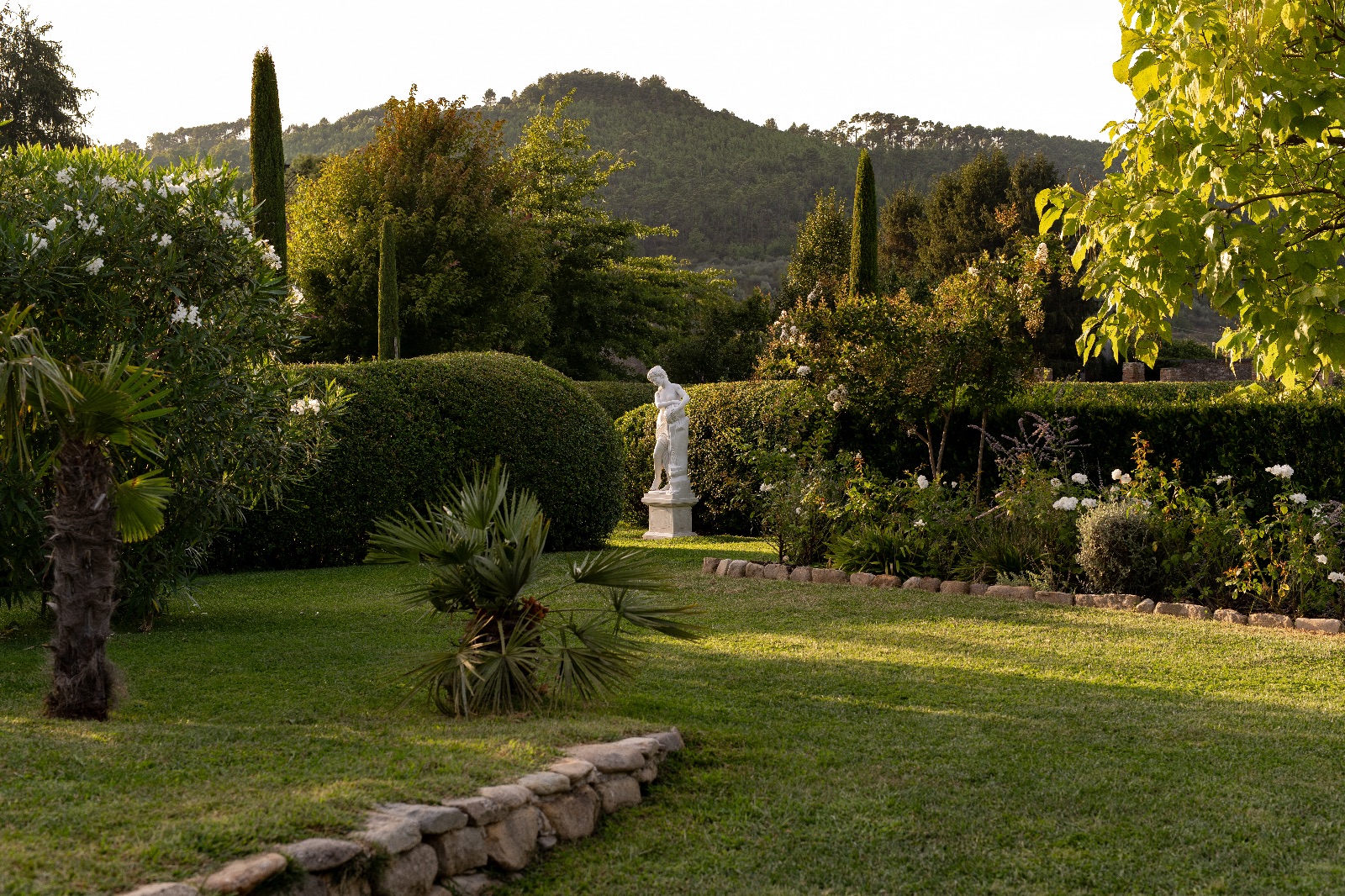
Lucca’s Renaissance walls survive complete, and the top of them is now a wide paved circuit above the rooftops — four kilometres, no cars, no junctions. For a family it is the rare thing that suits a nine-year-old and a grandparent equally, and the only decision is which direction to ride.
- Best for ages
- All — family bikes with child seats and trailers are available, so nobody is left out
- Getting there
- Easy by car or train; a straightforward day trip from Florence or the Lucca hills
- Practicalities
- Lucca is flat and pushchair-friendly. Reserve bikes and helmets ahead in spring — the rental places by the station run out on warm weekends
- Nearby
- Torre Guinigi, which has oak trees growing on its roof; several playgrounds inside the walls; Pisa, Pistoia and the Versilia coast within an hour
Three · AnywhereA cooking class children can actually do
The version that works is not a demonstration but a kitchen where a child is given dough. Many Tuscan schools now run family classes on exactly that principle: pasta by hand, pizza, sometimes gelato, with an outdoor space for whoever loses interest at the twenty-minute mark.
The better move is to do it at the villa. A chef who comes to you means no drive home afterwards, no fixed finish time, and a kitchen where the children can leave and come back. Most of our Tuscan houses can arrange it, and several include a chef already.
- Best for ages
- Five and up get the most from it; toddlers can knead and mix
- Practicalities
- Ask when booking about nappy-changing and whether there is anywhere for children to play. Choose a class with an outdoor area if you have more than one child
- Worth adding
- The market first — Pienza for pecorino, any town market on its market morning. Children who choose the ingredients eat the result
Four · MaremmaIl Giardino dei Tarocchi
Niki de Saint Phalle’s Tarot Garden, in the Maremma near Capalbio: enormous mosaic sculptures of tarot figures, mirrored and tiled, set on a hillside. It is the single most startling thing on this list for a child, and it looks like nothing else in Italy.
- Best for ages
- All — and unusually, teenagers like it as much as small children
- Getting there
- By car, and it is genuinely remote — build the drive into the day rather than adding it to one
- Practicalities
- Mostly pushchair-accessible. Toilets, a café and a picnic area. Book online in advance; spring weekends sell out
- Nearby
- Capalbio on its hill, and the Maremma beaches — swimmable from late May, walkable before that
Five · FlorenceFlorence, at child pace
Florence rewards a family that gives up on completeness. Two things a morning: the Duomo dome or Giotto’s tower for the climb, the Boboli Gardens for the running, Palazzo Vecchio’s family tours for the secret passages, gelato as the fixed point of the day. The centre is compact enough to do all of it on foot.
In 2027, Easter Sunday is 28 March, and that morning brings the Scoppio del Carro — a cart of fireworks lit outside the Duomo by a dove sent down a wire from the altar. It is loud, brief and completely unlike anything a child will have seen. Arrive early; the piazza fills.
- Best for ages
- All, with the caveat that galleries suit over-eights and towers suit anyone who can manage stairs
- Getting there
- Train, if you can — parking in Florence is a project. A private transfer drops you at the edge of the pedestian zone
- Practicalities
- Compact and pushchair-manageable, though the pavements are narrow. Cafes will let you change a baby; pharmacies stock everything you might have forgotten
- Nearby
- Pisa, Lucca and Siena are all an hour or less by train or car
Six · Florence or EmpoliA Serie A match
Fiorentina at the Franchi, or Empoli twenty minutes west, and the season runs to late May — so spring is match season. What a child remembers is not the football but the noise: a whole stand singing, flares, ninety minutes of collective feeling.
- Best for ages
- Eight and up. Younger children find the volume more than they expected
- Getting there
- Public transport for Serie A; a car or taxi for lower divisions
- Practicalities
- Leave the pushchair at the villa — stadium crowds and stairs make it a liability, and changing facilities are scarce
- One rule
- Home colours only. A child in the wrong shirt in the wrong stand is a conversation nobody wants
Seven · San GimignanoClimbing the Torre Grossa
Fourteen medieval towers still stand in San Gimignano, and the tallest is open. Just over two hundred steps to the top, and then the whole Val d’Elsa laid out below — the kind of reward children remember precisely because they had to earn it.
Inside the palazzo at the base there is a small collection of crossbows, helmets and daggers that tends to detain a certain sort of nine-year-old for longer than the view does.
- Best for ages
- Anyone who can walk it; babies go up in a carrier
- Getting there
- Car, bus or train plus a connection. Parking sits below the walls, so allow a short uphill walk
- Practicalities
- No pushchairs in the tower — fine in the streets. Changing tables are not reliable in the public toilets
- Nearby
- Gelateria Dondoli on the main square, twice a world-champion gelateria and worth the queue; Volterra and the Chianti villages beyond
Eight · SienaSiena without the Palio
The Palio runs on 2 July and 16 August, so a spring visit misses it — which is the point. Out of season the Campo is a square children can run across rather than a grandstand, the cathedral has no queue, and the contrade are visible in the ordinary way: a fountain, a flag, an animal carved above a door. Give each child a contrada to support and the city organises itself.
- Best for ages
- All — smaller children respond to the stripes and the animals long before the history
- Getting there
- The bus drops closer to the centre than the train does. A private transfer gets you to the edge of the old city
- Practicalities
- Pushchair-friendly, if hilly. The Orto dei Pecci, just below the centre, is grass, ducks and a place to let everyone off the leash
- Nearby
- Monteriggioni’s walls, the Chianti villages, the Sculpture Park
Nine · CollodiParco di Pinocchio
Collodi is where the author of Pinocchio took his pen name, and the park there is an unhurried, slightly old-fashioned place: mosaics and bronzes along a path through the story, a play area, workshops, and a puppet show if the timing falls right. Two or three hours, not a day.
Read the book first, or at least the beginning. Children who know the story get considerably more from it than children who are simply looking at statues.
- Best for ages
- Three to ten, most of all
- Getting there
- By car; Collodi is small and worth an hour of its own
- Practicalities
- Pushchair-friendly, changing facilities in the toilets, a café on site. Check the workshop and show times before you go
- Nearby
- Villa Garzoni’s gardens next door, and Lucca twenty minutes away — the two pair well in one day
TenThe villa is the holiday
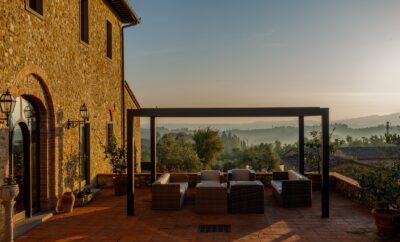
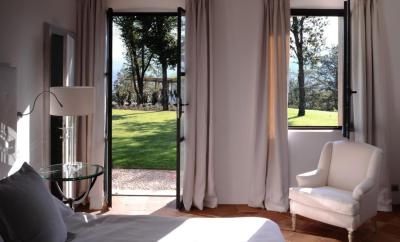
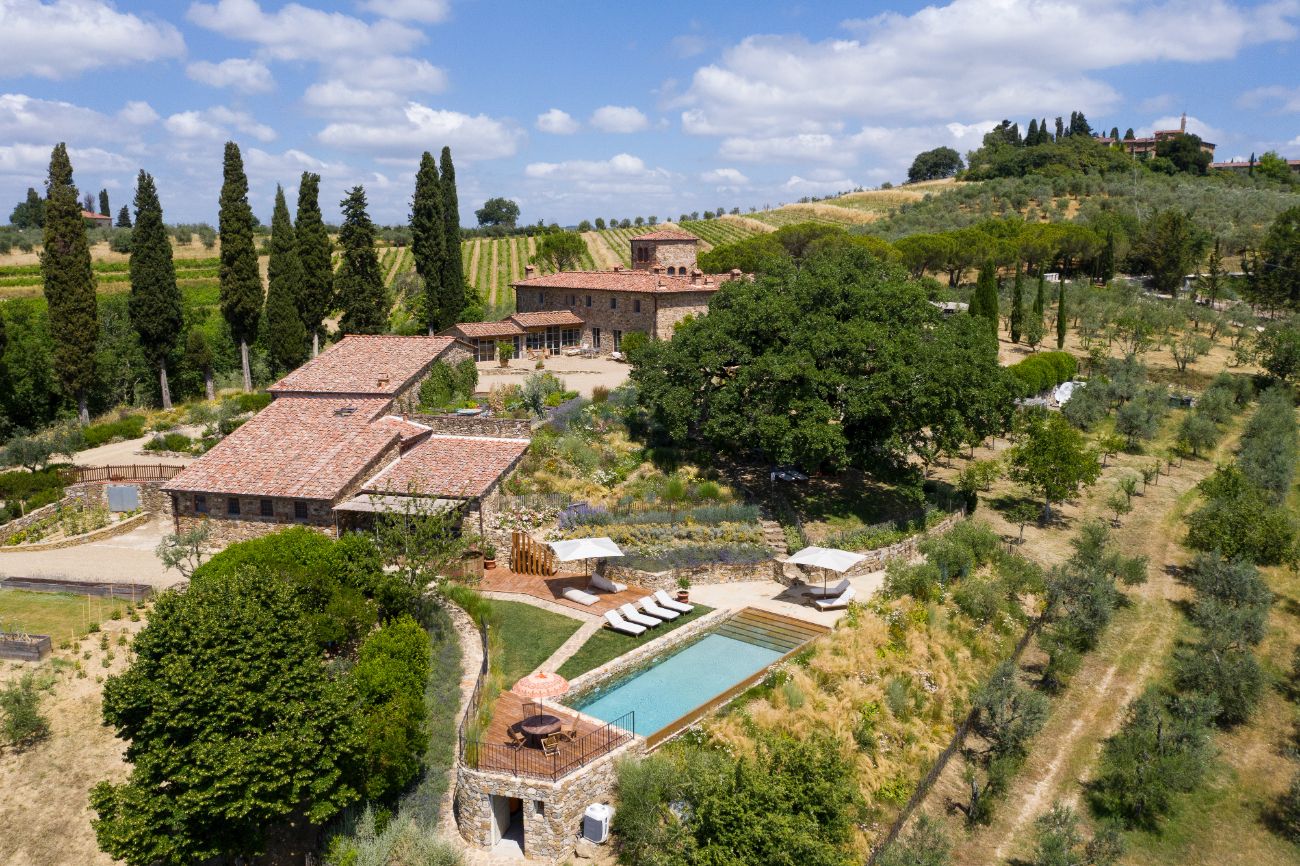
With children, the house is not where the holiday happens between outings — it is most of the holiday. What matters is not the view: it is whether the pool is fenced or heated, whether the bedrooms let one child sleep while another does not, whether there is enough garden to be sent out into, and whether somebody else is cooking.
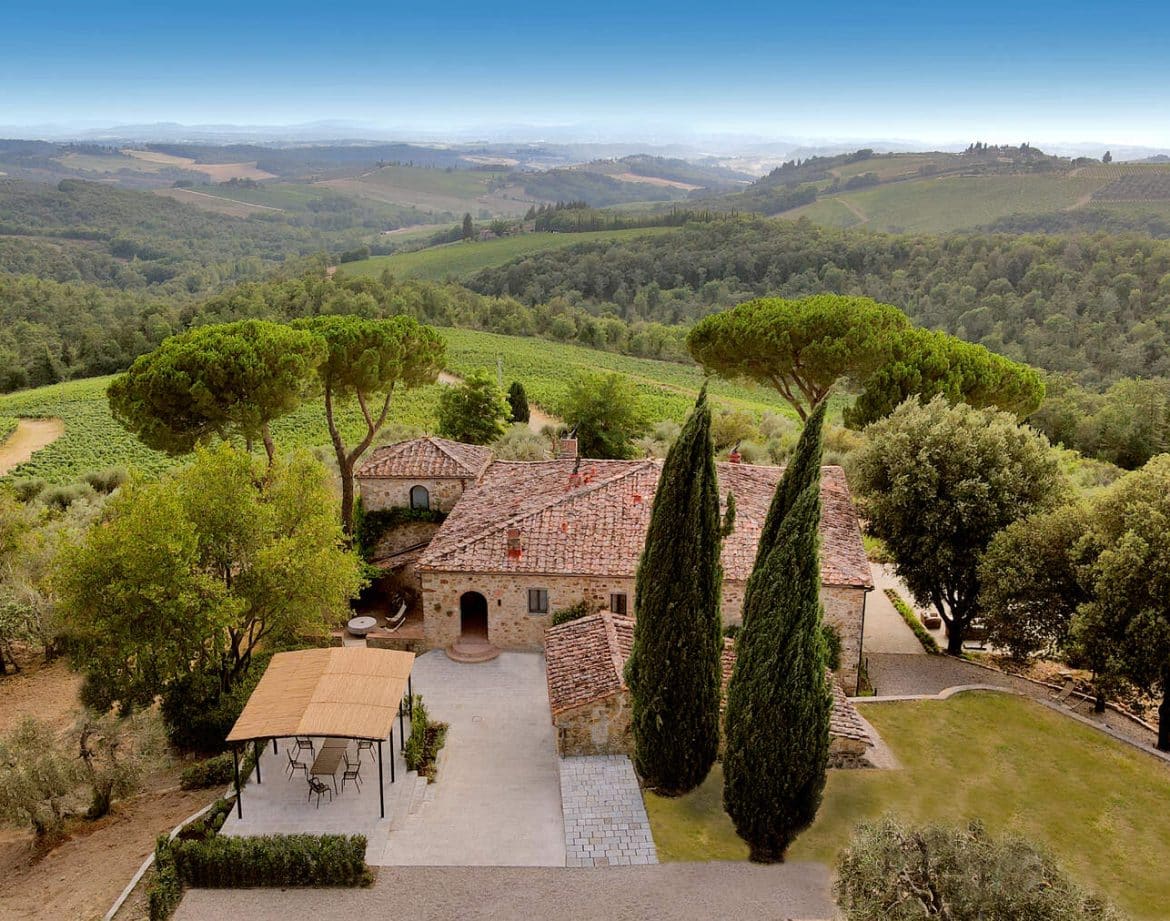
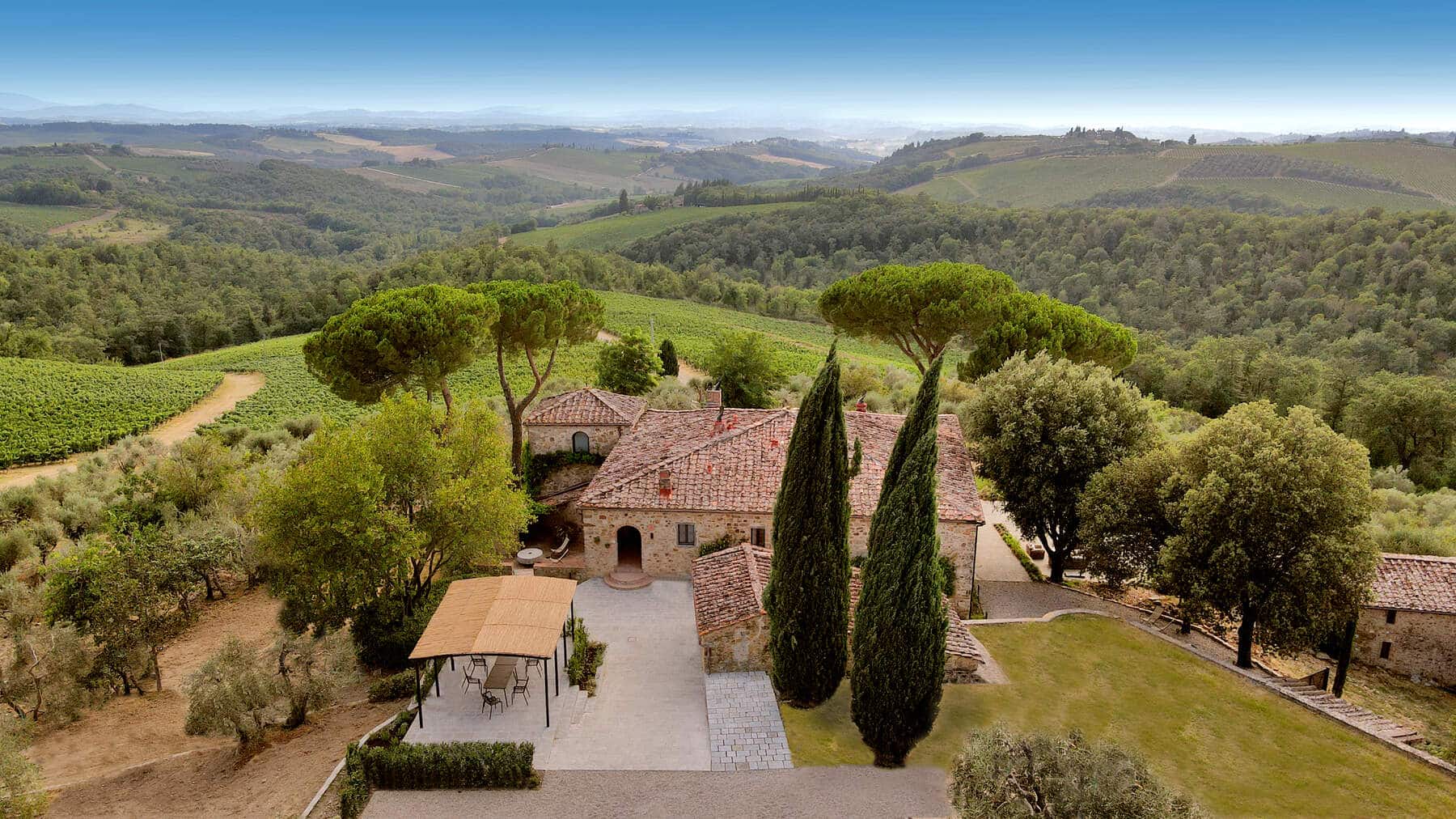
Villa Le Masse in Panzano is a good example of the type: six bedrooms, a salt-water infinity pool, a fourteenth-century pizza oven in the wall, a chef for one meal a day and a pizza night written into the week. Further south, Villa Zietta takes up to twenty-two across a farmhouse and two guest houses — the arrangement that works when it is three generations rather than one family.
- Ask about
- Pool heating and fencing; cots and high chairs; whether the chef is included or on request; how far the nearest shop is
- Ask us to arrange
- Chef nights, market trips, a driver for the Florence day, tennis or riding for teenagers, and a babysitter if you want one dinner alone
Fenced or heated pools, cots and high chairs, a chef most nights, and enough garden that nobody is bored. Tell us the ages and we will shortlist accordingly.
Spring festivals worth planning around
Two are worth building a day around rather than hoping to stumble into. Scoppio del Carro in Florence is Easter morning — 28 March in 2027 — and the Infiorata flower-carpet festivals fall in May and June in towns across central Italy, with Spello’s in neighbouring Umbria the best known. Florence’s Maggio Musicale runs through May and June, and while much of the programme is for adults, there are family concerts in it.
Questions parents ask us
Is spring a good time to take children to Tuscany?
Late April and May, yes — arguably the best time. Temperatures sit around 18–23°C, everything is open, and the crowds that make Florence and Siena hard work in July have not arrived. Mid-March to mid-April is a gamble on weather. The one trade-off is swimming: pools are cold in spring unless heated, so ask.
When is Easter 2027, and does it matter?
28 March — early, which matters more than it sounds. Italian school holidays cluster around Easter, so the last week of March will be busy and prices firmer, while April is likely to be unusually quiet. If you are flexible, the second half of April is the value window in 2027.
Do we need a car?
For most of this list, yes. The Sculpture Park, the Tarot Garden and the Pinocchio Park are not reachable by public transport in any practical way. Florence, Lucca, Siena and Pisa are all better by train. Many families do both: a hire car at the villa, and the train for city days. We can also arrange a driver for individual days, which is usually the right answer for Florence.
Which base is best with children?
Chianti, for most families — central enough that Florence, Siena and San Gimignano are all inside an hour, rural enough that the children have somewhere to be. The Lucca hills suit families wanting the coast and Pisa as well. Val d’Orcia is the most beautiful and the most driving.
Can you arrange a chef, cots and a babysitter?
Yes, and it is most of what our concierge does on family bookings. Chef nights, cots and high chairs, market visits, drivers, tennis coaching, riding, and a vetted babysitter for the evening you would like to eat slowly. Bespoke concierge services covers the full range.
Further reading: Tuscany with kids is our year-round companion to this guide; the best towns to stay in Tuscany helps with the base; a review of the best Tuscany tours covers the guided options; and summer holiday villas in Tuscany is the July and August version of the same trip.
Send us your dates and who is coming — a specialist will shortlist villas that suit the youngest traveller, and plan the days around them. No fees, no obligation.