The Amalfi Coast runs roughly fifty kilometres from Punta Campanella to Salerno, and in that short distance it manages three towns that could not be less alike: Positano stacked vertically above its beach, Amalfi flat and workaday around a cathedral, Ravello three hundred and sixty-five metres up in the quiet. Choosing between them is the holiday. This is how our specialists frame it — with the practical detail that decides an Amalfi stay, which is almost always about steps.
An intriguing mix of sophistication and simplicity, and a mere seagull’s spit from the superyachts and the five-star hotels: around the stacked hill villages farmers still work small plots of steeply terraced land, and down on the water tiny fishing communities still make a living from the sea. That contrast is the coast’s whole character, and it is why the region has stayed largely untouched by overdevelopment.
One · The vertical onePositano
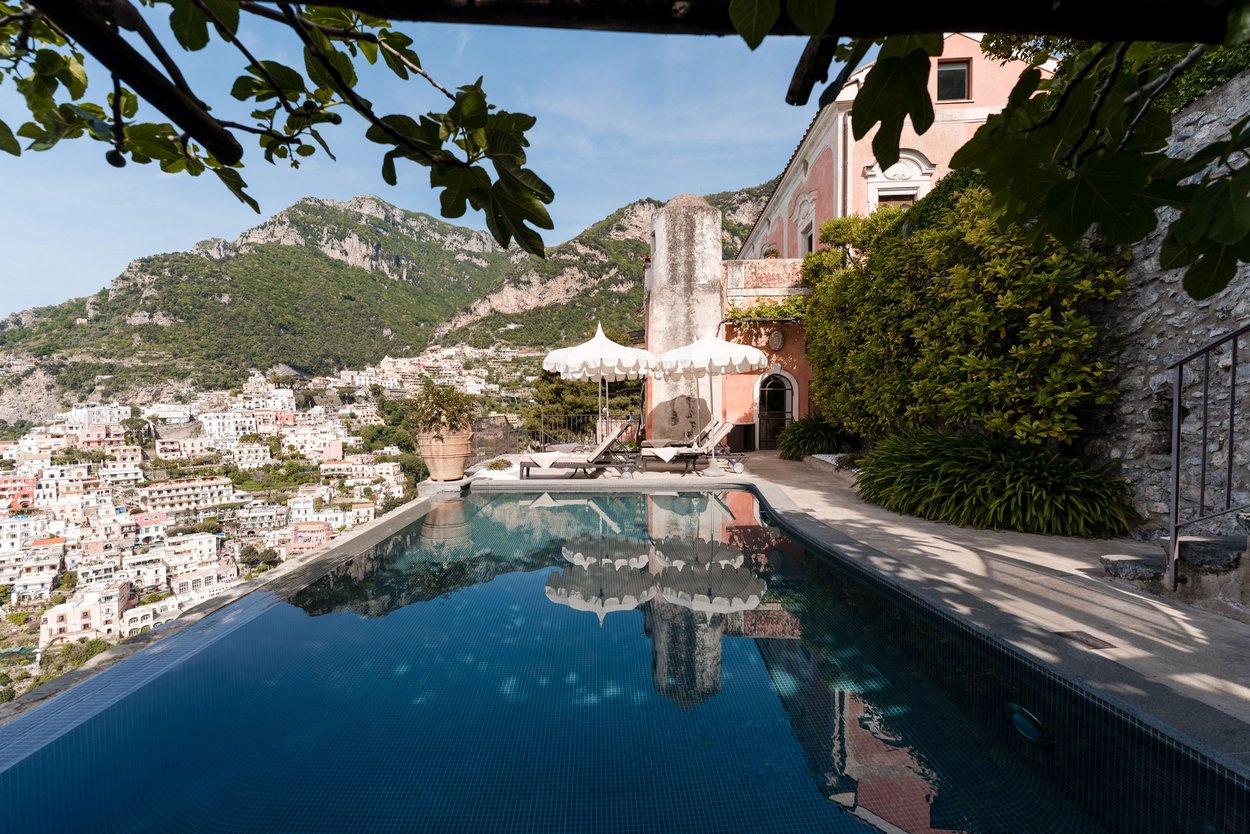
Of all the tumbling coastal towns in Italy, Positano is the most beautiful, and it is entirely the fault of the geography — a near-cliff of pastel houses stacked above Spiaggia Grande, with the whole town angled at the sea. It is also the most social: the boutiques, the beach clubs, the long lunches and the sense that something is always happening a few steps below you.
Those few steps are the catch, and they are the reason our Positano villa rentals are described by access first and view second. Two examples of how differently that can go:
Villa Mon Repos — lift from the garage to every floor ›
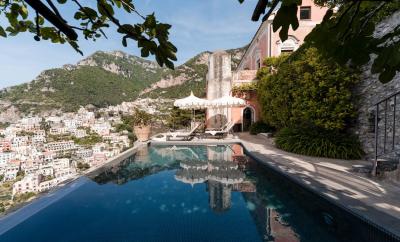
Palazzo Santa Croce is the opulent option: frescoed ceilings, a private wine cellar, and a full-service spa with a Turkish steam bath, sauna, hot tub, massage room and a tiled pool with a waterfall and a resistance-swimming setting. It sits eight minutes’ walk from the centre and fifteen from the beach — and it is reached either by 190 steps or by the public elevator, which runs 08:00 to midnight, charges a fee, and is operated by the township rather than the villa.
Villa Mon Repos is the answer to that. Three floors of Vietri ceramic floors, local artwork and heirloom antiques, with easy access straight off the main road, private parking for up to four family-size cars, and a lift running from the garage to every floor but the top. Our own listing calls that “a rare asset among the local villas,” which is an understatement in a town built on a gradient.
- Character
- The most beautiful and the most social town on the coast
- Best for
- Couples, style-led trips, anyone who wants to walk to dinner
- The catch
- Vertical. Verify steps, parking and lift access before you book
- Distances
- 10 miles to Amalfi and Sorrento; 17 to Ravello; Naples about 1h35
Two · The practical oneAmalfi
Amalfi gave the coast its name, and it is the one town here that behaves like a town rather than a view. It is comparatively flat, built around the Duomo di Sant’Andrea and its steep sweep of cathedral steps, and it has the working infrastructure the others lack: the main ferry port, the bus interchange, shops that sell things residents need.
That makes it the most efficient base on the coast, and the right choice for a first visit or an itinerary with a lot of moving parts — Capri one day, Pompeii the next, Ravello for a concert. It is less glamorous than Positano and less serene than Ravello, and it is the one that gets you out of the door fastest.

- Character
- Historic, flatter, genuinely lived-in — the coast’s hub
- Best for
- First visits, multi-stop plans, ferry-based days
- Don’t miss
- The cathedral, and the handmade-paper mills the town is famous for
- Nearby
- Atrani, ten minutes east, for quieter evenings with the same access
Three · The quiet oneRavello
Ravello is the coast’s exhale. It sits 365 metres above the sea rather than on it, so the air is cooler, the evenings are breezier, and the noise is bells instead of scooters. There is no beach and that is the point: people who choose Ravello are choosing gardens, terraces, long dinners and the ability to read outdoors in August.
If you go and do not spend an hour or two in Villa Cimbrone’s gardens, you have missed the point of the town. From Ravello’s central piazza the signs lead you to them; they belong to an eleventh-century palatial compound, and the Terrace of Infinity at the end of them has been called the most beautiful place anyone has visited by writers who had seen most places. Villa Rufolo, on the piazza itself, hosts the summer festival concerts on a stage built out over the drop.

For a trip built around the villa rather than the town, Ravello and the hills behind it are where our specialists look first — and our guide to Positano vs Ravello vs Praiano sets the three side by side on privacy, access and sea proximity.
- Character
- Hilltop, serene, garden-led. Cooler than the coast below
- Best for
- Privacy, families wanting downtime, wellness-minded travellers
- The trade
- No beach — you drive or take a boat down to swim
- Season
- The Ravello Festival runs across July, August and early September
Sorrento and Capri
Neither of these is on the Amalfi Coast — Sorrento sits on the north side of the Sorrentine Peninsula, and Capri is an island off its tip. Both are named honestly here rather than counted in, because they are genuinely useful: most of the itineraries we build across this region use two or three bases, and these are the two that pair best with the coast.
Sorrento
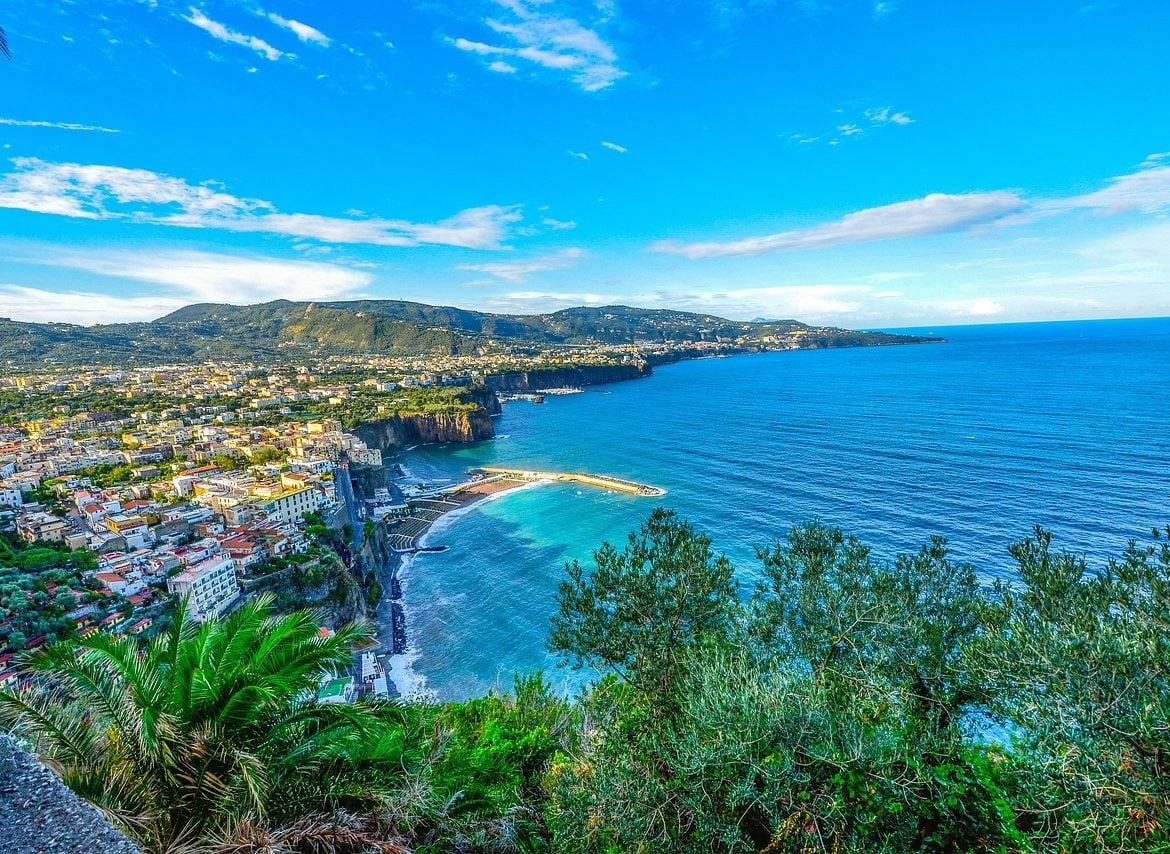
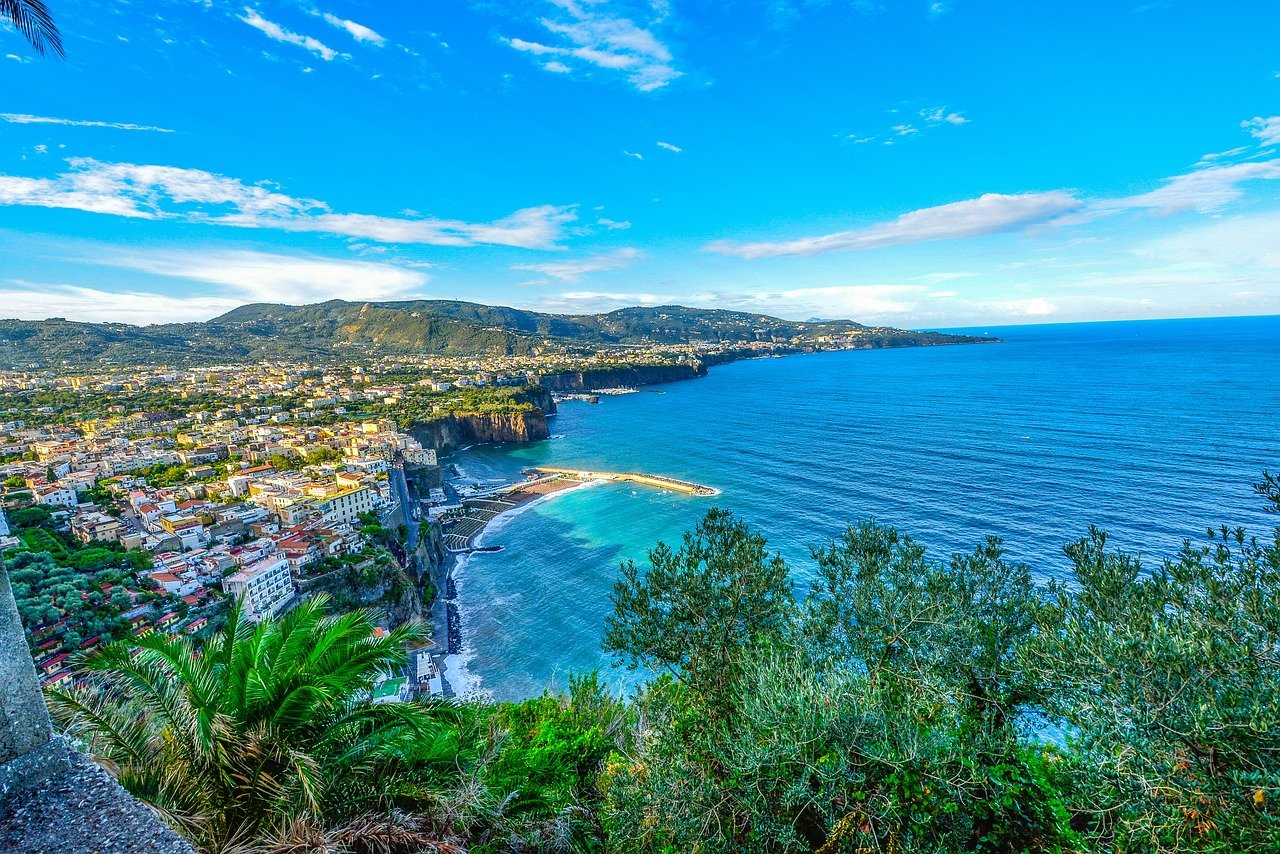
A grand dame of a tourist town, sitting on a cliff and gazing at Vesuvius, with a charming fishing village down below. It is the easiest arrival point of the three, and the best-connected: trains from Naples, ferries to Capri and along the coast.
Capri
Walk in the footsteps of Jackie O and Clark Gable. The whitewashed core of Capri town is lovely, with a path leading out through terraced countryside to a Roman villa — and the island empties considerably once the day boats leave.
TimingWhen to go
Enjoying this coast is almost entirely a question of timing, and the honest answer is not summer.
December and January are genuinely quiet — many restaurants and attractions are chiuso, and the coast closes in on itself. July and August are the opposite problem: the coastal road clogs, the temperatures soar, and tempers fray in the traffic. What is left is the good part. Spring and autumn are wonderful here — spring for swathes of wildflowers on the terraces, autumn for warm seas and the year’s best produce. May, early June, September and October are when our specialists book their own trips.
The coast now stays tightly booked well into October, so “shoulder season” no longer means late availability — it means better weather and the same lead times. Our note on Italy’s late-August availability shows how thin the remaining inventory gets, and how quickly.
LogisticsGetting there
However you arrive, the journey is scenic. What has changed is that you now have a choice of airports.
By air
Naples (NAP) is the long-established gateway, roughly 60 kilometres from the coast, with the widest choice of flights and the most onward options.
Salerno Costa d’Amalfi (QSR) is the newer answer and the closer one — about 20 kilometres southeast of Salerno and roughly 45 minutes from Positano. It opened to commercial traffic in July 2024 and now handles domestic and international flights, with European routes building each season. For anyone basing themselves at the southern end of the coast it removes the long transfer entirely. Check current routes at aeroportosalerno.it.
By ferry or boat
Seasonally, fast ferries such as Alilauro run from Naples to Amalfi’s main port; the two-to-three-hour journeys are not direct and usually call at Capri or Sorrento first. Travelmar sails from Salerno and stops at most of the larger coastal towns. We also arrange private boats, which turn the transfer into a tour of the coast rather than a queue.
By train and road
From Naples, Trenitalia high-speed services connect Napoli Centrale to the rest of Italy — but note that Sorrento is not on the high-speed network. It is reached on the Circumvesuviana narrow-gauge line from Napoli Garibaldi, or on the seasonal Campania Express, which is the same route with fewer stops and reserved seats. Different station, different operator, different ticket.
For most guests we arrange a private transfer instead, with drivers who will stop for lunch at a good restaurant on the way rather than treating the drive as dead time. Self-driving is the most independent option and the most demanding one: the coastal road is narrow, hairpinned and busy in season, and parking at the villa is the thing to confirm first.
Private jets and helicopters
Jet charters arranged through our private aviation partner land at Naples, with a private transfer or a helicopter leg onward to the villa. A few questions about party size and trip type are usually enough for us to come back with the right aircraft.
The detail that decides itSteps, lifts and access
Every villa on this coast is beautiful. What separates a good week from a hard one is vertical: how many steps from the road to the door, whether there is a lift, where the car actually stops, and who carries the luggage. The range is real — 190 steps at one Positano villa we love, a garage lift to every floor at another a few minutes away. Ask about all four, and be blunt about grandparents, toddlers, buggies and knees. Our specialists volunteer this information because it is the single most common reason a guest would have chosen differently.
EatingWhere to eat
Fine dining in Positano peaks at Zass, the Michelin-starred restaurant at Il San Pietro, where the kitchen builds around fruit and vegetables grown on the property and fish landed the same day. Order the lemon pasta. Along the cliff at Le Sirenuse — family-owned, terraced high into the rock, all tilework and lemon trees and paintings — La Sponda holds its own star and its own view; the dining room is candlelit to a degree that has to be seen.
Da Vincenzo
The menu changes with what came in that morning, and everything on it is the best of old-fashioned nonna cooking. Plenty of pasta, and unusually good gluten-free options.
Covo dei Saraceni
A five-star hotel running a formal restaurant on the upper terrace and a brasserie at ground level. The Margherita is good; the Napoletana and the Saracena are better. The calzone with mozzarella, artichokes and ham deserves attention, and dessert is the lemon sorbet served in its own lemon shell.
Chez Black
As close to dinner on the sea as you will get — a few steps from Spiaggia Grande, which makes it the natural end to a day on the beach. A hotspot for tourists, locals and the occasional famous face, with a homely atmosphere that makes leaving difficult, and good gluten-free options too.
Le Tre Sorelle is the more affordable one and consistently good: people come for a quick pizza and stay for hours at an outside table with cold white wine and the grilled sea bass. For the full list, see our seven best restaurants in Positano.
BuyingCeramics, paper and hippy-chic
Ceramics and crafts
Artisan workshops along the coast make and sell earthenware, and Vietri sul Mare is where the most prized of it is produced — a town full of small shops selling brightly coloured ware, and schools still teaching the pottery. For artistic pieces, Pasquale Liguori’s studio; for contemporary work, Marco Fusco’s Laboratorio Fes in Amalfi.
Amalfi is famous above all for handmade paper. Cartiere Amatruda holds a vast selection; at Scuderie del Duca you can buy wax, ink and antique and modern prints alongside it.
Fashion
This coast invented “hippy-chic” — a Mediterranean reading of flower-power dressing, all brightly coloured cotton and linen blouses, head scarves, sarongs and flat handmade sandals inspired by the footwear first made on Capri. For made-to-measure sandals without emptying the wallet, Alfonso Dattilo’s legendary shop in Maiori. For the full Positano look, Bottega di Brunella, where Vito and Brunella have been working in fine linen, chenille and wool since the 1960s. Antica Sartoria on Spiaggia Grande for swimwear.
DoingThings not to miss
Beyond Villa Cimbrone’s gardens, the coast’s other unmissable thing is a walk. The Path of the Gods is hemmed into the hills above the coastline — a roughly five-hour hike that snakes high above the sea through small villages, past valleys where farmers and shepherds sell what they have, with sea views most of the way. Comfortable shoes, and rain gear if you are walking it in late autumn or winter.
Cliffside terraces above Positano, garden estates in the Ravello hills, and homes within walking distance of a town. Every one visited and vetted.
Questions we get asked
Positano, Amalfi or Ravello — which should I choose?
Positano if you want glamour and to walk out into it; Amalfi if your itinerary moves and you want the port and the buses on your doorstep; Ravello if you want quiet, gardens and cool evenings, and do not mind driving down to swim. Our three-bases guide compares them in more depth.
When is the best time to visit?
May, early June, September and October. Spring brings wildflowers across the terraces; autumn brings warm seas and the year’s best produce, with far less traffic than July and August. December and January are genuinely closed in places. Note that the coast now books solidly into October, so a later trip means better conditions rather than easier availability.
Which airport should I fly into?
Naples (NAP) for the widest choice of flights, about 60km away. Salerno Costa d’Amalfi (QSR), which opened in July 2024, is roughly 45 minutes from Positano and much the better arrival if your base is at the southern end of the coast. We arrange transfers from both, and helicopter legs where they make sense.
How do I get from Naples to Sorrento by train?
On the Circumvesuviana line from Napoli Garibaldi, or the seasonal Campania Express — the same route with fewer stops and reserved seats. Sorrento is not served by Italy’s high-speed Frecciarossa network, so do not book to it from Napoli Centrale expecting a fast train. For most guests we arrange a private transfer instead.
How many steps will there be?
It varies enormously and it matters more than any other practical detail. One Positano villa in our collection is 190 steps up or a public elevator ride; another, minutes away, has a lift from its own garage to every floor. Always ask about steps, lift access, where the car stops and who handles the luggage — especially with young children or anyone with limited mobility.
Villa or hotel?
A villa gives you the whole property — pool, terraces, several en-suite bedrooms and the option of full staff — usually for less per person than the equivalent in five-star suites, and it is much better for families and groups who would otherwise be split across floors. We set out the arithmetic in five reasons to rent a villa in Italy over a hotel, and answer the practical questions in our Italy villa FAQs.
Related reading: Amalfi Coast villas within walking distance of a town, Italian villas for rent and villas for a romantic proposal.
Tell us your dates, your party and how much you want to move — a specialist will send villas, an itinerary and the transfer plan within 24 hours.