What to Know Before Traveling to St Barts
Everything you need before you go — how to actually get there, when to visit, what it costs, how to get around, and where to stay. A practical guide to traveling to St Barts, from the team that books the island year-round.
St Barts — formally Saint-Barthélemy — is the most refined island in the Caribbean: French in character, barely 21 km², and with no large resorts to speak of. That smallness is exactly why a little planning pays off. Below is what regular visitors and our concierge team wish every first-timer knew before traveling to St Barts. When you are ready to stay, our collection of St Barts villa rentals at Haute Retreats spans beachfront estates and hillside retreats across the island.
- Location
- French Caribbean, ~230 km from Puerto Rico; ~21 km²
- Getting there
- No long-haul flights — connect via St Maarten (SXM); 10-min flight or 45-min ferry to Gustavia
- Airport
- Gustaf III (SBH) — short runway, small aircraft only, daylight hours only
- Currency
- Euro (€). US dollars and cards widely accepted
- Language
- French official; English widely spoken
- Visa
- Not required for US/UK/EU citizens for short stays; valid passport needed
- Best months
- Dec–Apr (peak), May–Jun & Oct–Nov (best value)
- Getting around
- Rent a small car; drive on the right; no rideshare apps
- Time zone
- Atlantic Standard Time (UTC−4), no daylight saving
- Power
- 220V, European (type C/E) plugs
Where is St Barts, exactly?
St Barts is a French overseas collectivity in the northeastern Caribbean, about 35 km southeast of St Maarten and 230 km east of Puerto Rico. It covers roughly 21 km² and has around 10,000 residents.
The island sits in the Leeward Islands, sharing its corner of the Caribbean with St Maarten, Anguilla, and St Kitts. Its French heritage — with a distinctive Swedish chapter in its history — shows in everything from the food to the boutiques to the rhythm of the day. Despite its fame, it remains genuinely small and residential, which is much of its appeal.
How do you get to St Barts?
There are no direct long-haul flights to St Barts. Almost everyone connects through St Maarten (SXM), then takes a 10-minute turboprop flight to St Barts (SBH) or a 45-minute ferry to Gustavia. San Juan (SJU) and Antigua (ANU) are alternative gateways.
The connection is the one piece of St Barts travel that genuinely benefits from being arranged in advance, because the inter-island flights are small and fill quickly in high season. For every villa stay, our team coordinates the SXM connection, transfers, and timing so the handover is seamless. If you would like the whole route handled for you, that is exactly what our bespoke concierge service is for.
The famous landing at Gustaf III Airport
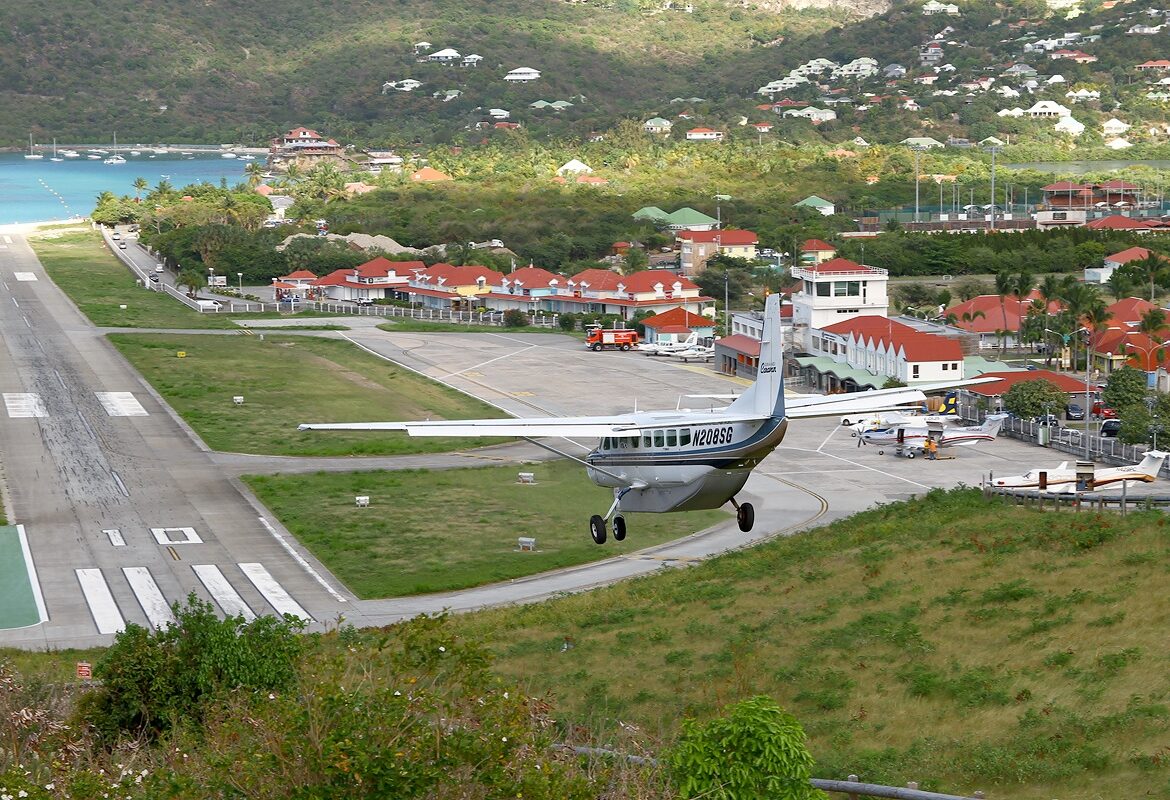
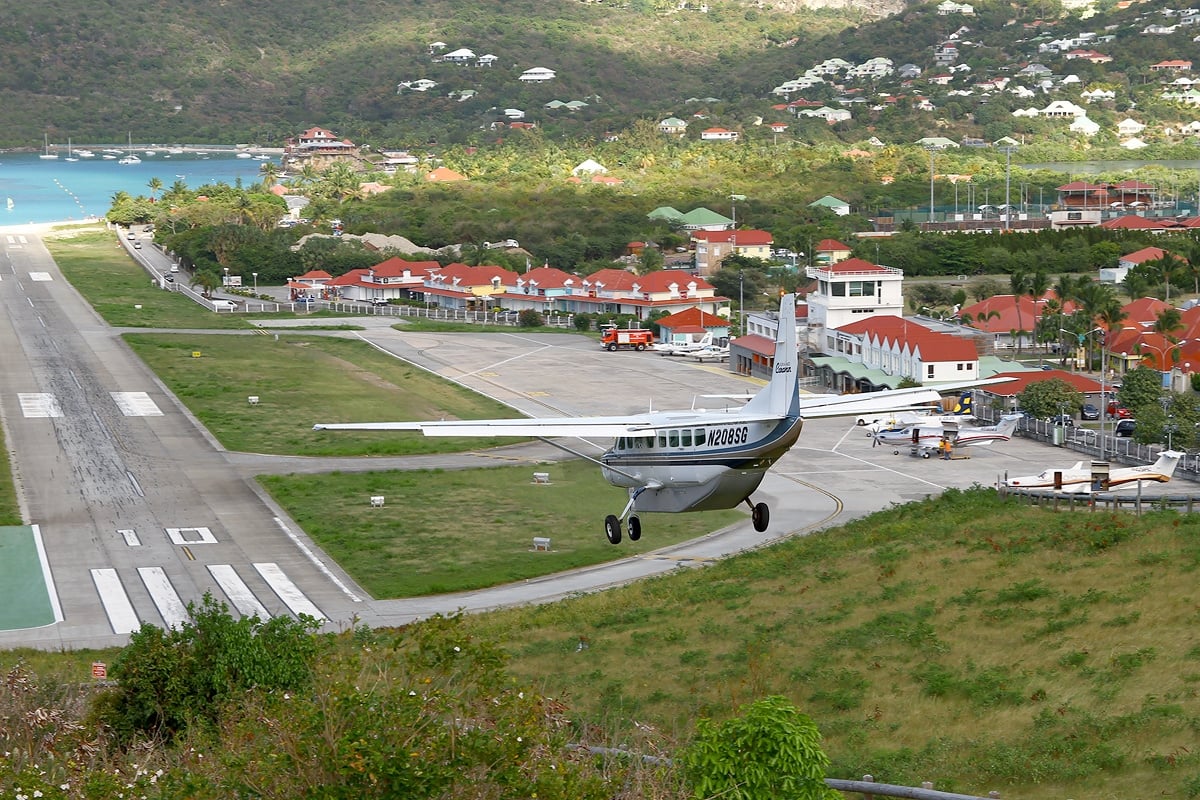
St Barts’ Gustaf III Airport (SBH) has one of the most distinctive approaches in commercial aviation. The runway is only about 2,170 feet long, so it can take only small aircraft such as the Pilatus PC-12, Cessna Caravan, or Twin Otter. Pilots require special certification to land here: the approach drops steeply over a hillside before a short final onto the runway, with St Jean’s beach just beyond the far end. The airport also operates in daylight hours only, so arrival timing matters.
Arriving by ferry
If you prefer to stay on the water, high-speed ferries run from St Maarten to Gustavia harbour in roughly 45 minutes. It is a scenic, relaxed alternative to the flight and avoids luggage limits on the small planes — a good option for larger groups or longer stays.
Flying private
Many guests fly privately into St Maarten’s Princess Juliana International Airport, which handles large jets, then transfer to St Barts by chartered turboprop, helicopter, or ferry. Direct private arrivals into SBH are possible only in the small, certified aircraft the runway allows. We arrange these connections, including the St Maarten handover, as part of a stay. See our St Martin & St Maarten guide for more on the gateway island.

Do you need a visa or passport for St Barts?
US, UK, and EU citizens do not need a visa to visit St Barts for short stays (generally up to 90 days). A valid passport is required. Always confirm current entry rules with official sources before you travel.
As a French overseas collectivity, St Barts follows French entry policy. For most leisure travellers this means a passport and nothing more for short visits. Check that your passport has sufficient validity for your dates, and review the latest official guidance close to departure, as requirements can change.
When is the best time to travel to St Barts?
The peak season is December to April — dry, warm (around 27°C), and at its liveliest, with New Year the most coveted week of all. May, June, October, and November offer the same beautiful weather with fewer crowds and better value. July to September has the lowest rates but falls within the Atlantic hurricane season.
Temperatures stay between roughly 24 and 30°C year-round, so there is no genuinely “bad” time to go — only different trade-offs. For a first visit with the easiest weather and the best value, the shoulder months of May–June and October–November are hard to beat. If you are set on New Year, plan far ahead: the most sought-after villas are reserved twelve to eighteen months in advance.
Timing around the island’s events can shape a trip too: the St Barth Gourmet Festival in November draws Michelin-starred chefs, and spring brings the famous regatta weeks. Current dates are on our St Barts calendar of events.
What currency and language are used in St Barts?
The official currency is the euro (€), though US dollars are widely accepted and credit cards are taken almost everywhere. French is the official language, but English is widely spoken throughout the island’s hotels, restaurants, and shops.
If you pay in dollars, the exchange rate offered may not be in your favour, so carrying some euros or paying by card is often simpler. Communication is rarely an issue for English speakers, though a few words of French are always appreciated.
How do you get around St Barts?
Rent a small car. St Barts has no public transport and no rideshare apps, and its best beaches and restaurants are spread across steep hills. Driving is on the right, and a standard driver’s licence is accepted. Mini-mokes and compact cars are the island favourites.
The roads are narrow, winding, and occasionally steep, so a small vehicle is far easier than a large one. Taxis exist but are limited and relatively expensive for daily use. For guests who would rather not drive, we arrange a car and driver. Whatever you choose, you are never more than about twenty minutes from any beach or table on the island.
Prefer to have arrivals, transfers, and reservations arranged for you?
Explore Our ConciergeHow expensive is St Barts?
St Barts is a premium destination: dining, shopping, and accommodation are priced accordingly, and the island has no budget tier. Villa rates vary widely by size, location, and season, with New Year commanding the highest premium of the year.
Because there are no large hotel chains, a private villa is the standard — and often the better value — way to experience the island, particularly for families and groups who share the space, a chef, and concierge across the stay. We share live availability and tailored rates on request rather than fixed list prices, so the figures reflect your exact dates and group. Tell us how you travel and we will send a private shortlist.
Where should you stay in St Barts?
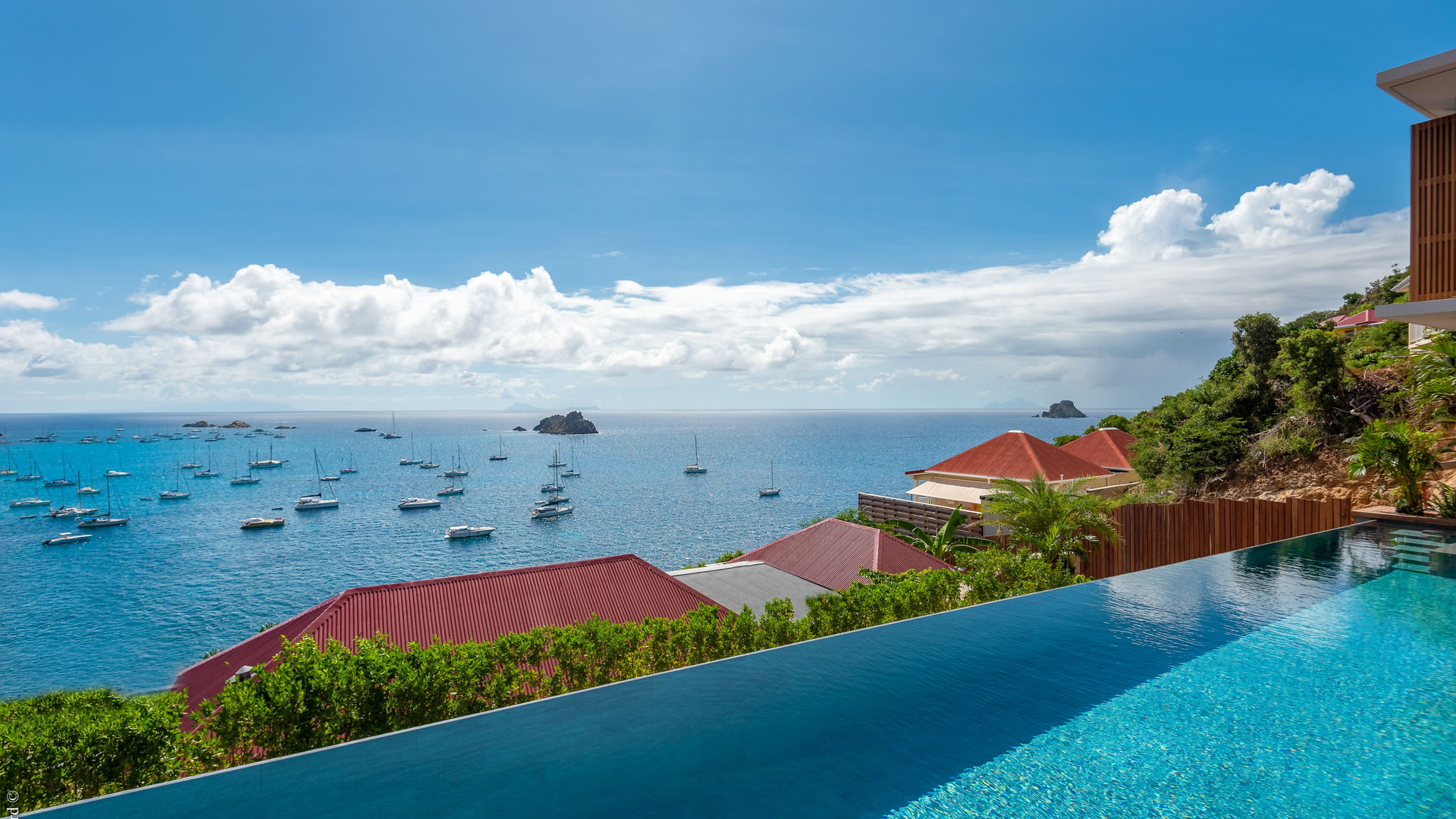
St Barts has no large resorts, so private villas are the definitive way to stay. The right area depends on your priorities: Flamands and Grand Cul-de-Sac for beaches, Gustavia for the marina and dining, Pointe Milou for sunsets, and St Jean for energy and family-friendly beach life.
A villa gives you the island’s signature privacy — your own pool, the option of a private chef, and in many cases direct beach access. Our beachfront villa collection puts the sand a few steps from the door, while the wider portfolio of St Barts villa rentals covers every neighbourhood and group size. If you are still choosing a base, our guide to the best areas to stay in St Barts breaks each one down by vibe and beach.
What should you pack and wear?
Pack light, resort-elegant clothing: St Barts has no formal dress codes, but evenings lean chic. Bring strong, reef-safe sun protection, comfortable shoes for hikes and cobbled streets, and swimwear for several beaches. A light layer is useful for breezy evenings and the air-conditioned indoors.
The island’s style is understated rather than flashy — linen, good sandals, and a relaxed evening outfit will carry you through almost any setting. Sun is intense year-round, so reef-safe sunscreen, a hat, and sunglasses are essentials, not extras.
Practical essentials: power, time, connectivity, health & safety
St Barts uses 220V European (type C/E) plugs, runs on Atlantic Standard Time (UTC−4, no daylight saving), has reliable mobile and Wi-Fi coverage, and is considered very safe with low crime. No special vaccinations are required.
Bring a European plug adapter and a converter if your devices are not dual-voltage. Mobile coverage and villa Wi-Fi are generally good across the island. There is a private medical clinic for routine needs, but bring any prescription medication you require. As always, comprehensive travel insurance is sensible for an island reached by small aircraft and ferries.
What are the best things to do once you arrive?
The headline experiences are the beaches, the dining, and the water. Swim at Saline or Gouverneur, snorkel at Colombier, take a long lunch in Gustavia or a garden restaurant, and spend at least one day on a boat exploring the surrounding islands.
For the full itinerary — which beach on which day, where to eat, the best hikes, and how to spend time on the water — see our companion guides: the best things to do in St Barts, the island’s finest beaches, and our pick of where to eat. Members of our Elite Guest Privileges programme also unlock priority reservations and upgrades across the island.
Traveling to St Barts: Quick Answers
Is St Barts hard to get to?
It takes one connection rather than a direct flight. Almost everyone flies into St Maarten (SXM), then takes a 10-minute turboprop to St Barts or a 45-minute ferry to Gustavia. With the connection arranged in advance, it is straightforward — and the famous approach into Gustaf III Airport is part of the appeal.
Do I need a passport or visa to visit St Barts?
A valid passport is required. US, UK, and EU citizens do not need a visa for short stays of up to about 90 days, as St Barts follows French entry policy. Confirm current requirements with official sources before you travel.
What is the best month to travel to St Barts?
December to April is peak season — dry, warm, and lively, with New Year the busiest week. For the same weather with fewer crowds and better value, choose May, June, October, or November. July to September has the lowest rates but falls in hurricane season.
What currency does St Barts use?
The euro (€) is the official currency. US dollars are widely accepted and credit cards work almost everywhere, though paying in euros or by card usually gives a better rate than paying cash in dollars.
Do you need a car in St Barts?
Yes. There is no public transport and no rideshare app, and the beaches and restaurants are spread across hilly terrain. A small rental car or mini-moke is standard; for guests who would rather not drive, we arrange a car and driver.
Is St Barts safe?
Very. St Barts has low crime and is considered one of the safest islands in the Caribbean. Normal travel precautions are all that is needed.
Are there hotels in St Barts, or only villas?
There are boutique hotels, but no large resort chains. Private villas are the defining way to stay — they offer privacy, a pool, the option of a private chef, and often direct beach access. Our St Barts villa rentals span every area and group size.
What language is spoken in St Barts?
French is the official language, but English is widely spoken in hotels, restaurants, and shops, so English-speaking visitors rarely have any difficulty.
Your St Barts, Privately Arranged
From the St Maarten connection to the villa, the car, and the dinner reservations — tell us how you like to travel and we will arrange every detail and curate a private villa shortlist. No cost, no obligation.
[email protected] · +1 305 432 1731 · Response within hours