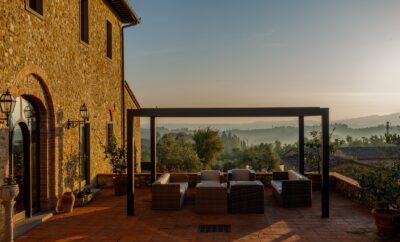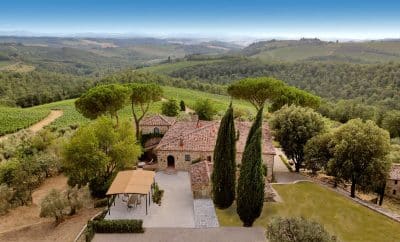
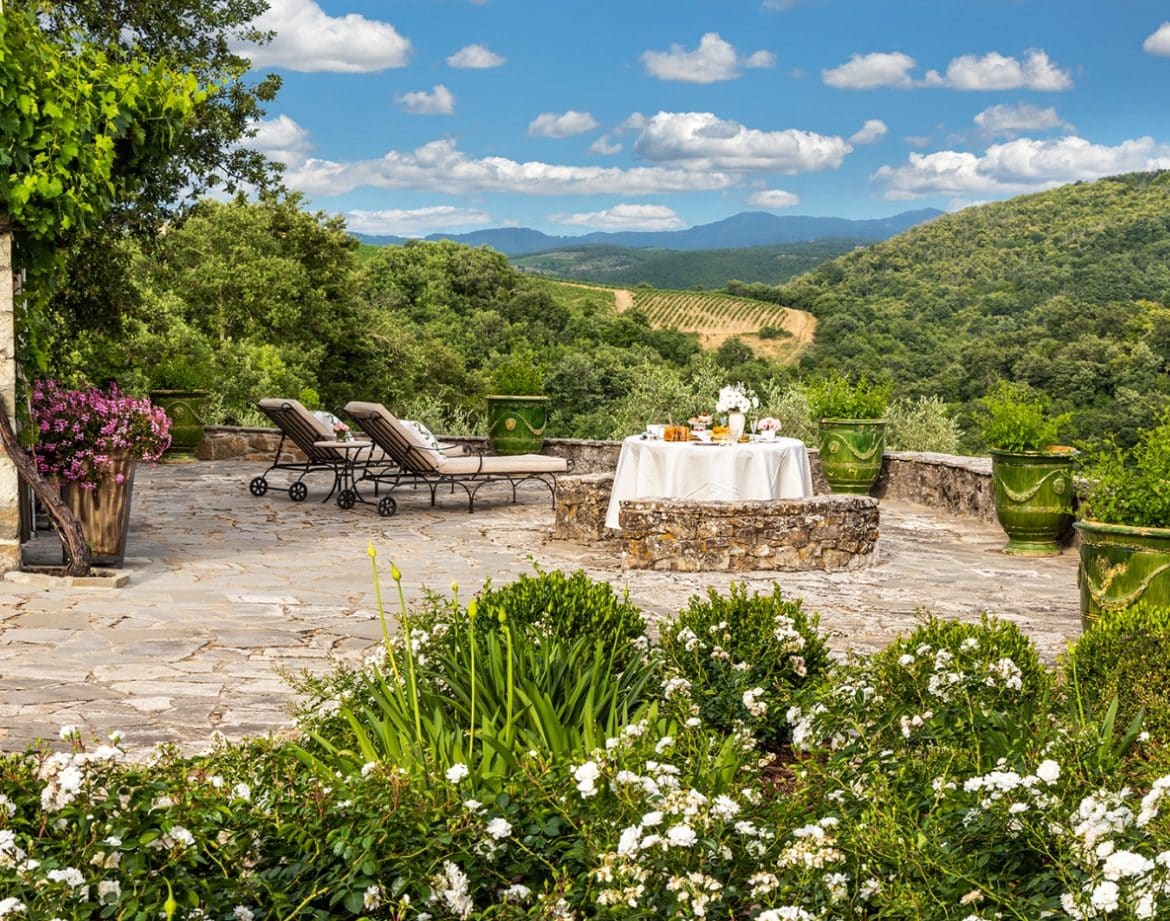

Picture the arrival: lunch under a pergola by the pool, the hills folding away in every direction, a glass of Brunello, and the smell of wild herbs coming off the fields on the breeze. That is the easy part. The harder part — and the reason how to rent a villa in Tuscany is the question we field most often — is that Tuscany is not one place. A house in Chianti and a house in the Maremma give you entirely different holidays, and the difference is decided months earlier, at the point of choosing. Haute Retreats is based in Italy, near Venice, with our own team on the ground across the country; these are the questions we ask before recommending a single one of our Tuscany villa rentals.
RelatedTaste of Tuscany: a culinary journey through the region’s traditional cookingIs this your first time in Tuscany?
First visits and fifth visits call for different addresses. If this is your first, stay where the icons are within reach: Chianti, the rolling wine country immediately south of Florence, or the Val d’Orcia below it, home of Brunello di Montalcino. Both put you inside the postcard while keeping Florence, Siena and San Gimignano within an easy morning’s drive — the urban and the rural in one week, which is what most first-timers actually want even when they say they want seclusion.
That is also where the classic Tuscany of the imagination lives: cypress avenues, stone farmhouses, vines to the horizon. If your mental image of this holiday was formed by a photograph, it was almost certainly taken within thirty minutes of a Chianti villa.
Read moreThe most beautiful towns in Tuscany for a dreamy Italian getaway
Does your villa need to be near the culture?
If museums and churches are the point of the trip, base yourself near Florence or Siena. Florence alone holds the Uffizi, Michelangelo’s David, the Medici palaces and tombs, Renaissance gardens and a city’s worth of painted chapels — and our villas near Florence put all of it within a half-hour drive of your own pool.
Beyond the two obvious cities: Lucca is Puccini’s birthplace, with a museum and a summer opera festival in his name; Pisa has the Leaning Tower and the sublime Romanesque of the Campo dei Miracoli; Arezzo holds Piero della Francesca’s Legend of the True Cross and one of Italy’s great antiques markets. We keep a dedicated collection near Pisa and Lucca for exactly this brief.
And a rural base does not mean giving up culture. Montepulciano, Montalcino and San Gimignano all reward a slow day of looking — it is simply spread more thinly than in the cities. For timing the city days themselves, our guide to the best time to visit Florence is the one we send clients most.
RelatedVilla stay: your perfect week in Tuscany, day by dayTown within walking distance, or total silence?
This is the question that changes a holiday most, and the one guests most often answer without thinking. A number of our Tuscan villas sit within walking distance of a village or town centre — which buys you the rhythm of local life: the weekly produce market, a service in the parish church, the passing trade of a bar at eleven at night. Families with teenagers and couples who like to wander tend to be much happier here.
The opposite brief — marooned in a sea of vines, nothing but a swallow to break the silence — is equally available, and mutually exclusive with the first. One practical note either way: most of these houses are nowhere near a bus route. Hire a car, or let us arrange one of our private drivers for the week.
Be honest about the driving. A twenty-minute unpaved approach is romantic on arrival and tiresome by day four with a car full of children and shopping. Tell us how much of that you actually want, and we will filter on it.
Returning to Tuscany, and want to see it differently?
You have watched a Chianti sunset, met David’s gaze at the Accademia, climbed the tower at Pisa and walked Siena until your feet complained. Tuscany has considerably more to give.
Spend a week in the Maremma instead: the Morellino winelands, wild coast, hot springs and the archaeological sites of the Etruscans. Everything is further apart and a car is essential — but even in August it is a fraction as busy as the north. Or go north of Florence to the Mugello, the Medici family’s original country, where a villa such as Tuori, near Borgo San Lorenzo, puts you in a genuinely different Tuscany. Also worth considering: pushing the border into Umbria, or timing the trip for the vendemmia — our September guide to Chianti, the Lucca hills and the Val d’Orcia covers the month the region stops performing and starts working.

Is there one thing you came to Tuscany for?
Different corners suit different obsessions, and naming yours narrows the search faster than any filter.
- Wine. Base in Chianti, or in the south near Montalcino and Montepulciano.
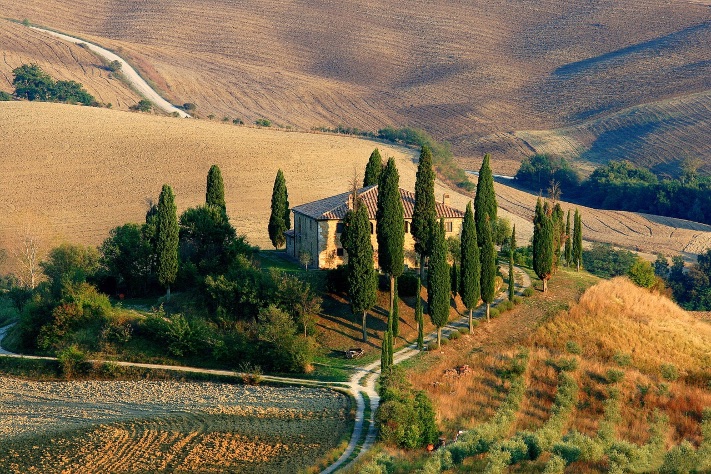
- Photography. The Val d’Orcia and the Crete Senesi south-west of Siena — the cypress stands, lonely chapels and near-lunar clay ridges of every classic Tuscan image.
- History before Rome. The Maremma is the Etruscan heartland: Vetulonia, Populonia and Roselle for sites, Grosseto, Volterra and Chiusi for museums.
- Food. Anywhere, honestly — but a fully staffed villa with its own chef turns the kitchen into the best restaurant of the week.
- Doing very little. Vineyard seclusion, a long pool, and a concierge who has already booked the wine tastings you may or may not attend.
Tell us which of the five above matters most and we will shortlist the houses that fit — not the ones that happen to be free.
Matching the area to the trip
| Area | Best For | Nearest Cities | Character |
|---|---|---|---|
| Chianti | First visits, wine | Florence, Siena | The classic postcard; everything within reach |
| Val d’Orcia | Photography, Brunello | Siena, Montalcino | Cypress ridges, big skies, quiet villages |
| Near Florence | Museums, day trips | Florence | Culture on the doorstep, hills behind |
| Lucca & Pisa | Opera, architecture, coast access | Lucca, Pisa | Walled-town elegance, softer landscape |
| Maremma | Returning travellers, Etruscan history | Grosseto | Wild, spread out, uncrowded even in August |
| Mugello | Something different | Florence (north) | Medici country, green and little visited |
Questions we are asked before every Tuscan booking
How far in advance should I book a villa in Tuscany?
For July and August, nine to twelve months — the best houses with pools and staff are taken a year out. For May, June and September, four to six months is usually comfortable. Short notice is not hopeless: see our guide to Italy’s staffed villas still available in late August for how the last-minute market actually behaves.
Do I need a car?
Almost always yes. Most Tuscan villas sit on country roads with no public transport, and the region rewards driving. If nobody in the party wants to drive, we arrange a private driver for the week or for specific days.
What does “fully staffed” include?
It varies by house: typically housekeeping and a chef, sometimes a butler and an estate manager, occasionally a full brigade. Each villa’s staffing is confirmed in writing before you book — and the difference between “chef on request” and “chef included” is worth reading closely.
When is the best month?
May and June for wildflowers and comfortable heat; September for the harvest and the best light of the year; July and August for the fullest social calendar and the highest prices. October is beautiful and quiet, with shorter days.
Can you plan the days as well as the house?
Yes — that is the concierge’s job. Tastings, chefs, drivers, cookery lessons, museum slots and restaurant tables are arranged before you arrive. Our Tuscany itinerary and best experiences guides show the shape of a well-planned week.
Our travel designers will recommend the villas, restaurants and experiences that match your answers — a curated shortlist within 24 hours, at no cost.