Is Croatia Safe? Everything Discerning Travelers Must Know Before They Book
Is Croatia safe? Yes. The US State Department rates Croatia Level 1, “exercise normal precautions”, the lowest of its four levels, in an advisory reissued on 18 May 2026, and Croatia ranks 23rd in the world on the Global Peace Index 2026, ahead of Spain, Italy and Greece. Violent crime against visitors is rare. What travelers actually meet is pickpocketing in the summer crowds of Dubrovnik and Split, late nights in Hvar Town, wildfires on dry hillsides in July and August, and the bura wind on the roads and the sea. Below, region by region, for families and solo travelers, with health care, natural hazards and the new EU entry rules, and what a private villa from our Croatia villa rentals changes.
Is Croatia safe? The short answer
| US travel advisory | Level 1, exercise normal precautions (reissued 18 May 2026) |
|---|---|
| Global Peace Index | 23rd in the world in 2026 |
| Main risk for visitors | Petty theft in crowded old towns, on beaches and on public transport |
| Natural hazards | Summer wildfires, the bura wind, earthquakes inland |
| Emergency number | 112, as everywhere in the EU |
| Money and borders | The euro and the Schengen area since 1 January 2023 |
| Tap water | Safe to drink in the cities and main resorts |
Sources: US State Department, Croatia travel advisory; Institute for Economics and Peace, Global Peace Index 2026.
How safe is Croatia compared with the rest of the Mediterranean?
On the Global Peace Index, which weighs crime, violence and conflict across 23 indicators, Croatia sits in the top quarter of the world and ahead of most of the countries on the same summer shortlist.
| Country | Global Peace Index 2026 |
|---|---|
| Portugal | 7th |
| Croatia | 23rd |
| Spain | 27th |
| Montenegro | 30th |
| Italy | 35th |
| Greece | 53rd |
| France | 99th |
The risks that remain are the ones of any popular coast in August: crowds, heat and a few pickpockets where the crowds are thickest. For the wider picture, see whether it is safe to travel to Europe now.
Is Croatia safe in Dubrovnik, Split and Hvar?
Dubrovnik
The walled Old Town is busy and well policed in summer. Its main risk is pickpocketing on the Stradun and the city walls in the middle of the day, when the cruise passengers are ashore; since 2019 the city has allowed no more than two cruise ships a day, which has thinned the worst of the crowds. Visit early or after five, and keep phones and wallets out of back pockets. Outside the walls, in Lapad, on the Dubrovnik Riviera and on the Elafiti Islands, the evenings are quiet. See our Dubrovnik villas.

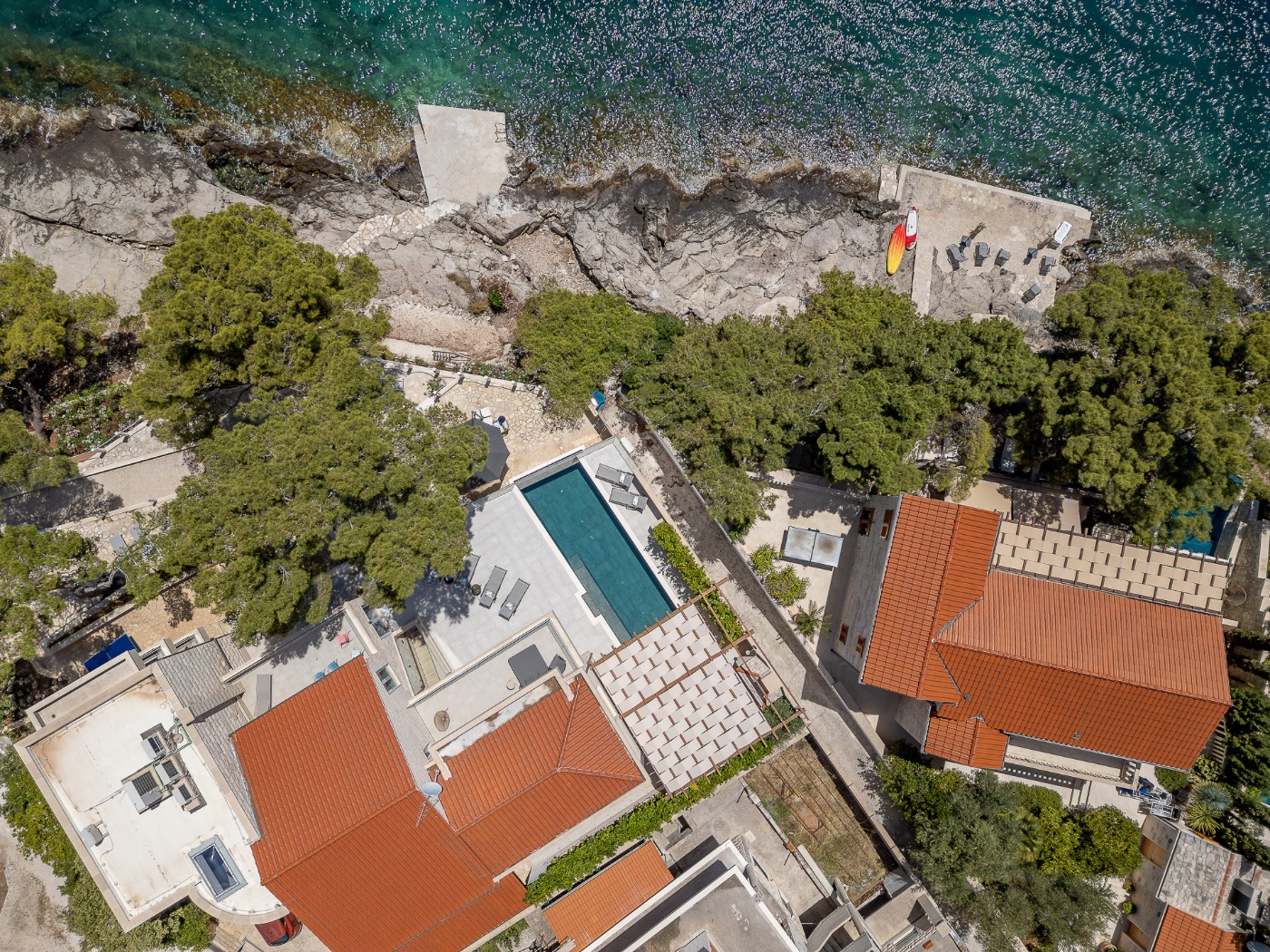
Villa Cardinale
Lozica, Dubrovnik · 5 bedrooms · sleeps 12
On the water in Lozica, seven kilometers from the Old Town, with an infinity pool, a private mooring and a house manager at your disposal. A driver takes you into Dubrovnik before the crowds and brings you back when they arrive.
Split
Diocletian’s Palace and the old town around it are lively until late and safe to walk with ordinary city sense. The ferry port and the Riva are where crowds, and pickpockets, gather on summer mornings. The islands off Split, Brač, Šolta and Vis, are among the calmest places on the coast.
Hvar
Serious crime on Hvar is rare. Hvar Town’s harbor and its bars get loud and crowded on summer nights; a few minutes up the hill or along the shore, the island is quiet again, and that is where both of our Hvar villas stand.
Villa Sunset Hvar
Above Hvar Town · 7 bedrooms · sleeps 16
On the hillside above Hvar Town, a kilometer from the center, where the road ends at the gate and there is no through traffic. The view runs across the channel to the Pakleni Islands from almost every room, and a maid comes daily.
Is Croatia safe for families?
Croatia is one of the easiest coasts in Europe for children: warm, clear and mostly calm water, small pebble coves and shallow bays. Bring water shoes for the sea urchins on rocky shores, and expect the occasional jellyfish in late summer. The heat is the bigger risk for small children in July and August, so plan the beach for the morning and the late afternoon. Many villa pools are unfenced: if you travel with toddlers, ask before you book whether the pool has a fence or a cover.
Is Croatia safe for solo female travelers?
Croatia is generally considered safe for women traveling alone, and violent crime is rare. The usual precautions apply late at night in the nightlife areas: Hvar Town’s harbor, Zrče beach near Novalja on Pag, and Split’s old town after the bars close. Use licensed taxis or a booked driver after dark, and keep an eye on your drink. Police in the main resorts are used to dealing with visitors, and 112 reaches every emergency service.
Is Croatia safe all year?
Yes, but the risks change with the season. July and August bring the crowds, the heat and the wildfire season. April to June and September to October are the most comfortable months, with the sea warm enough to swim from late May. In winter the coast is quiet, many restaurants and ferries run reduced timetables, and the bura can close bridges, mountain roads and some ferry lines for a day at a time.
Health care, water and food
Hospitals in Zagreb, Split, Rijeka and Dubrovnik work to EU standards; on the islands and in rural areas facilities are more limited, and serious cases are often transferred to the mainland; the US advisory notes the same. EU travelers should carry the European Health Insurance Card; everyone else needs travel insurance that includes medical evacuation, since Medicare does not cover care abroad and many US plans cover little. Pharmacies, marked ljekarna, are well stocked. Tap water is safe to drink in the cities and main resorts, food hygiene follows EU rules, and there is no malaria, though tiger mosquitoes are common on the coast in summer.
Natural hazards and the roads
- Wildfires: dry hillsides around Split, Trogir and the Pelješac peninsula burn in some summers. Follow local instructions, and never light a barbecue outside the places meant for it.
- Earthquakes: inland Croatia is seismic. Zagreb was hit by a magnitude 5.5 earthquake in March 2020, and Petrinja by one of 6.4 that December.
- The bura and the jugo: the bura is a cold north-easterly that can gust to storm force in minutes, and the jugo brings rough seas from the south. Check the forecast with your captain before any day on a boat.
- The roads: the A1 motorway between Zagreb, Split and the south is modern and fast. The coastal road, the Magistrala, is narrow in places with steep drops, and island roads are often single track. A driver removes the question.
- Landmines: Croatia declared itself free of all known landmine contamination in March 2026, after nearly three decades of clearance. In former conflict areas inland, keep to roads and marked paths, as the US advisory still recommends.
Sources: EU regional policy, Croatia’s way to a future without landmines; US State Department advisory.
Entry rules in 2026: EES and ETIAS
Croatia has been in the Schengen area since 2023, so the 90-days-in-180 rule applies across the zone. Since 12 October 2025, the EU’s Entry/Exit System records a photo and fingerprints of non-EU travelers at their first crossing, replacing passport stamps, so allow extra time at the border the first time. ETIAS, the travel authorization for visa-free visitors such as Americans, is expected to start in the last quarter of 2026; until it does, a valid passport is all you need. For flights and routes, see our guide to traveling to Croatia from the USA.
What a private villa changes
A villa does not make Croatia safer than it is, but it takes you out of the places where its few risks are found: the crowded lanes at midday, the late-night harbor, the airport taxi line. You arrive by private transfer, houses such as Villa Cardinale and Villa Crescendo have a manager or a concierge on call, and the evenings are spent on your own terrace rather than in the crowd. Our concierge, included with every stay, books the transfers, the boat with a captain who knows the winds, and the tables in town.

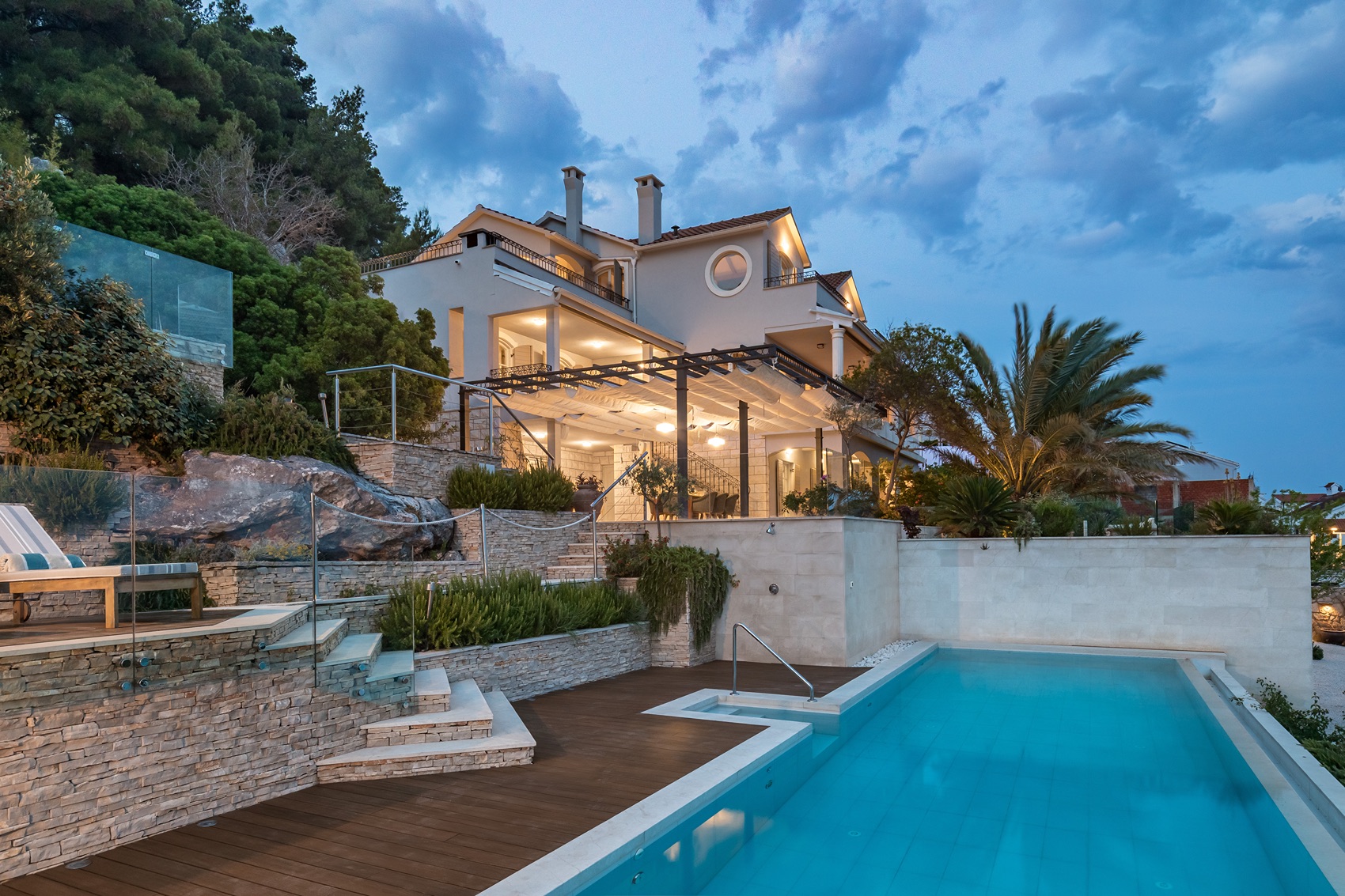
Villa Crescendo
Zaton, Dubrovnik Riviera · 5 bedrooms · sleeps 10
A contemporary house five meters from the sea in Zaton, ten kilometers from Dubrovnik, with an infinity pool, daily housekeeping and a concierge service available around the clock.
Common mistakes when visiting Croatia
- Arriving in Dubrovnik’s Old Town at midday in August, when the crowds and the pickpockets peak.
- Taking a boat out without checking the wind. The bura and the jugo can turn a calm channel rough within hours.
- Driving the coast road after a long flight, at night or with little experience of narrow mountain roads.
- Leaving bags and phones unattended on beaches and in parked cars, where most thefts happen.
- Skipping travel insurance with evacuation cover, which matters most on the islands.
- Booking the villa late. For June to September, ask nine to twelve months ahead; for spring and autumn, six to nine months is usually enough.
Croatia safety: your questions
Is Croatia safe to visit right now?
Yes. The US State Department rates Croatia Level 1, exercise normal precautions, in an advisory reissued on 18 May 2026, and Croatia ranks 23rd in the world on the Global Peace Index 2026. The main risks are petty theft in crowded places and wildfires in summer.
Is Dubrovnik safe?
Yes. The Old Town is busy and well policed, and its main risk is pickpocketing on the Stradun and the walls in the middle of the day. Since 2019 the city has allowed no more than two cruise ships a day, and the areas outside the walls are quiet in the evening.
Is Croatia safe for solo female travelers?
Generally yes, and violent crime is rare. Take the usual precautions late at night in the nightlife areas of Hvar Town, Zrče beach on Pag and Split’s old town, and use licensed taxis or a booked driver after dark.
Is the tap water safe to drink in Croatia?
Yes, in the cities and the main resorts, where it meets EU standards. On small islands supplied by tanker or cistern, ask your host, and drink bottled water if in doubt.
Do Americans need ETIAS to visit Croatia?
Not yet. ETIAS is expected to start in the last quarter of 2026; until then a valid passport is enough for stays of up to 90 days in any 180. Since October 2025 the EU’s Entry/Exit System records a photo and fingerprints at your first entry.
Is Croatia safe for first-time visitors?
Yes, and it is one of the easiest countries in Europe to visit for the first time. It uses the euro, belongs to the EU and the Schengen area, and English is widely spoken in hotels, restaurants and shops along the coast.
Is Croatia safe for older travelers or those with limited mobility?
Yes, though the old towns of Dubrovnik and Hvar are all steps and polished stone. Choose a villa with level access and bedrooms on the ground floor, and ask how many steps lead from the road to the door before you book.
Plan a stay on the Croatian coast
Tell us your dates, how many of you are traveling and whether you want Dubrovnik, Split or the islands. A specialist replies with villas away from the crowds, and our concierge arranges the transfers and the boat days.
Request a Tailored SelectionWhatsApp +1 305 432 1731
Toll-free, US and Canada +1 888 279 6444 · Miami +1 305 432 1731