
Is Croatia a Good Place to Visit? Who It Suits, and How to Do It Well
Yes. Croatia is a good place to visit if you want clear water, walled old towns and islands that are an hour apart, and it is at its best from a private house on the coast. It suits couples, families with children of any age, groups of friends who want to sail, and anyone who travels for food and wine. It suits you less if you want long sandy beaches, warm sea in winter or a resort with everything on one site. The rest of this guide explains who it is right for, where to base yourself and what to know before you book; for the houses themselves, see our Croatia villa rentals.

Croatia at a glance
| Getting there | United flies nonstop from Newark to Dubrovnik and Split in season, about nine hours overnight; from other US cities, one connection in Europe. See how to get to Croatia from the USA. |
|---|---|
| Time difference | Six hours ahead of New York, nine ahead of Los Angeles. |
| Money | The euro, since 2023. |
| Entry | Croatia is in the Schengen area. A US passport, no visa, for stays of up to 90 days in any 180. |
| Language | Croatian. English is spoken widely on the coast and in every place you are likely to stay or eat. |
| Safety | The US State Department rates Croatia Level 1, its lowest advisory level. See is Croatia safe. |
| Season | May to October on the coast, with June and September the most comfortable months. Month by month in the best time to visit Croatia. |
| When to book | Nine to twelve months ahead for June to September, six to nine months for spring and autumn. |
Why visit Croatia
- The sea and the islands. More than a thousand islands and islets lie off the coast, and the water is clear enough to see the bottom from a boat. The distances are short: Hvar Town is about an hour from Split by catamaran, so an island lunch never takes the whole day.
- Old towns you can live in. Dubrovnik inside its walls, Diocletian’s Palace at the heart of Split, Trogir on its island, Korčula Town on its peninsula, Rovinj above the harbor. Croatia has ten UNESCO World Heritage sites, among them the old towns of Dubrovnik and Trogir, the palace in Split, the Euphrasian Basilica in Poreč, the Stari Grad Plain on Hvar and the Plitvice Lakes.
- Nature close to the coast. Eight national parks, from the lakes and waterfalls of Plitvice and Krka to the forested island of Mljet and the Kornati archipelago, which is best seen by boat.
- Food and wine with a strong sense of place. Oysters from Ston, lamb and octopus slow-cooked under the peka bell, cheese from Pag, truffles in Istria in autumn, and native grapes such as Plavac Mali, Pošip, Grk and Malvazija. See our guide to Croatian wine.
- Private houses on the water. Stone villas and modern houses with their own pools, many with a path or a landing to the sea, rented whole, with a concierge to arrange the boat, the chef and the transfers.
For the places themselves, with what each is like and how long to give it, see the best places to visit in Croatia.
Who Croatia suits, and where to base yourself
- Couples. A house on Hvar or Korčula with dinners in town, or the Dubrovnik Riviera for the Old Town in the evening, when it is quiet.
- Families. Calm, clear water, short boat trips and towns where children can walk the old streets. Most beaches are pebble or rock, so the house pool often becomes the center of the day.
- Multigenerational groups. Large houses near Split, on Hvar and on the Dubrovnik Riviera take twelve to twenty guests; Split’s airport and the islands are close together, which helps when the group arrives on different flights.
- Food and wine. Istria for truffles, olive oil and Malvazija; Korčula and the Pelješac peninsula for Grk, Pošip and Plavac Mali.
- Sailing. Central Dalmatia, with Hvar, Brač, Vis and the Pakleni Islands within a day’s sail of Split; a skippered boat from the villa’s landing or the nearest marina is the easiest way to see them.
| Region | Best for | Fly into | From our collection |
|---|---|---|---|
| Dubrovnik and the Riviera | The Old Town, Cavtat, day trips to the Elaphiti Islands and Mljet | Dubrovnik | Cardinale, Villa Pearl |
| Split, Trogir and Brač | Easy arrivals, the palace in Split, island days, large groups | Split | Villa Nikita, Villa Sea Gem |
| Hvar | Hvar Town in the evening, the Pakleni Islands by boat, sailing | Split, then by boat | Villa Sunset Hvar, Aqua Vista |
| Korčula and Pelješac | Quiet villages, wine, Korčula Town | Dubrovnik | Villa Cataleya, Villa Sansarea |
| Istria | Food, hill towns, Rovinj, spring and autumn stays | Pula, or Venice and Trieste in Italy | Eva, Villa Yara |
What to know before you go
- July and August are the busiest weeks. The longest days and every restaurant open, but also the fullest roads and ferries. For the same sea with more space, choose June or September.
- Dubrovnik has two rhythms. From late morning to mid-afternoon the Old Town fills with cruise passengers and day visitors. Walk the walls early or after five, and spend the middle of the day at the house or on the water.
- The beaches are mostly pebble and rock. The water is clear because of it. Bring water shoes, or choose a house with a pool and its own way into the sea; for sand and the best coves, see the best beaches in Croatia.
- Ferries and catamarans fill up in summer. Car ferries can mean a wait at the quay. A private boat timed to your flight avoids it, and we arrange it.
- The wind decides some days. The maestral, a steady afternoon breeze from the northwest, is what sailors wait for; a jugo from the south can bring swell and delay a crossing for a few hours. Keep arrival and departure days free of fixed plans.
- The coast is long. Dubrovnik and Split are three and a half to four hours apart by road, so choose one or two bases rather than moving every night.
- Out of season, the islands slow down. From late October to April many island restaurants and beach clubs close; the cities and Istria stay open.
Why a private villa changes the trip
Croatia’s best moments happen away from the busiest hours: breakfast on a terrace above the sea, a boat to an empty cove, dinner at home after a day in town. A house of your own makes that the default. Four villas from our collection, one in each region, with the details as they are on each listing.

Cardinale
Dubrovnik, Lozica · 5 bedrooms · sleeps 12
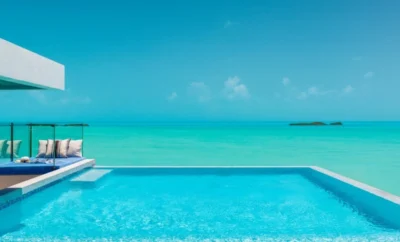
A contemporary house in Lozica, about ten minutes from the Old Town of Dubrovnik, with an infinity pool facing Daksa Island and the open Adriatic. Five hundred square meters of interiors in white and marble, a gym, and art throughout. The Elaphiti Islands, Mljet and the Pelješac peninsula are all within reach by car or by boat.
Staff and service: maid service at the house; a private chef, transportation, tours and activities are arranged on request. Minimum stay five nights.

Villa Sunset Hvar
Hvar, above Hvar Town · 7 bedrooms · sleeps 16
On the hillside above Hvar Town, at the end of a road with no through traffic, with a view across the channel to the Pakleni Islands from almost every room; the sun sets straight into it. A heated pool, five terraces, a yoga room and two thousand square meters of garden. The sea is a hundred meters below, and the main square of Hvar Town about fifteen minutes on foot.
Staff and service: maid service at the house; a private chef, tours and activities are arranged on request.

Villa Cataleya
Korčula, Žrnovo · 4 bedrooms · sleeps 8
A modern house steps from the sea on Korčula, about three kilometers from Korčula Town, with a heated infinity pool and a private elevator between its four floors, which makes it easy for grandparents. Paddleboards, kayaks and bicycles are at the house. From Dubrovnik Airport, allow about two hours.
Staff and service: housekeeping, our concierge and a welcome hamper are included; a chef and grocery pre-stocking are arranged on request.

Eva
Istria, near Rovinj · 6 bedrooms · sleeps 12
In the countryside of Bale, among olive groves and vineyards, about fourteen kilometers from Rovinj and seven from the sea. The house is built as two identical wings, each with its own kitchen and living room, joined by a lower floor with a heated indoor pool and a sauna; there are pools outside too. Two families can share it without sharing every room.
Staff and service: maid service at the house; a private chef, private transfers, tours and excursions are arranged on request. Minimum stay four nights.
More than 55 villas across the coast and the islands are in our collection of luxury villas in Croatia, and the ones with heated pools for spring and autumn are in our guide to Croatia villas with a heated pool.
More Croatia guides
- Best places to visit in Croatia
The coast and the islands, place by place. - The best time to visit Croatia
Season by season, and how far ahead to book. - Travel to Croatia from the USA
Nonstop flights, connections and the border. - Is Croatia safe?
What travelers actually meet, region by region. - The best beaches in Croatia
Sand, pebbles and coves you reach by boat. - Game of Thrones in Croatia
Dubrovnik, Split and the other locations.
Is Croatia a good place to visit: your questions
Is Croatia worth visiting?
Yes. Clear water, more than a thousand islands and islets, walled old towns such as Dubrovnik and Trogir, and food and wine with a strong sense of place, all within short distances. It is at its best from May to October, from a private house on the coast.
Who is Croatia best for?
Couples, families, multigenerational groups, people who sail and people who travel for food and wine. It suits you less if you want long sandy beaches, warm sea in winter or a resort with everything on one site.
How many days do you need in Croatia?
A week is right for one region, such as Dubrovnik or Split and the islands. With ten days to two weeks, you can combine two bases, for example Dubrovnik and Hvar, without moving every night.
What is the best month to visit Croatia?
June and September. The sea is warm, the days are long and the coast is calmer than in July and August. May and October suit cities, walking and food more than swimming.
Is Croatia good for families?
Yes. The sea is calm and clear, the boat trips are short and the old towns are easy to walk with children. Most beaches are pebble or rock, so a house with a pool and its own way into the sea works best for young children.
Is Croatia expensive?
It depends on the week more than anything else. July and August are the most in demand, and June and September offer the same sea for less pressure on availability. We quote current rates for your dates when we send a selection.
Do you need a car in Croatia?
Not if you stay in one region with a driver and boat transfers, which we arrange. On the mainland and in Istria, a car or driver helps for day trips; on the islands, a boat is often faster than the road.
Is Croatia safe to visit?
Yes. The US State Department rates Croatia Level 1, its lowest advisory level. Normal city precautions apply in Dubrovnik and Split in summer, as in any busy destination.
Sources: World Heritage properties in Croatia from UNESCO; travel advisory from the US Department of State (Level 1, issued May 18, 2026). Flight and crossing times are typical in-season figures; we confirm the current schedules for your dates when we plan your trip.
Plan your stay in Croatia
Tell us your dates, who is coming and what you want from the trip. A Croatia specialist replies within 24 hours with three to five villas that fit, their current rates, and the boat and transfers timed to your flights.
Request a Tailored SelectionWhatsApp +1 305 432 1731
Toll-free, US and Canada +1 888 279 6444 · Miami +1 305 432 1731