
The 14 Best Places to Visit in Croatia, and Where to Stay in Each
The best places to visit in Croatia are Dubrovnik’s walled Old Town, Split and its Roman palace, the islands of Hvar, Brač, Korčula and Vis, the lakes and waterfalls of Plitvice and Krka, and Rovinj in Istria. For a first trip, choose two bases on the coast, one around Dubrovnik and one around Split, then add an island and a national park. Below are fourteen places, what each is for, how to reach it and where to stay, with a private villa in each base from our Croatia villa rentals.
The best places to visit in Croatia at a glance
| Place | Best for | Best months | Fly into | Where to stay |
|---|---|---|---|---|
| Dubrovnik | The walled Old Town, the walk on the walls, Lokrum and the Elaphite Islands by boat | May, June, September, October | Dubrovnik | Ploče, above the Old Town, or the Dubrovnik Riviera |
| Split and Trogir | Diocletian’s Palace, a Roman palace that is still a living city; Trogir’s medieval center | April to June, September, October | Split | Split, near Marjan hill |
| Hvar | Hvar Town, the Pakleni Islands by boat, the Stari Grad Plain | June, September | Split, then the catamaran | Just outside Hvar Town |
| Brač | Zlatni Rat at Bol, stone villages, the shortest crossing from Split | June to September | Split, then the car ferry | Bol, between the town and the beach |
| Korčula | A walled island town, the Moreška sword dance, Grk and Pošip vineyards | June to September | Dubrovnik | The south coast of the island |
| Mljet | A national park with two saltwater lakes and a monastery on an islet | May to September | Dubrovnik | A day by boat from Dubrovnik or Korčula |
| Vis | The quietest of the central islands, Komiža and the Blue Cave | June to September | Split, then the catamaran | A long day by private boat from Hvar or Split |
| Makarska Riviera | Pebble beaches under pine woods, below the Biokovo mountains | June to September | Split | Brela |
| Šibenik and Krka | A UNESCO cathedral and fortress; the waterfalls of Krka National Park | April to June, September, October | Split | Primošten, between Šibenik and Split |
| Plitvice Lakes | Sixteen named lakes linked by waterfalls, Croatia’s first national park | April to June, September, October | Zagreb or Zadar | An overnight on the drive between Zagreb and the coast |
| Zadar | The Sea Organ and the Greeting to the Sun on the waterfront | May, June, September | Zadar | A night on the way to or from Plitvice |
| Istria | Rovinj, Poreč and Pula; olive oil, wine and autumn truffles | May to October | Pula | The countryside near Rovinj |
| Kvarner | Opatija’s old resort and the pine-shaded bays of Lošinj | June to September | Rijeka or Pula | Mali Lošinj |
| Zagreb | The Upper Town, museums and the Advent season in December | All year | Zagreb | A night or two at the start or end of the trip |
Best months here means warm enough for the place and calmer than the peak of July and August. Month by month, see the best time to visit Croatia.
1. Dubrovnik and the Elaphite Islands
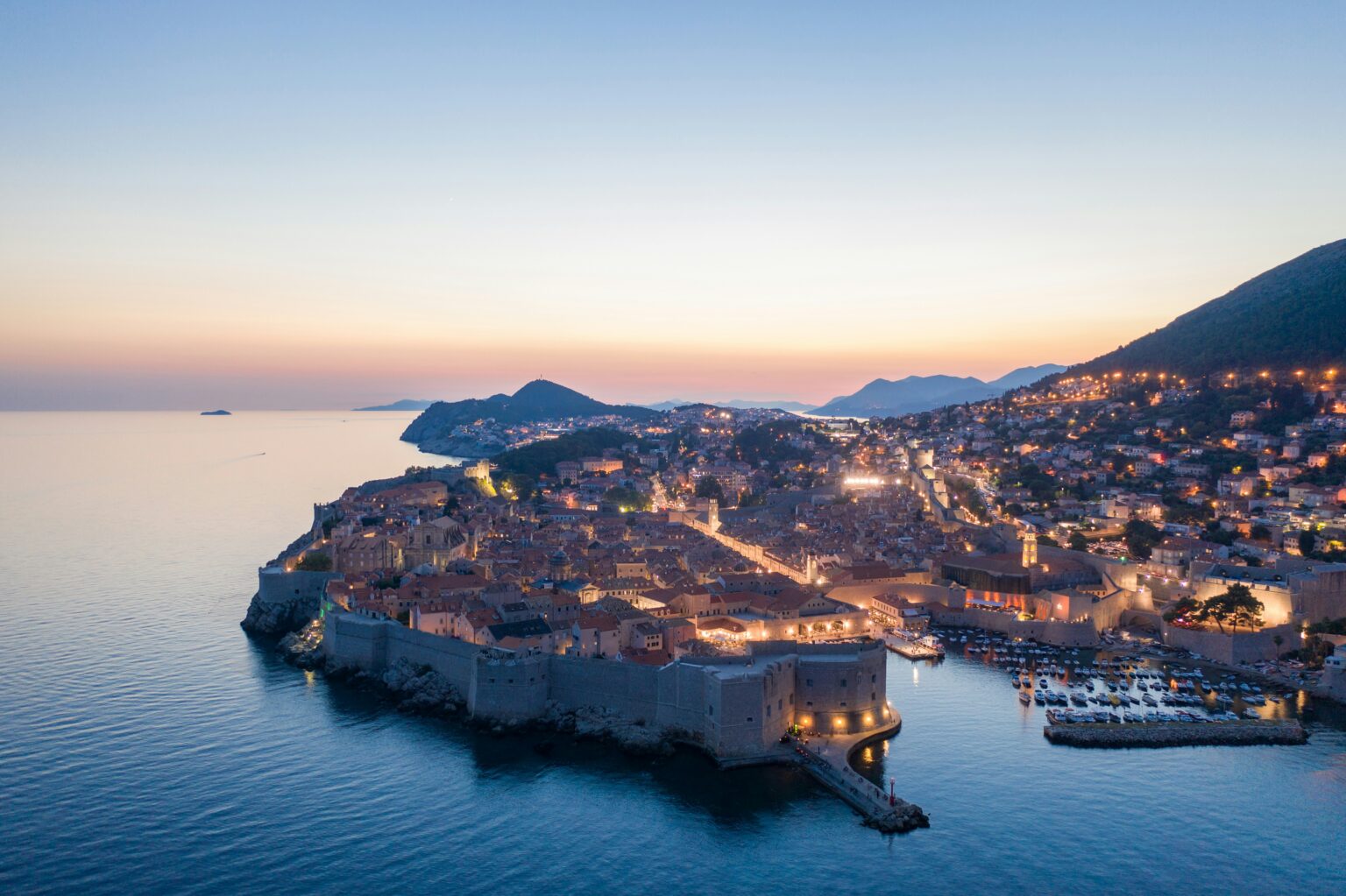
Dubrovnik’s Old Town has been a UNESCO World Heritage site since 1979. The walls run about 1,940 meters around it, and the full circuit takes an hour and a half to two hours: walk them when they open in the morning or late in the afternoon, when the stone has cooled and the cruise passengers have gone. Boats from the Old Port cross to the island of Lokrum in minutes, and a private boat reaches the Elaphite Islands and Cavtat for lunch. For the Old Town in the evening, stay close: the houses in Ploče, just east of the walls, look straight back at it.

Villa Annalisa
Dubrovnik, Ploče · 5 bedrooms · sleeps 10
A seventeenth-century house in Ploče with three terraces facing the Old Town, the island of Lokrum and Banje beach. The heated pool sits on the terrace with the walls in view, next to a summer kitchen and a covered dining pavilion. Five en-suite bedrooms on two floors, for ten guests.
Staff and service: a private chef, butler service, wine tours and excursions are arranged on request.
Dubrovnik is also where the King’s Landing scenes were filmed: see where Game of Thrones was filmed in Croatia.
2. Split and Trogir
Split grew inside the palace the Roman emperor Diocletian built at the turn of the fourth century; the Historical Complex of Split with the Palace of Diocletian has been on the UNESCO list since 1979. People still live and eat within its walls, and the Riva promenade runs along its sea front. Split is also the port for Hvar, Brač and Vis, which makes it the most practical base on the coast. Trogir, a UNESCO site since 1997, is a small medieval town on its own islet, about six kilometers from Split Airport.

Villa Exclusive Split
Split, at the foot of Marjan hill · 5 bedrooms · sleeps 10
A house about a hundred years old, protected as a cultural monument and renovated in 2004, at the foot of Marjan hill and about ten minutes’ walk from Diocletian’s Palace. A pool with a jacuzzi in a shaded garden under a large palm, a gym and a sauna: a house in Split from which you can walk to dinner in the palace and come back to a garden.
Staff and service: maid service, with a private chef, grocery delivery and tours on request.
3. Hvar
Hvar Town is the island’s harbor of yachts, restaurants and late dinners, below the fortress on the hill. A boat takes you across to the Pakleni Islands in minutes for swimming in the coves. On the north side, the Stari Grad Plain, a UNESCO site since 2008, keeps the field pattern laid out by Greek colonists in the fourth century BC. The catamaran from Split to Hvar Town takes about an hour; the car ferry to Stari Grad about two.

Aqua Vista
Hvar, Majerovica · 10 bedrooms · sleeps 20
At the water’s edge in Majerovica, a kilometer west of the main square of Hvar Town: close enough to walk in for dinner, far enough that the noise of the town does not reach the terrace. A heated infinity pool facing the Pakleni Islands, a private platform for swimming in the sea below, and ten bedrooms across five floors, for twenty guests.
Staff and service: maid service, with a private chef, butler service and transfers on request.
4. Brač and Zlatni Rat
Brač is the island closest to Split, about 50 minutes by car ferry to Supetar. Its best-known beach, Zlatni Rat at Bol, is a pebble spit whose tip shifts with the wind and the current, and the channel between Brač and Hvar is one of the windsurfing spots of the Adriatic. Away from Bol, the island is stone quarries, olive groves and quiet villages. For the beaches on Brač and along the rest of the coast, see the best beaches in Croatia.

Bol Exclusive
Brač, Bol · 6 bedrooms · up to 16 guests
Halfway between the center of Bol and Zlatni Rat, so both are a walk away. Two residences around an inner courtyard, with a pool, a large terrace and a barbecue; six bedrooms for twelve, and up to sixteen with extra beds. The minimum stay is seven nights.
Staff and service: maid service, with a private chef, a boat or motor yacht and transfers on request.
5. Korčula
Korčula Town is a walled medieval town on a small peninsula, often compared to a smaller Dubrovnik. The Moreška, a sword dance, is performed on summer evenings, and a house near the cathedral claims to be the birthplace of Marco Polo, on local tradition rather than records. The vineyards of Lumbarda, at the eastern tip, make Grk, a white wine from a local grape; for the island’s wines, see our guide to Croatian wine. From Dubrovnik the catamaran takes about two hours; by car, the ferry from Orebić on the Pelješac peninsula crosses in about half an hour.

Villa Sansarea
Korčula, south coast · 6 bedrooms · sleeps 12
On the quiet south coast of the island, facing the open sea and the island of Lastovo, with pine woods behind for privacy. A 50 square meter infinity pool, private steps down to the sea with a mooring for a boat, and a gym next to the house.
Staff and service: a concierge, daily housekeeping, a mid-week linen change and pool and garden care are included; a private chef, pre-stocking and airport transfers are arranged on request.
6. Mljet
The western end of Mljet has been a national park since 1960, almost 5,300 hectares of pine forest around two saltwater lakes, Veliko jezero and Malo jezero. On an islet in the larger lake stands a Benedictine monastery, the park’s most visited sight. Excursion boats from Dubrovnik and Korčula land at Polače and Pomena; a private boat lets you arrive before them and leave after.
7. Vis
Vis was a Yugoslav naval base, closed to visitors until 1989, and it still feels apart from the rest of the coast: two small towns, Vis and Komiža, a few vineyards and very little building. From Komiža, boats go out to the Blue Cave on the neighboring island of Biševo. The catamaran from Split takes about an hour and ten minutes and the car ferry about two hours and twenty. Vis works well as a long day by private boat from a villa on Hvar or in Split, with lunch in Komiža.
8. The Makarska Riviera
South of Split, the Biokovo mountains drop almost straight into the sea, and the towns of the Makarska Riviera sit on a string of pebble beaches shaded by pine woods. Brela, at the northern end, has the pine-backed beaches the riviera is known for.

Bello
Brela, Makarska Riviera · 9 bedrooms · sleeps 20
Built into the hillside above Brela on four floors joined by an elevator, with a 60 square meter heated infinity pool facing the sea, a gym, a sauna and a jacuzzi. Nine bedrooms for eighteen adults and two children: a house that takes a group of twenty under one roof.
Staff and service: maid service; anything else through our concierge.
9. Šibenik and Krka National Park
Šibenik has two UNESCO sites: the Cathedral of St James, built entirely of stone and listed since 2000, and the Fortress of St Nicholas at the mouth of the channel, part of the Venetian works of defence listed in 2017. Inland, Krka National Park is a river of waterfalls and pools. Enter at Skradin and take the park boat up the river to Skradinski buk; the island monastery of Visovac, run by Franciscans, can only be reached by boat. Swimming in the park has been banned since January 2021.

Villa Dream Pearl
Primošten, Bilo · 5 bedrooms · sleeps 10
A house on the sea at Bilo, by Primošten, between Šibenik and Split. A heated pool, a gym, a sauna and a wine cellar, with five bedrooms and seven bathrooms; the local red, Babić, comes from the vineyards on the rocky slopes around the town.
Staff and service: a private chef, private tours, a yacht charter and private transfers are arranged on request.
10. Plitvice Lakes National Park
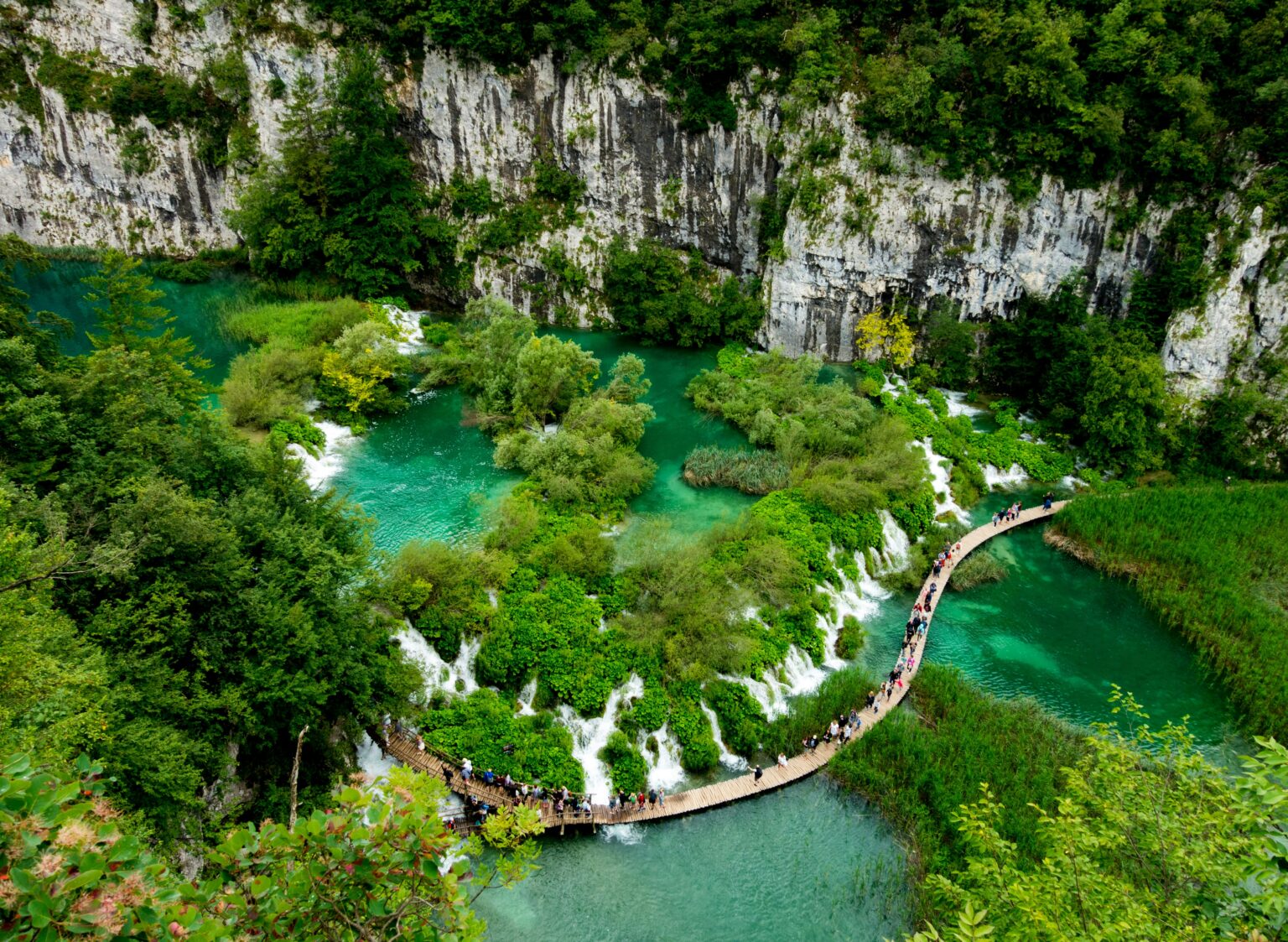
Plitvice was proclaimed Croatia’s first national park in 1949 and has been a UNESCO site since 1979: sixteen named lakes, and several smaller ones, stepping down through waterfalls in a park of just under 300 square kilometers. Swimming is prohibited, and the boardwalks are busiest in the middle of the day, so arrive at opening or in the late afternoon. The park is open all year. It is a long day trip from Zagreb or Zadar; it is better as an overnight on the drive between the capital and the coast.
11. Zadar
Zadar’s waterfront has two works by the architect Nikola Bašić: the Sea Organ, played by the waves through pipes under the stone steps, opened in 2005, and the Greeting to the Sun, a circle of solar panels that lights up after dark, in 2008. The city’s Venetian fortifications are part of the same UNESCO listing as Šibenik’s fortress. Zadar has its own airport and is the nearest coastal city to Plitvice.
12. Istria: Rovinj, Poreč and Pula
Rovinj’s old town was an island until the channel to the mainland was filled in, in 1763; its church of St Euphemia, finished in 1736, has the tallest bell tower in Istria, 61 meters. In Poreč, the Episcopal Complex of the Euphrasian Basilica has been a UNESCO site since 1997, and Pula has a Roman amphitheater still used for summer concerts and films. Inland, the hill towns are for olive oil, wine and, in autumn, truffles. Pula Airport is about 40 kilometers south of Rovinj.

Eva
Istria, near Rovinj · 6 bedrooms · sleeps 12
A modern house in the Istrian countryside near Rovinj, among olive groves, built as two identical wings, each with its own kitchen and living room: right for two families traveling together. Two heated outdoor pools, and an indoor heated pool with a sauna in the basement that joins the two wings.
Staff and service: maid service, with a private chef, transfers, excursions and tours on request.
13. Kvarner: Opatija and Lošinj
Opatija, on the Kvarner Gulf, grew into a seaside resort in the nineteenth century, and its villas and seafront promenade still show it. Farther south, Lošinj is an island of pine woods and quiet bays around the harbor town of Mali Lošinj. The nearest airports are Rijeka, on the island of Krk, and Pula.

Villa Hortensia
Mali Lošinj, Čikat Bay · 10 bedrooms · sleeps 20
A restored Belle Époque residence from the Austro-Hungarian years, in the pine-shaded Čikat Bay. Ten bedrooms with views of the sea or the pines, a heated seawater pool, a private bathing deck, a sauna, a whirlpool and a fitness studio. The minimum stay is seven nights.
Staff and service: fully staffed, with butler service and housekeeping.
14. Zagreb
The capital is a city of Austro-Hungarian squares, small museums and cafes, with the Upper Town on its hill and the Dolac market below it. In December its Advent season fills the squares. Zagreb has flights all year, and on to Split and Dubrovnik: a night or two at the start or end of a trip, or on the way to Plitvice.
How to combine the best places in one trip
Dubrovnik and Split are three and a half to four hours apart by road, so choose bases by region rather than trying to see the whole coast from one house. These are the combinations we plan most often, each with a private villa as the base.
| Trip | Bases | Getting between them | Add |
|---|---|---|---|
| The south | Dubrovnik and Korčula | Catamaran, about two hours, or a private boat | Mljet and the Elaphite Islands by boat |
| The center | Split and Hvar or Brač | Catamaran to Hvar Town, about an hour; car ferry to Brač, about 50 minutes | Vis by private boat; Krka on the way north |
| The coast | Split and Dubrovnik | By road, three and a half to four hours, or by boat along the islands | A night on Korčula on the way |
| The north | Istria and Kvarner | By road | Plitvice and Zagreb on the way in or out |
From our concierge: the easiest arrival on an island is a private boat waiting at the quay when the car from the airport arrives, booked to your flight. Catamarans and small boats have real luggage limits, so tell us about golf bags or sports equipment before you travel. For flights from the US, see how to travel to Croatia from the USA.
When to go, and when to book
On the coast and the islands, May, June and September are warm and calmer than July and August; the national parks are at their best in spring and autumn. For a villa between June and September, we suggest booking nine to twelve months ahead, and six to nine months for spring and autumn. Before you go, see also whether Croatia is safe and whether Croatia is a good place to visit.
More Croatia guides
- Croatia villa rentals
Our collection, with a shortlist in 24 hours. - The best time to visit Croatia
Season by season, and how far ahead to book. - The best beaches in Croatia
From Brač to Vis and the Makarska Riviera. - Travel to Croatia from the USA
Nonstop flights, the border and the transfers. - Game of Thrones in Croatia
Dubrovnik, Split and the locations on the coast. - Croatia villas with a heated pool
Houses for spring, autumn and cooler evenings.
Best places to visit in Croatia: your questions answered
What is the most beautiful place in Croatia?
For most first-time visitors it is Dubrovnik’s Old Town, seen from its walls or from the sea. Plitvice Lakes, the Pakleni Islands off Hvar and the old town of Rovinj are the other places people remember most. Which one is right depends on whether you want a city, islands or nature.
Is Dubrovnik or Split better for a first visit?
Choose Dubrovnik for the walled Old Town and the southern islands, and Split for a lived-in Roman city with the fastest boats to Hvar, Brac and Vis. With a week or more, stay in both: they are three and a half to four hours apart by road.
Which Croatian island is best to visit?
Hvar for restaurants, boats and the Pakleni Islands; Brac for Zlatni Rat and the shortest crossing from Split; Korcula for a walled town and vineyards; Vis for the quietest island. For a first trip, Hvar or Brac pairs most easily with a stay in Split.
How many days do you need in Croatia?
Seven to ten days covers two bases, such as Split and an island, or Dubrovnik and Korcula, with a national park or a boat day added. Two weeks lets you combine the south, the center and Plitvice without rushing.
How many UNESCO World Heritage sites does Croatia have?
Ten: eight cultural and two natural. They include the Old City of Dubrovnik, Diocletian’s Palace in Split, Trogir, the Stari Grad Plain on Hvar, the Cathedral of St James in Sibenik, the Euphrasian Basilica in Porec and Plitvice Lakes National Park.
Can you swim at Plitvice Lakes or Krka?
No. Swimming in the lakes is prohibited at Plitvice, and Krka National Park banned swimming from January 2021. For swimming, plan the coast and the islands, or a villa with its own pool.
How do you get from Split to Dubrovnik?
By road it takes three and a half to four hours. In summer you can also go by catamaran along the islands, or by private boat, stopping on Hvar or Korcula on the way. We arrange the transfer with the villa.
How far ahead should we book a villa in Croatia?
Nine to twelve months ahead for June to September, and six to nine months for spring and autumn. July and August are the weeks that book first.
Updated October 2026. Sources: UNESCO World Heritage List; Plitvice Lakes National Park; Mljet National Park; Croatia Week on the Krka swimming ban; Visovac. Crossing and drive times are typical in-season figures; we confirm the current schedules for your dates when we plan your trip.
Plan your Croatia, one base at a time
Tell us your dates, who is coming and which places you want to see. A Croatia specialist replies within 24 hours with three to five villas that fit, their current rates, and the boats and transfers between them.
Request a Tailored SelectionWhatsApp +1 305 432 1731
Toll-free, US and Canada +1 888 279 6444 · Miami +1 305 432 1731